
Introduction: Why Fake Trading Apps Scam Matters
Cybercriminals reportedly stole ₹7,061 crore from Indian investors over the past year through fraudulent investment and trading applications. The Fake Trading Apps Scam highlights how scammers are exploiting people’s interest in stock markets and online investing by creating apps that closely resemble legitimate trading platforms.
According to reports, these scams commonly begin through social media advertisements, WhatsApp groups, Telegram channels, or unsolicited investment messages that promise guaranteed profits, exclusive IPO access, or “expert” stock recommendations. Once victims invest, fake profits are displayed to encourage larger deposits before the fraudsters disappear.
How Fake Trading Apps Operate
Most fake investment platforms involved in the Fake Trading Apps Scam follow a carefully planned strategy designed to gain victims’ trust before stealing larger amounts of money.
The typical scam works as follows:
- Victims receive advertisements or invitations through social media, WhatsApp, Telegram, or phone calls.
- They are encouraged to install a trading application that appears professional and legitimate.
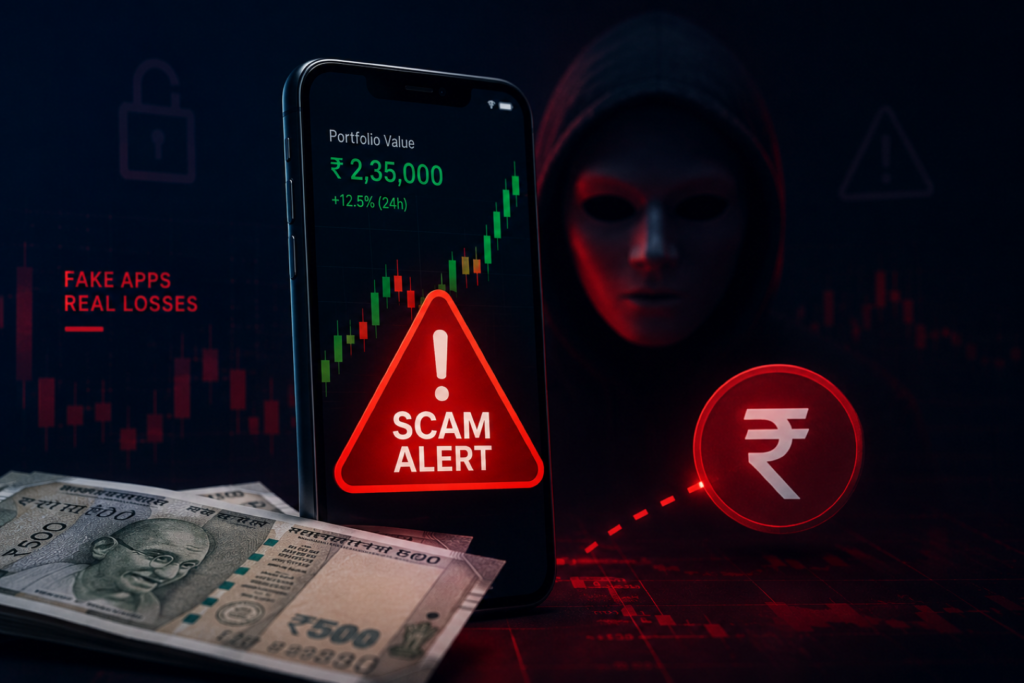
- The application displays fake profits and portfolio growth.
- Victims invest additional funds after seeing these fabricated returns.
- When users attempt withdrawals, scammers either stop responding or demand extra “processing fees,” “taxes,” or “verification charges.”
- Eventually, the platform disappears along with the invested money.
Why These Scams Are Increasing
Several factors have contributed to the rise of fake trading applications in India.
- Growing interest in stock market investing.
- Increased use of online investment platforms.
- Easy creation of convincing fake mobile applications.
- Widespread use of encrypted messaging platforms.
- Fraudsters exploiting FOMO (Fear of Missing Out) with unrealistic return promises.
Cybersecurity experts continue to warn that scammers frequently adapt their tactics to appear more authentic, making awareness one of the strongest defenses.
To learn more about the Fake Trading Apps Scam and other emerging cyber threats, explore CyberNexora News’ Learn & Protect section for practical cybersecurity tips and prevention guides. Readers can also visit the Cyber Incidents section to stay updated on the latest scams, data breaches, ransomware attacks, and other cybersecurity developments from around the world.
Warning Signs of Fake Trading Apps
Investors should be cautious if they notice any of the following:
- Guaranteed or unusually high returns.
- Pressure to invest immediately.
- Invitations received through WhatsApp or Telegram groups.
- Requests to transfer money to personal bank accounts.
- Poorly reviewed or newly published applications.
- Difficulty verifying the company behind the platform.
- Demands for additional fees before withdrawals.
Understanding the warning signs behind the Fake Trading Apps Scam can help investors avoid becoming victims of financial fraud. Even professionally designed applications can be fraudulent, so appearance alone should never be considered proof of legitimacy.
How to Protect Yourself
Protecting yourself from the Fake Trading Apps Scam starts with verifying every investment platform before transferring any money.
Follow these security practices before investing online:
- Verify that the broker is registered with SEBI before investing.
- Download trading applications only from official app stores and verify the developer’s identity.
- Never trust promises of guaranteed or risk-free profits.
- Ignore unsolicited investment advice received through WhatsApp, Telegram, SMS, or unknown callers.
- Never share OTPs, banking credentials, UPI PINs, or account passwords.
- Research the company independently before investing.
- Regularly monitor your investment accounts for suspicious activity.
- Educate family members, especially first-time investors, about common investment scams.
For more practical guides, security checklists, and cybersecurity awareness content, explore CyberNexora News’ Resources section.
What To Do If You Become a Victim
If you suspect you’ve invested through a fake trading platform:
- Stop sending additional money immediately.
- Contact your bank and payment provider.
- Report the incident by calling the National Cyber Crime Helpline (1930).
- File a complaint through the National Cyber Crime Reporting Portal.
- Preserve payment receipts, screenshots, chat history, and transaction records for investigation.
Key Takeaways
- Fraudulent trading applications reportedly caused losses of ₹7,061 crore to Indian investors.
- Most scams begin through social media advertisements or messaging platforms.
- Fake profits are displayed to convince victims to invest more money.
- Always verify SEBI registration before investing.
- Report suspected fraud immediately through official cybercrime channels.
Conclusion: Fake Trading Apps Scam and Staying Safe
The Fake Trading Apps Scam serves as another reminder that cybercriminals continue to evolve their financial fraud techniques. Attractive returns and professional-looking applications should never replace proper verification before investing.
Remaining cautious, confirming broker registrations, and avoiding unsolicited investment opportunities can significantly reduce the risk of becoming a victim. As online investment fraud continues to grow, awareness remains one of the strongest cybersecurity defenses.
Frequently Asked Questions(FAQs)
It refers to fraudulent investment applications that reportedly deceived Indian investors by displaying fake trading profits and convincing them to invest more money before disappearing.
These apps imitate genuine trading platforms, display fabricated profits, and often communicate through WhatsApp or Telegram to build trust before requesting larger investments.
Check whether the broker is registered with SEBI, verify the application’s publisher, review independent customer feedback, and download apps only from official stores.
Immediately stop making payments, contact your bank, report the incident by calling 1930, and file a complaint through the National Cyber Crime Reporting Portal.
Growing online investing, social media marketing, encrypted messaging platforms, and increasing financial awareness have provided scammers with more opportunities to target potential victims.