
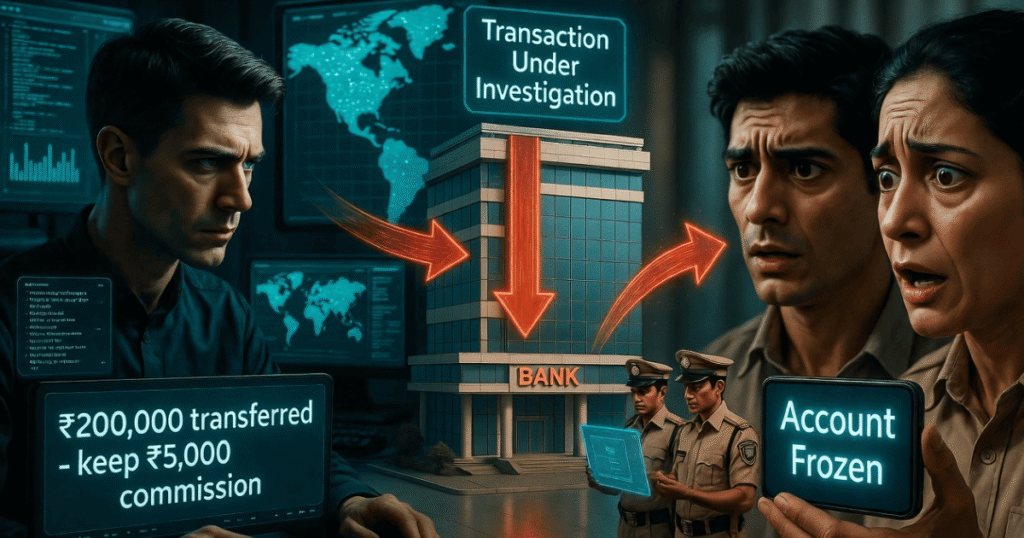
Across India, cybercrime investigations have revealed a serious and growing issue — individuals allowing others to use their bank accounts for a small commission. Many believe it is harmless or temporary. In reality, it can result in account freezes, police investigation, and even criminal charges.
This article explains the full process — how it happens, why accounts are frozen, what “lien” and “hold” mean, and what legal risks are involved.
How the Scam Usually Starts
Most cases begin with:
- Telegram / WhatsApp job offers
- Social media messages promising easy money
- “Rental income” for bank accounts
- Offers to open new accounts for “business transactions”
- Commission-based withdrawal work
The person is told:
- “Money will come temporarily”
- “You just need to transfer it”
- “You will get 2%–10% commission”
In many cases, the funds originate from:
- Online investment fraud
- Loan app scams
- OTP fraud
- Fake customer care scams
- International cyber fraud operations
Sometimes the money even comes from foreign accounts before being routed through Indian bank accounts.
What Is a Mule Account?
When someone allows their account to receive and transfer fraud money, it becomes what investigators call a “money mule account.”
The real fraudster:
- Stays anonymous
- Uses fake SIM cards
- Operates from another state or sometimes another country
- Communicates only through encrypted apps
But the bank account used for transactions belongs to a real, traceable individual.
What Happens After a Fraud Complaint Is Filed?
When a victim reports fraud on the National Cyber Crime Portal or to local police:
- The transaction trail is traced.
- The first beneficiary account is identified.
- Banks are alerted through internal fraud monitoring systems.
- The account is immediately restricted.
This restriction can appear as:
- Debit Freeze – You cannot withdraw money.
- Lien Marked Amount – Specific amount is locked.
- Full Account Freeze – No debit or credit allowed.
- Hold Amount – Equivalent fraud amount is blocked.
Banks act under regulatory obligations and coordination with law enforcement.
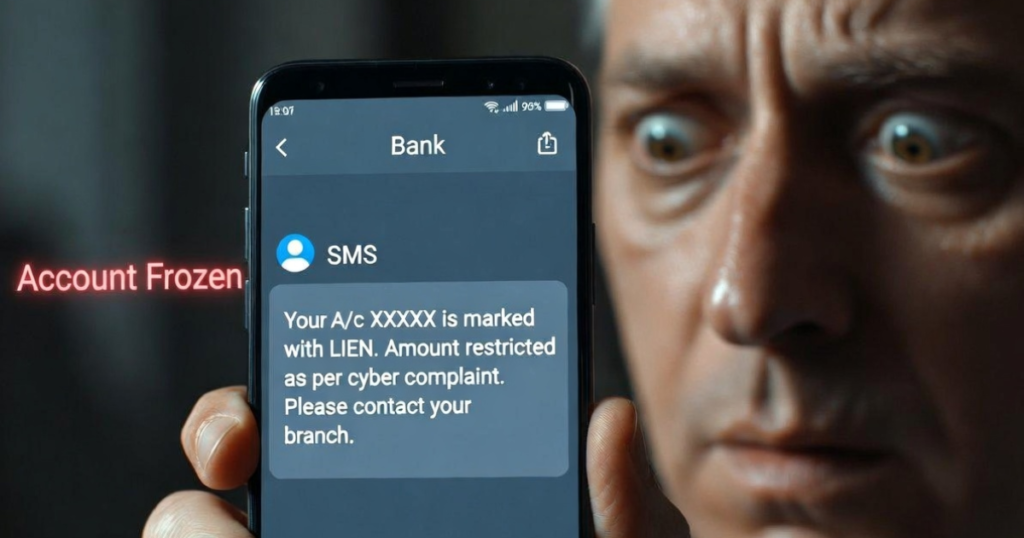
What Does “Lien” Mean?
A lien is when a specific amount in your account is marked and frozen.
Example:
If ₹2,00,000 fraud money came into your account and was withdrawn, the bank may still mark ₹2,00,000 as lien if balance is available.
This amount cannot be used until investigation is complete.
Why Are Accounts Getting Frozen So Quickly Now?
Banks and cyber cells now use:
- Real-time transaction monitoring
- Suspicious Transaction Reports (STR)
- Inter-bank coordination systems
- UPI fraud alert systems
- Centralized complaint tracking
Because of this, accounts can be frozen within hours or days of a complaint.
Legal Responsibility of Account Holder
Under Indian law:
- The bank account holder is legally responsible for their account.
- Claiming “I didn’t know” does not automatically remove liability.
- If negligence is proven, legal consequences may follow.
Depending on involvement, sections related to cheating, criminal conspiracy, and Information Technology Act provisions may be applied.
However, courts generally differentiate between:
- Mastermind criminals
- Intentional accomplices
- Negligent account holders
Each case depends on evidence.
What If Money Came From Another Country?
In some investigations, fraud proceeds originate from outside India and are layered through multiple accounts before reaching mule accounts.
When cross-border transactions are involved:
- Enforcement agencies may become involved.
- Banks apply stricter compliance checks.
- Investigation timelines become longer.
International routing does not protect the account holder from liability.
Why Innocent People Are Facing Trouble
Many students and unemployed individuals:
- Share accounts for small commission.
- Do not verify source of funds.
- Ignore red flags.
- Believe it is temporary.
When investigation begins:
- Account gets frozen.
- Police notice is issued.
- Travel restrictions may apply in serious cases.
- Financial credibility is affected.
Meanwhile, the actual fraud operator often disappears.
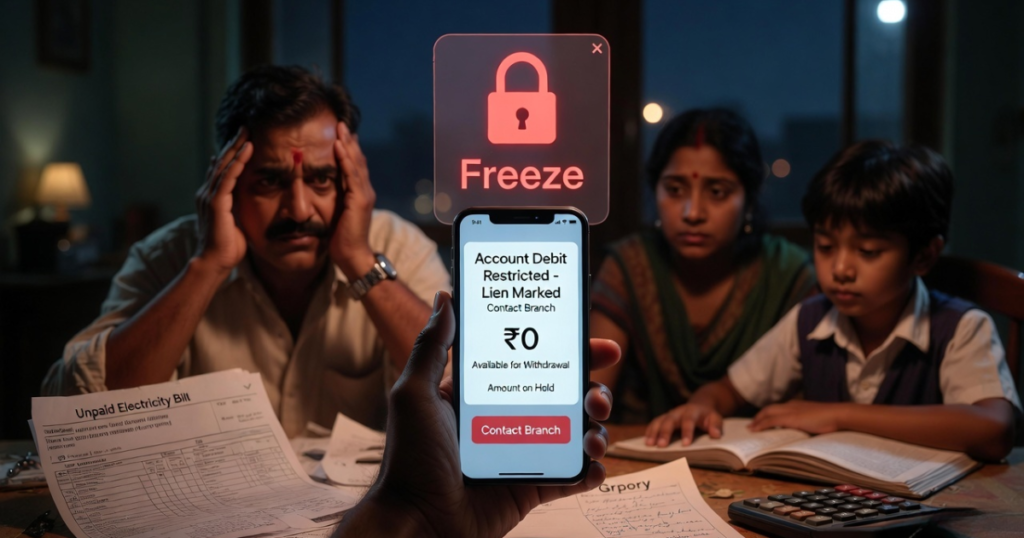
Can a Frozen Account Be Unfrozen?
Yes, but the process is not instant.
Generally:
- You must visit your bank.
- Provide explanation and written statement.
- Respond to police notice if issued.
- Cooperate with investigation.
- In some cases, court order may be required for release.
If investigation confirms no intentional involvement, restrictions may be removed.
However, if evidence shows active participation, legal action continues.
Important Awareness Points
Never:
- Share ATM card or PIN
- Share internet banking login
- Share OTP
- Allow unknown deposits and withdrawals
- Open accounts for strangers
Even small commission work can create serious long-term consequences.
Final Awareness Message
Cybercrime networks are increasingly using ordinary citizens as financial channels. Many account holders only realize the seriousness when their account is frozen or they receive a police call.
Quick money offers involving bank accounts are high risk.
Your bank account is legally your responsibility.
Stay informed. Stay cautious. Protect your financial identity.