
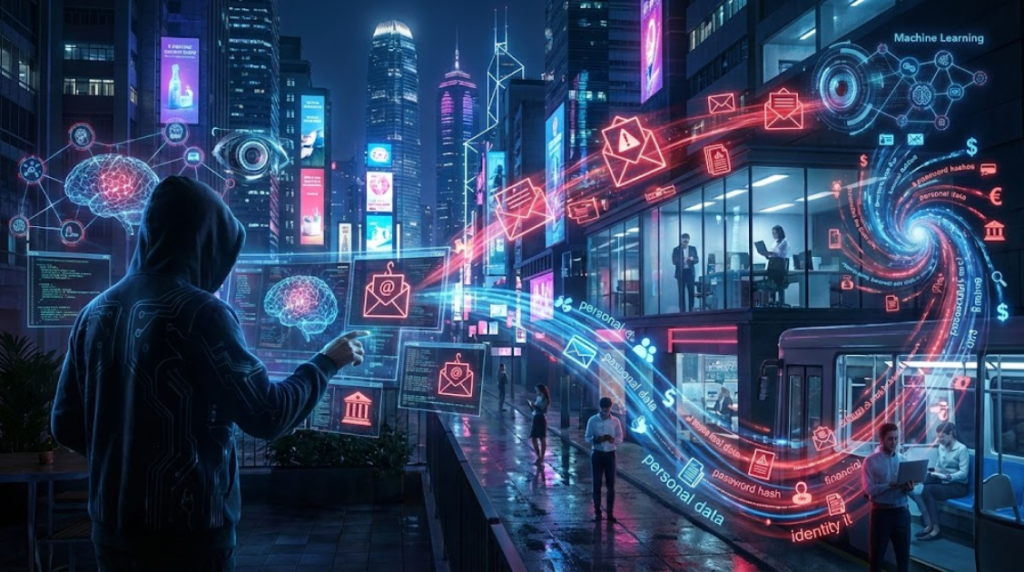
Hong Kong experienced its highest-ever number of cyber incidents in 2025, raising serious concerns among cybersecurity authorities and businesses. Official data shows that 15,877 cybersecurity incidents were recorded during the year, marking a significant increase compared to previous years.
The sharp rise was largely driven by phishing attacks, which have evolved rapidly with the use of Artificial Intelligence. Cybercriminals are now using AI tools to craft emails and messages that closely imitate real communication from banks, employers, service providers, and government-related platforms. These messages often appear legitimate, making them difficult for users to identify as fraudulent.
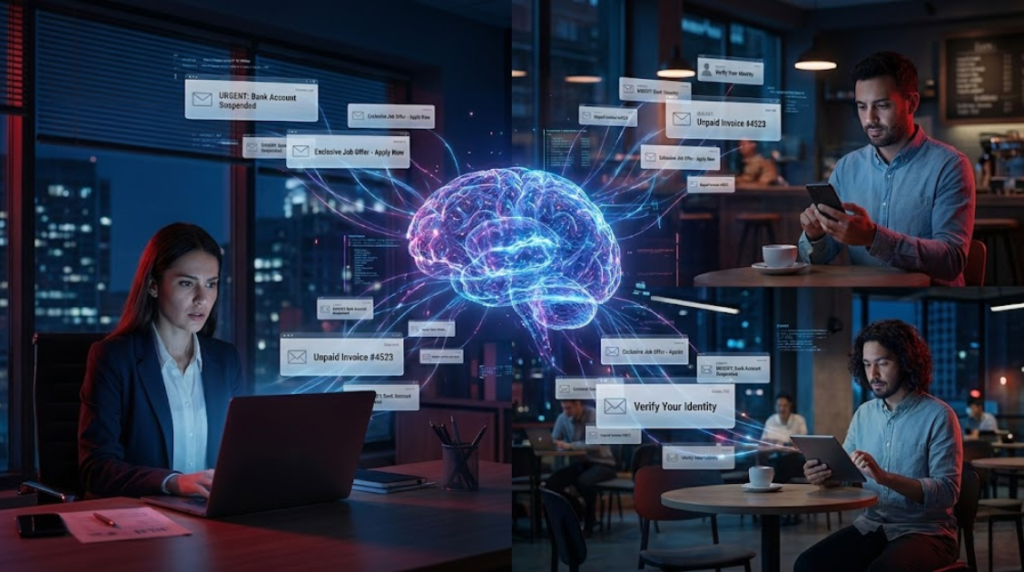
Security experts have warned that AI-powered phishing is far more dangerous than traditional scams. Unlike older phishing attempts filled with obvious errors, modern attacks use accurate language, professional formatting, and realistic sender details. As a result, even experienced users and corporate employees are increasingly falling victim to financial fraud, identity theft, and account takeovers.
Authorities noted that small businesses and individual users were among the most affected, as many still rely on basic email security and lack advanced detection tools. Several incidents also involved business email compromise, leading to financial losses and data exposure.
Cybersecurity analysts describe this trend as a global warning, not limited to Hong Kong alone. With AI tools becoming cheaper and more accessible, experts expect similar attack patterns to increase worldwide in 2026, particularly targeting the banking, e-commerce, and corporate sectors.
The Hong Kong cyber incident data highlights a major shift in cybercrime tactics. Attacks are no longer just technical — they are increasingly psychological and trust-based, exploiting human behavior rather than system vulnerabilities. Without stronger awareness and improved email security measures, AI-driven phishing is likely to become one of the most serious cyber threats in the coming years.