Cybersecurity Learning Resources: Career Guide, Skills, Jobs & Study Path
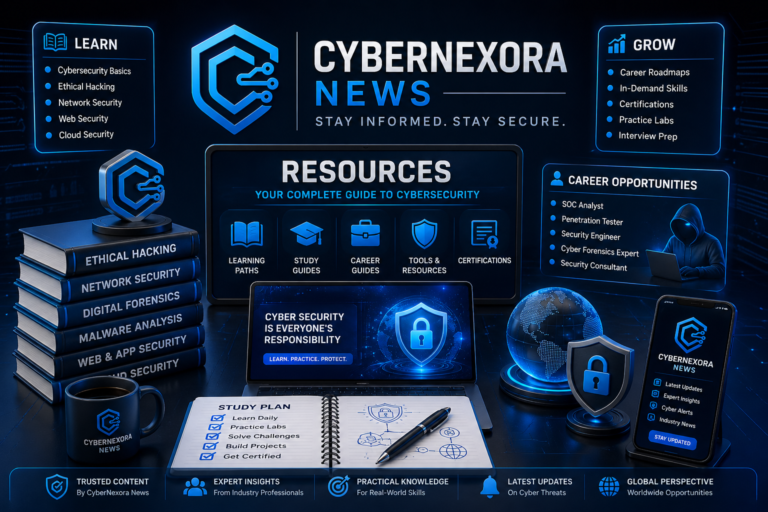
Cybersecurity is one of the fastest-growing fields in the digital world, but for many students and professionals, getting started can feel confusing. Questions like where to begin, what to study, which skills are required, and what career opportunities exist often create uncertainty. The Resources section of CyberNexora News is built to solve exactly these problems by providing clear, structured, and practical guidance for anyone interested in cybersecurity.
This section is not just about theory — it focuses on real-world learning paths, career insights, and industry-relevant knowledge that helps both beginners and professionals make informed decisions.
What is Cybersecurity?
Cybersecurity is the practice of protecting systems, networks, and data from digital attacks. These attacks can include hacking, data breaches, phishing, ransomware, and identity theft. As businesses and governments rely more on digital infrastructure, the demand for cybersecurity professionals continues to increase globally.
Understanding cybersecurity is important not only for professionals but also for students and everyday users. Basic awareness can help prevent online fraud and protect personal data.
How to Start Learning Cybersecurity
One of the biggest challenges beginners face is not knowing where to start. Instead of jumping into advanced topics, it is important to build a strong foundation.
Start by learning the basics of networking, operating systems, and how the internet works. Concepts like IP addresses, DNS, HTTP/HTTPS, and firewalls are essential. Once the fundamentals are clear, move toward cybersecurity-specific topics such as ethical hacking, vulnerability assessment, and penetration testing.
Practical learning is very important in this field. Setting up a lab environment using tools like virtual machines helps you understand real attack and defense scenarios. Platforms that offer hands-on labs and challenges can significantly improve your skills.
Key Skills Required in Cybersecurity
To build a successful career in cybersecurity, certain skills are essential:
Technical knowledge is the foundation. Understanding networks, systems, and security tools is critical.
Analytical thinking helps in identifying vulnerabilities and understanding attack patterns.
Problem-solving skills are required to respond to incidents and fix security issues.
Awareness of current threats is important because cyber attacks evolve constantly.
Communication skills also matter, especially when explaining risks or reports to non-technical stakeholders.
Cybersecurity Career Options
Cybersecurity offers a wide range of career opportunities depending on your interests and skill level.
Ethical Hacker or Penetration Tester focuses on finding vulnerabilities in systems before attackers do.
SOC Analyst monitors systems and responds to security incidents in real time.
Security Engineer works on designing and implementing secure systems.
Cybersecurity Analyst analyzes threats and improves organizational security posture.
Digital Forensics Expert investigates cybercrimes and collects digital evidence.
These roles are in demand across industries such as finance, healthcare, IT, e-commerce, and government sectors.
Cybersecurity Job Market and Demand
The global cybersecurity market is growing rapidly due to increasing cyber threats and digital transformation. Organizations are investing heavily in security to protect their data and infrastructure.
There is a shortage of skilled cybersecurity professionals worldwide, which creates strong job opportunities for learners entering this field. Salaries in cybersecurity are also competitive compared to many other IT roles.
For students, this means that with the right skills and practical knowledge, entering the cybersecurity industry is highly achievable.
Certifications and Learning Paths
Certifications can help validate your skills and improve job opportunities. Some widely recognized certifications include:
CompTIA Security+ for beginners
Certified Ethical Hacker (CEH) for ethical hacking
Certified Information Systems Security Professional (CISSP) for advanced professionals
However, certifications alone are not enough. Practical knowledge, projects, and real-world experience play a major role in career growth.
Avoiding Common Mistakes
Many beginners make the mistake of jumping directly into advanced hacking tools without understanding basics. This leads to confusion and slow progress.
Another common mistake is relying only on theoretical knowledge without hands-on practice. Cybersecurity is a practical field, and real experience matters.
Following random tutorials without a clear roadmap can also waste time. It is important to follow a structured learning path.
Why CyberNexora Resources Section is Useful
The Resources section of CyberNexora News is designed to simplify cybersecurity learning by providing:
Clear study guides for beginners and professionals
Career roadmaps and skill development paths
Latest industry trends and updates
Practical tips and learning strategies
Easy-to-understand explanations without unnecessary complexity
This helps users avoid confusion and focus on what truly matters.
Final Thoughts
Cybersecurity is not just a career — it is a critical skill in today’s digital world. Whether you are a student exploring career options or a professional looking to switch domains, the right guidance can make a huge difference.
By following a structured approach, building practical skills, and staying updated with the latest trends, anyone can build a strong foundation in cybersecurity.
The Resources section of CyberNexora News aims to guide you at every step, helping you learn smarter, grow faster, and build a successful future in cybersecurity.