
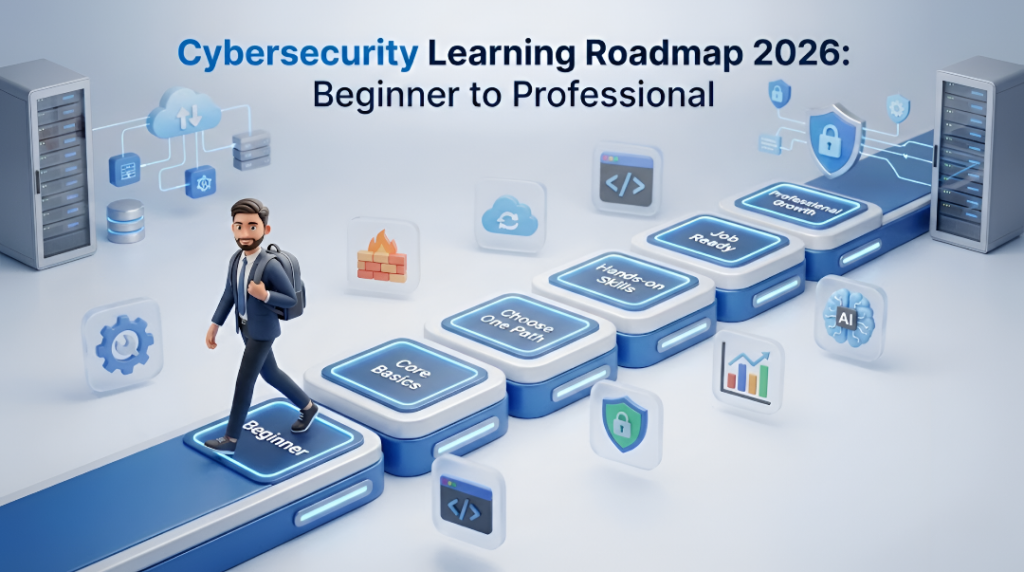
Beginner to Professional (Practical & Focused)
The biggest problem in cybersecurity learning is not a lack of resources.
It is lack of direction.
This roadmap is written to help students avoid wasting time, avoid learning unnecessary things, and focus only on what is actually required for real cybersecurity roles.
One important truth to understand from the start:
You do NOT need to learn everything in cybersecurity.
Phase 1: Learn Only the Basics That Matter
Time required: 1–2 months
At the beginning, many students either rush too fast or go too deep into topics they don’t need.
Focus only on:
- How the internet works (basic understanding)
- Networking fundamentals (IP, ports, DNS, HTTP – conceptual level)
- Basic Windows and Linux usage
- Simple command-line usage
You do NOT need to:
- Become a networking expert
- Learn advanced Linux administration
Goal:
Understand how systems work, not master them.
Phase 2: Understand What Cybersecurity Actually Is
Time required: 1–2 months
Before choosing tools or courses, you must understand the field itself.
Learn:
- What cybersecurity roles exist
- Difference between SOC, Pentesting, Cloud Security, Forensics, GRC
- Common attack types at a high level
- Basic security concepts such as authentication, access, and logs
You do NOT need to:
- Memorize attack techniques
- Write exploits at this stage
Goal:
Get a clear picture of the cybersecurity landscape.
Phase 3: Choose ONE Career Path (Most Important Step)
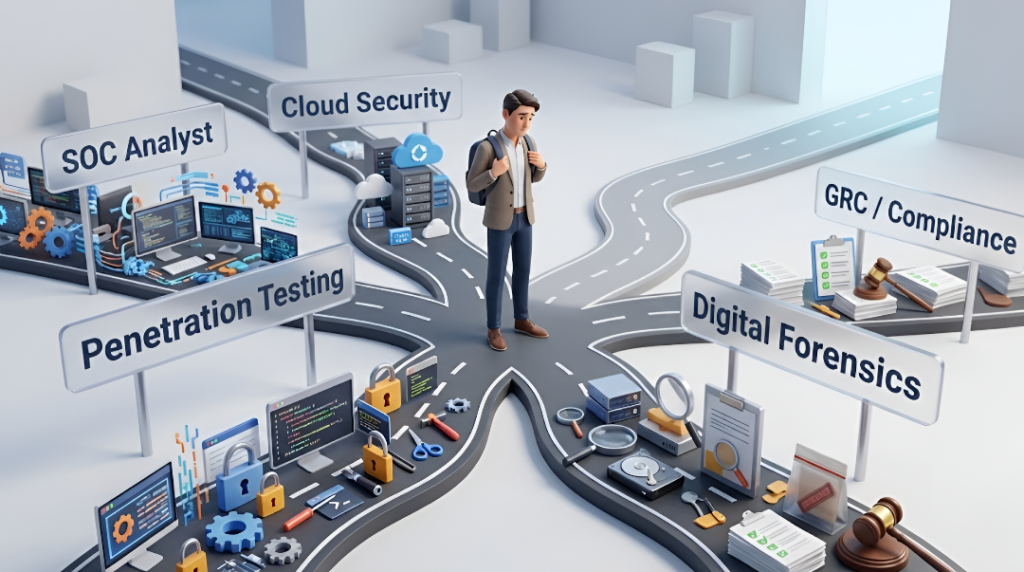
This is where most students make mistakes.
Cybersecurity does not reward people who try to learn everything.
It rewards specialists.
Popular paths in 2026 include:
- SOC Analyst (Blue Team)
- Vulnerability Assessment & Penetration Testing
- Cloud Security
- Digital Forensics
- GRC (Governance, Risk, Compliance)
Choose one path only.
Goal:
Be clear about which role you are preparing for.
Phase 4: Learn Skills Only for Your Chosen Role

Time required: 3–4 months
Once a path is chosen, your learning must become focused.
Examples:
- SOC Analysts focus on logs, alerts, SIEM, and incidents
- Pentesters focus on web vulnerabilities, tools, and reporting
- Cloud security roles focus on IAM, misconfigurations, and monitoring
You do NOT need to:
- Learn tools used by other roles
- Chase every new tool or trend
Goal:
Be capable of doing the job you are preparing for.
Phase 5: Hands-On Practice Is Mandatory
Watching videos or reading blogs is not enough.
You must:
- Practice in labs
- Work on realistic scenarios
- Build small but meaningful projects
- Be able to explain what you did
Certificates alone are not proof of skills.
Goal:
Be able to say, “I have done this myself.”
Phase 6: Prepare for Job or Internship

Time required: 1–2 months
At this stage, learning is less important than presentation.
Focus on:
- A simple, honest resume
- Role-based interview preparation
- A clean and truthful LinkedIn profile
Do NOT:
- Add skills you don’t have
- Claim expertise you cannot explain
Goal:
Build trust, not hype.
Phase 7: Professional Growth (After Getting the Role)

Real learning accelerates after you start working.
- Learn from real incidents
- Improve depth in your chosen domain
- Stay updated, but remain focused
You still do NOT need to learn everything.
Goal:
Become strong in your role, not scattered across many.
Final Reality Check
- Learning everything is not required
- Learning everything is not practical
- Focus saves time and effort
Cybersecurity is a long-term career.
With the right direction, no effort is wasted.