Cyber Safety Tips: How to Protect Yourself from Online Fraud & Cyber Attacks
Cybercrime is increasing rapidly across the world, affecting individuals, businesses, and even governments. From phishing scams and fake job offers to ransomware attacks and identity theft, cyber threats are evolving every day. In such a digital environment, understanding how to protect yourself from cyber fraud is no longer optional — it is essential.
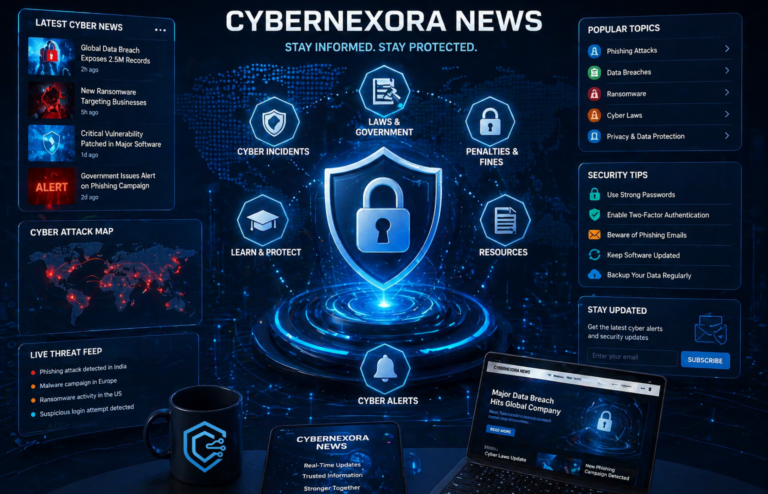
The Learn & Protect section of CyberNexora News is designed to provide clear, practical, and real-world cybersecurity tips that help users stay safe online. Whether you are using social media, online banking, or business platforms, following the right security practices can significantly reduce your risk.
Understanding Common Cyber Threats
Before learning protection techniques, it is important to understand the most common cyber threats:
Phishing attacks are one of the most widespread methods used by attackers. These involve fake emails, messages, or websites designed to trick users into sharing sensitive information such as passwords or bank details.
Data breaches occur when hackers gain unauthorized access to databases and leak personal or financial information. These incidents can impact millions of users at once.
Ransomware attacks involve malicious software that locks your system or data and demands payment to restore access.
Social engineering attacks manipulate human behavior rather than technical systems, making users unknowingly reveal confidential information.
Fake job scams, investment frauds, and impersonation attacks are also increasing, especially on platforms like LinkedIn and WhatsApp.
Essential Cyber Safety Tips
To stay protected from these threats, follow these proven cybersecurity practices:
Always verify links before clicking. If you receive an email or message with a link, check the URL carefully. Avoid clicking on suspicious or shortened links.
Use strong and unique passwords for each account. A combination of uppercase letters, numbers, and symbols makes passwords harder to crack. Avoid using the same password across multiple platforms.
Enable two-factor authentication (2FA) wherever possible. This adds an extra layer of security even if your password is compromised.
Keep your devices and software updated. Regular updates fix security vulnerabilities that hackers often exploit.
Avoid using public Wi-Fi for sensitive activities such as banking or logging into important accounts. If necessary, use a secure VPN.
Do not share personal or financial information on unknown websites or with unverified individuals.
Be cautious of urgent messages. Cyber attackers often create panic situations like “Your account will be blocked” to force quick actions.
Protecting Against Data Breaches
Data breaches can happen even if you follow all precautions, so it is important to stay alert:
Regularly check if your email or data has been exposed in a breach using trusted tools.
Change passwords immediately if you suspect any unauthorized activity.
Monitor your bank transactions and account activity frequently.
Avoid storing sensitive information in plain text on your devices.
Safe Use of Social Media
Social media platforms are a common target for cybercriminals:
Do not overshare personal details such as phone numbers, addresses, or travel plans.
Be cautious when accepting friend or connection requests from unknown profiles.
Check privacy settings and limit who can view your information.
Avoid clicking on unknown links sent via direct messages.
Business and Professional Security
For professionals and businesses, cybersecurity is even more critical:
Train employees about phishing and social engineering attacks.
Use secure email systems and endpoint protection tools.
Regularly back up important data to prevent loss during ransomware attacks.
Implement access control policies to limit sensitive data exposure.
Staying Updated with Latest Threats
Cyber threats evolve continuously, so staying informed is key. CyberNexora News provides regular updates on:
Latest cyber attacks and data breaches worldwide
New phishing techniques and scam trends
Security vulnerabilities and patches
Government alerts and cybersecurity advisories
By staying updated, users can recognize new attack patterns early and take preventive action.
Final Thoughts
Cybersecurity is not just about technology — it is about awareness and behavior. Most cyber attacks succeed because of human error rather than technical flaws. By following simple but effective security practices, you can protect your personal data, financial information, and digital identity.
The Learn & Protect section of CyberNexora News aims to simplify cybersecurity for everyone. Whether you are a beginner or a professional, these practical tips can help you stay safe in an increasingly connected world.