
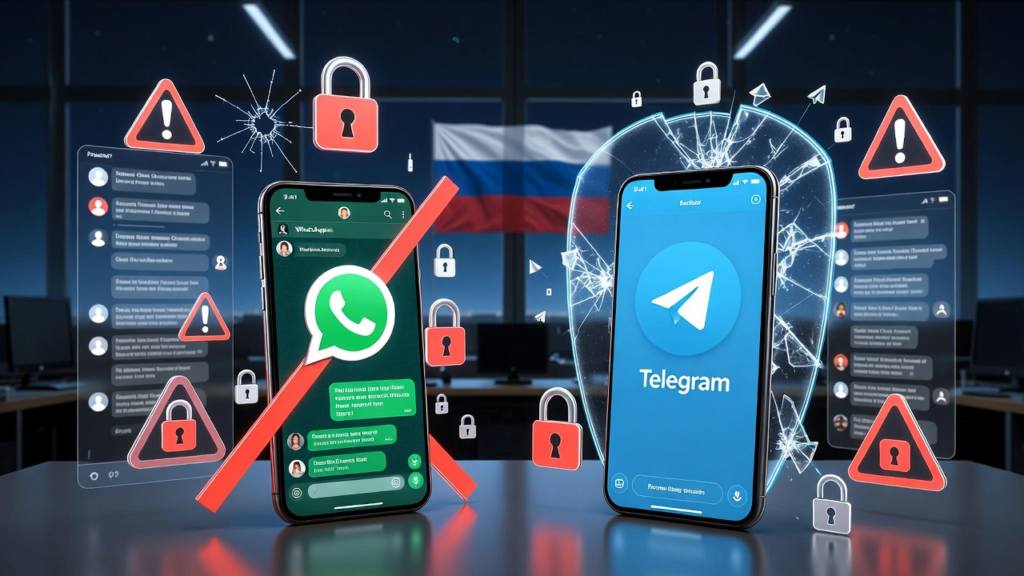
Russia has effectively blocked WhatsApp across the country and stepped up regulatory and technical pressure on Telegram, signaling a sharper turn in its approach to encrypted communication platforms. The move has disrupted everyday messaging for millions and raised broader concerns about digital access, privacy, and cybersecurity.
Reports from users across multiple regions indicate that WhatsApp services stopped functioning normally, with messages failing to send or receive. The disruption followed regulatory actions that removed the platform from Russia’s approved digital services ecosystem. While officials have avoided calling it a formal ban, network-level blocking has made the app largely unusable without technical workarounds.

Telegram has not been completely shut down, but its position has weakened noticeably. Authorities have increased enforcement pressure, including traffic throttling and renewed compliance demands related to content control and data governance. These measures have caused intermittent service issues and sparked criticism even from groups that previously relied on Telegram as a primary communication channel.
Russian officials justify these steps under the concept of “digital sovereignty,” arguing that foreign platforms must comply fully with national laws and security requirements. WhatsApp’s end-to-end encryption model and its refusal to provide mechanisms for state access have long placed it at odds with these regulations. Telegram, despite its popularity inside Russia, has similarly resisted full compliance, leaving it exposed to continued restrictions.
Alongside the crackdown, authorities have promoted the use of domestically developed messaging applications that operate under Russian jurisdiction. Cybersecurity specialists warn that this shift may significantly reduce user privacy, as local platforms are more likely to allow lawful access and monitoring by state agencies. For journalists, businesses, and civil society groups, the change narrows options for secure communication.
From a cybersecurity perspective, this development is best classified as a state-level cyber incident. Although no malware or system breach is involved, the impact on encrypted communication, digital infrastructure, and user security is substantial. Blocking widely trusted platforms often forces users toward unverified alternatives or risky circumvention tools, which can increase exposure to fraud, surveillance, and cybercrime.
Internationally, Russia’s actions reflect a broader trend in which governments treat control over digital platforms as a component of national security. Rather than focusing solely on protecting users from cyber threats, policy enforcement is increasingly shaping how and where secure communication is allowed.
The blocking of WhatsApp and the tightening grip on Telegram mark a decisive moment in Russia’s internet governance strategy. For cybersecurity professionals, this episode underscores a key reality: encryption, platform access, and state regulation are now central elements of the global cyber risk landscape.