
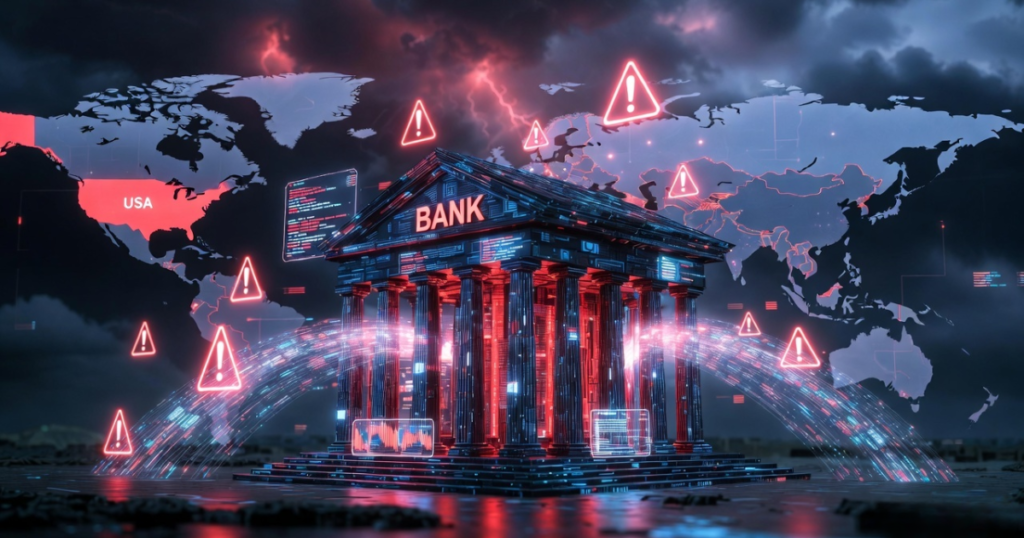
Recent geopolitical developments in the Middle East have prompted U.S. financial institutions to strengthen their cybersecurity monitoring and preparedness. Security experts warn that periods of international conflict often lead to an increase in cyber activity targeting critical infrastructure.
According to industry analysts, banks and financial organizations are currently paying close attention to potential cyber threats that could originate from groups aligned with Iran. These threats may include disruptive actions such as Distributed Denial-of-Service (DDoS) attacks, which attempt to overwhelm servers and temporarily disrupt online services.
The financial sector is considered one of the most attractive targets for cyber operations because it supports essential systems such as payment networks, trading platforms, and settlement infrastructure. Even short disruptions in these systems can affect markets and financial transactions globally.
Organizations like the Financial Services Information Sharing and Analysis Center have previously noted that global political conflicts often lead to increased hacktivist activity and cyber campaigns aimed at Western financial institutions.
Although large-scale disruptions have been rare in recent years, experts believe that smaller incidents such as DDoS attacks, ransomware attempts, or probing activities could increase when geopolitical tensions rise.
Financial institutions are therefore focusing on strengthening monitoring systems, improving incident-response readiness, and coordinating with industry cybersecurity groups to ensure the resilience of critical financial infrastructure.
As global tensions increasingly extend into cyberspace, maintaining strong cybersecurity defenses remains essential for protecting financial stability and digital trust.