
Introduction: Student Resume Malware — Why It Matters
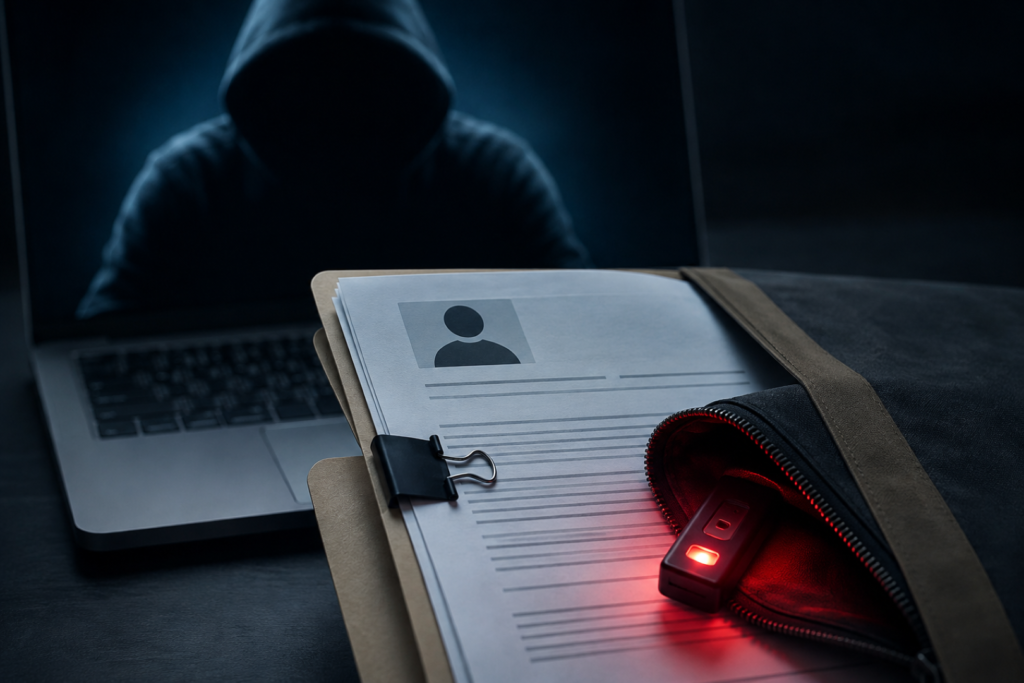
Student Resume Malware is reportedly being used to target researchers and professors through convincing graduate-school applications. Instead of containing only a legitimate curriculum vitae, the malicious ZIP archive reportedly carries an executable that opens a genuine Word resume as a decoy while malware operates in the background.
The campaign demonstrates how attackers can exploit routine academic communication. Security guidance from the Cybersecurity and Infrastructure Security Agency (CISA) recommends filtering potentially dangerous file types and examining compressed archives that may conceal malicious content. A professor expecting applications from prospective students may be more willing to open an unfamiliar attachment, particularly when the document appears relevant to their research interests.
The Student Resume Malware infection chain uses SNOWLIGHT as an intermediate component before deploying VShell, a remote-access tool that can provide attackers with a foothold on targeted Windows systems. The available reporting does not establish the identity of the operators or their ultimate objective.
Who Is Being Targeted?
The Student Resume Malware campaign appears focused on academic researchers, professors and laboratory personnel rather than ordinary corporate users. Researchers regularly receive resumes, research proposals, datasets and other files from unfamiliar people, making these workflows attractive for social engineering.
The use of an academic application as the lure also makes the attack harder to recognize. The recipient may focus on the candidate’s qualifications and research interests instead of examining whether the attached archive contains executable content.
Student Resume Malware: Technical Breakdown
The attack reportedly follows a multi-stage process designed to keep the victim focused on a legitimate-looking document.
Timeline of Events
- A targeted researcher receives what appears to be a graduate-school or research application.
- The application includes a malicious ZIP archive.
- An executable inside the archive launches a genuine Word resume as a decoy.
- The malicious component continues executing in the background.
- SNOWLIGHT is delivered and operates as a staging component.
- SNOWLIGHT subsequently enables deployment of VShell, providing remote-access capabilities.
What Systems Are Potentially Affected
The reported campaign specifically involves Windows systems. Potentially affected components include:
- Windows workstations used by researchers and professors
- Systems that permit execution of files extracted from archives
- Endpoints with insufficient application-control or endpoint-detection policies
- Research environments where email attachments are routinely exchanged
The reported memory-based execution chain can make conventional file-focused detection more difficult. Security teams should therefore examine process, memory and network telemetry in addition to newly created files.
Potential Risks & Impact
Remote-Access Risk
VShell is a remote-access malware family written in Go and has been observed in campaigns involving multiple platforms. Security researchers have documented its ability to support remote interaction and file operations, making an infected research workstation a potentially valuable foothold.
Business and Research Risk
Student Resume Malware could expose sensitive research materials, credentials, intellectual property and internal communications. For universities and laboratories, unauthorized access could also affect research continuity and collaboration.
Regulatory and Compliance Risk
If a compromised system stores personal information, confidential research or regulated data, an incident could create additional reporting, investigation and compliance obligations. The precise regulatory impact would depend on the affected organization, information involved and applicable laws.
Official Response / Statement
No official statement regarding Student Resume Malware from an affected university, research institution or identified victim has been provided in the supplied news input. The available reporting describes the campaign and its technical characteristics but does not establish a confirmed victim count or a definitive attribution.
Security teams should therefore distinguish confirmed technical observations from assumptions about the attackers’ identity or objectives.
Industry Context: Why This Attack Is Increasing
Student Resume Malware shows why academic environments are particularly attractive to social engineers because researchers often work with external collaborators and receive unsolicited documents. The attack also reflects a broader shift toward using legitimate-looking professional content as malware delivery mechanisms.
Security researchers have previously documented SNOWLIGHT being used to deliver VShell and other payloads, showing that the malware combination is not limited to a single incident.
CyberNexora readers can follow recent cyber incidents and malware campaigns for related developments.
How to Protect Yourself or Your Organization
- Verify unsolicited applications: Contact the supposed applicant through independently verified channels before opening unexpected archives.
- Inspect archive contents: Do not assume a ZIP file containing a resume is safe. Check whether it contains executable or script files.
- Show file extensions: Enable visible file extensions in Windows so executable files are not mistaken for ordinary documents.
- Block executable attachments: Organizations should consider mail controls that identify and block executable content. Microsoft provides guidance for blocking executable attachments through Exchange Online mail-flow rules.
- Use endpoint detection: Monitor unusual process creation, memory execution and unexpected outbound connections.
- Use attachment sandboxing: Detonate suspicious archives and files in an isolated environment before allowing users to interact with them.
- Restrict application execution: Prevent users from running unnecessary executables from email, downloads and temporary directories.
- Report suspicious files quickly: If an unexpected attachment has been executed, isolate the system and notify the security team immediately.
CISA guidance also recommends controls that reduce malware execution following phishing, including blocking executable and mislabeled file extensions.
For additional practical guidance, see CyberNexora’s Learn & Protect cybersecurity resources.
Indicators of Compromise (IoCs)
Based on the supplied reporting, defenders should monitor for:
- SNOWLIGHT appearing unexpectedly on Windows endpoints
- VShell or related remote-access activity
- Executables concealed inside supposedly academic ZIP archives
- A Word resume opening while an unrelated process runs simultaneously
- Suspicious memory-based execution following archive extraction
- Unexpected outbound connections from a workstation after opening a resume archive
Specific hashes, domains and IP addresses were not included in the supplied news input and are therefore not listed here.
Key Takeaways
- Student Resume Malware demonstrates how fake academic applications can be used as sophisticated malware lures.
- Student Resume Malware reportedly combines a ZIP-based delivery method with a legitimate-looking Word decoy.
- SNOWLIGHT acts as part of the infection chain before VShell provides remote-access functionality.
- Memory-based execution means file-only detection may miss important activity.
- Universities should combine email filtering, endpoint monitoring, application control and user awareness.
Conclusion: Student Resume Malware and What Happens Next
Student Resume Malware highlights a growing security challenge for universities and research organizations: trusted professional workflows can become effective delivery channels for malware. A convincing resume does not make an attachment safe, particularly when an archive contains executable content.
Organizations should watch for similar academic-themed lures and prioritize behavioral detection alongside traditional malware indicators. Further reporting may clarify the campaign’s scope, attribution and any confirmed victims. Readers can also monitor CyberNexora’s Cyber Incidents coverage for subsequent developments.
Frequently Asked Questions(FAQs)
Student Resume Malware refers to the reported campaign using fake academic applications to deliver malware to researchers. The infection reportedly uses SNOWLIGHT and VShell against targeted Windows systems.
The attack reportedly hides an executable inside a malicious ZIP archive. The executable opens a genuine-looking Word resume while the malware continues operating in the background.
SNOWLIGHT is a malware staging component that can deliver another payload. VShell is a Go-based remote-access tool that has been observed providing attackers with remote interaction capabilities.
The reported activity appears to target researchers, professors and academic laboratory personnel. The academic application theme is designed to make the malicious attachment appear relevant and trustworthy.
Researchers should verify unsolicited applications, inspect ZIP contents, display file extensions and avoid executing unexpected files. Organizations should also use email filtering, endpoint detection and application controls.
No definitive attribution is established by the supplied news input. SNOWLIGHT and VShell have appeared in other threat activity, but those overlaps alone do not prove that the same operator conducted this particular campaign.