
Freelancing platforms like Fiverr have opened global opportunities for millions of professionals, but at the same time, they have become a growing target for cybercriminals. A new wave of scams is actively targeting freelancers using fake project links, phishing pages, and email verification traps designed to steal data or exploit unpaid work.
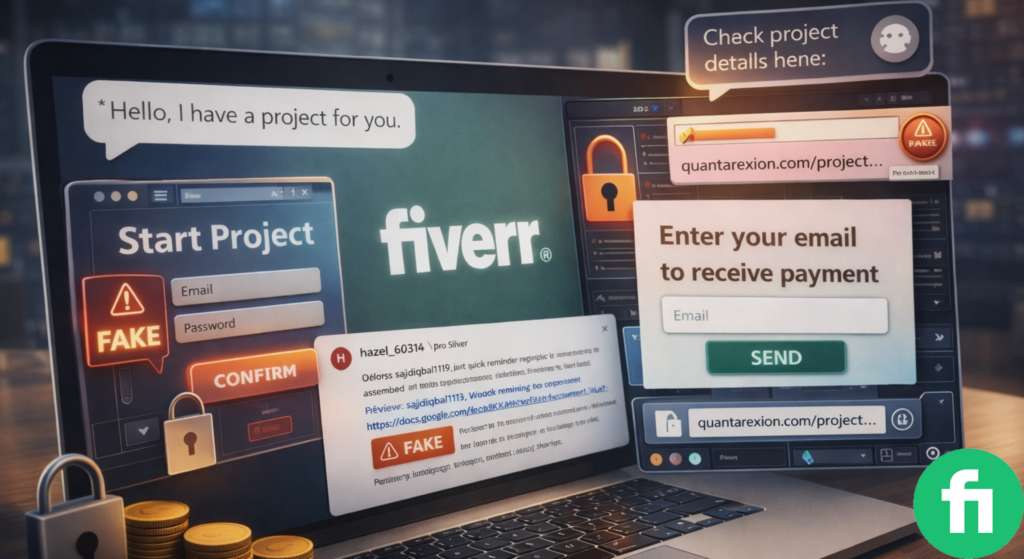
Recent incidents show a clear pattern in how these scams operate. Attackers pose as genuine clients and initiate conversations that appear completely normal. The interaction usually starts with simple messages like “Hello” or “I have a project for you,” making it difficult to detect any suspicious intent at the beginning.
Once the freelancer responds, the scam quickly progresses. The attacker shares an external link, claiming it contains project details, files, or instructions required to begin the work. This is the first major red flag. Fiverr officially recommends that all communication and file sharing should remain within its platform, but scammers deliberately try to move users outside this secure environment.
The shared links often look professional and trustworthy. Some mimic real company websites, while others are designed to resemble Fiverr-like dashboards. In many cases, the domain name appears legitimate at first glance, but closer inspection reveals slight variations or unfamiliar extensions. This technique is used to trick users into believing they are interacting with a genuine system.
When a freelancer clicks on such a link, they are redirected to a fake page. These pages typically display messages like “Start Project,” “Verify Order,” or “Complete Payment Setup.” At this stage, the scam enters its most critical phase.
The fake page often asks the user to enter their email address, claiming it is required to receive payment or verify the project. This is one of the most dangerous steps in the scam. Once the email is entered, the attacker may initiate further phishing actions. In some cases, the user is redirected to a fake login page that looks identical to Fiverr or email providers, where they are asked to enter their password or OTP.
If the freelancer enters these details, the attacker can gain access to their email account or Fiverr account. This can lead to account takeover, unauthorized actions, or further scams using the victim’s identity. Even if login credentials are not directly stolen, the email can be used for targeted phishing or spam campaigns.
Another variation of this scam involves fake payment promises. After entering the email, users may see messages like “Payment is pending” or “Complete verification to receive funds.” This creates a false sense of security and encourages the victim to continue the process. However, no real payment is ever made.
In some cases, freelancers are asked to start working on the project through the external platform. They may complete tasks, submit files, or spend hours working, only to realize later that no official order was ever placed on Fiverr. This results in complete loss of time and effort, with no compensation.
The success of these scams depends heavily on psychological manipulation. Scammers create urgency by saying things like “Client is waiting,” “Start immediately,” or “Limited time project.” This pressure reduces the chances of careful thinking. Additionally, the use of professional language, real-looking data, and structured communication builds trust quickly.
Cybersecurity experts classify this as a social engineering attack rather than a technical hack. Instead of breaking into systems, attackers manipulate users into taking unsafe actions. This makes awareness the most effective defense.
There are several clear warning signs that freelancers should watch for. Any request to move communication outside Fiverr is suspicious. External links, especially from unknown domains, should never be trusted. If a client asks for email verification or claims that payment requires external steps, it is almost certainly a scam.
Another important indicator is the absence of a proper Fiverr order. Legitimate clients always create an order through the platform before work begins. If someone asks you to start work without an official order, it is a major red flag.
To protect themselves, freelancers should follow a few essential practices. Always keep communication within Fiverr. Never click on unknown links sent by clients. Do not enter email, passwords, or OTP on external websites. Verify every order directly from the Fiverr dashboard before starting any work.
Enabling two-factor authentication (2FA) adds an extra layer of security to accounts. Regularly monitoring account activity and reporting suspicious users can also help prevent further damage.
If a freelancer encounters such a scam, they should immediately stop interaction and report the user to Fiverr. Early reporting helps the platform take action and protect other users from falling victim.
The rise of fake Fiverr link scams reflects a larger trend in the digital economy. As online work increases, cybercriminals are developing more advanced and convincing methods to exploit users. Freelancers, especially beginners, are often targeted because they may not be fully aware of these tactics.
Awareness is the key to prevention. Understanding how these scams work can help freelancers identify threats before it is too late. A simple mistake, such as clicking a link or entering an email, can lead to serious consequences.
In today’s freelancing environment, trust should never be blind. Every request must be verified, and every action should be taken with caution. Platforms like Fiverr provide built-in security systems, but users must actively follow safe practices to stay protected.
As cyber threats continue to evolve, freelancers must stay informed and alert. The safest approach is simple: if something feels unusual, it probably is. Avoid shortcuts, follow platform rules, and prioritize security over urgency.
The digital workspace offers great opportunities, but it also comes with risks. Staying aware and cautious is the only way to ensure a safe and successful freelancing journey.