
Close Menu
    What's Hot

    Child Online Safety India: Protect Kids from Cyber Threats

    July 28, 2026

    Vatican Click to Pray API Flaw Exposes 700K Users

    July 28, 2026

    Bank of Baroda Data Breach: Alleged 1TB Leak Investigated

    July 27, 2026

    TELESHIM Malware Campaign: Telegram C2 Targets Governments

    July 27, 2026

    Credential Stuffing: Your Leaked Password Is Being Tested on Every Account You Own Right Now

    July 27, 2026
    Facebook X (Twitter) Instagram
    Tuesday, July 28
    CyberNexora News
    X (Twitter) Instagram LinkedIn
    • Home
    • Cyber Incidents
    • laws & government
    • Penalties
    • Learn & Protect
    • Resources
    • Contact Us
    Get Cyber Alerts
    CyberNexora News
    Home»Cyber Incidents»Hackers Are Wiping Exposed MongoDB Databases and Leaving Ransom Notes

    Hackers Are Wiping Exposed MongoDB Databases and Leaving Ransom Notes

    Zeel_CyberexpertBy Zeel_CyberexpertFebruary 2, 2026Updated:March 4, 20262 Mins Read
    Facebook Twitter LinkedIn Email Telegram

    Cybersecurity researchers are warning about an ongoing wave of attacks targeting exposed MongoDB database instances on the internet. In these attacks, hackers are not stealing data — instead, they are completely deleting databases and replacing them with ransom notes demanding payment.

    The attacks mainly affect MongoDB servers that are misconfigured and accessible without authentication. Attackers use automated scanning tools to find such databases, gain access within seconds, erase all collections, and then create a new database containing a ransom message. Victims are asked to pay a small amount in cryptocurrency in exchange for a claimed data recovery solution.

    Security experts have made it clear that paying the ransom does not guarantee data recovery. In many reported cases, the deleted data could not be restored even after payment, as attackers often do not possess any real backups. The attack works more like data destruction combined with extortion, rather than traditional ransomware.
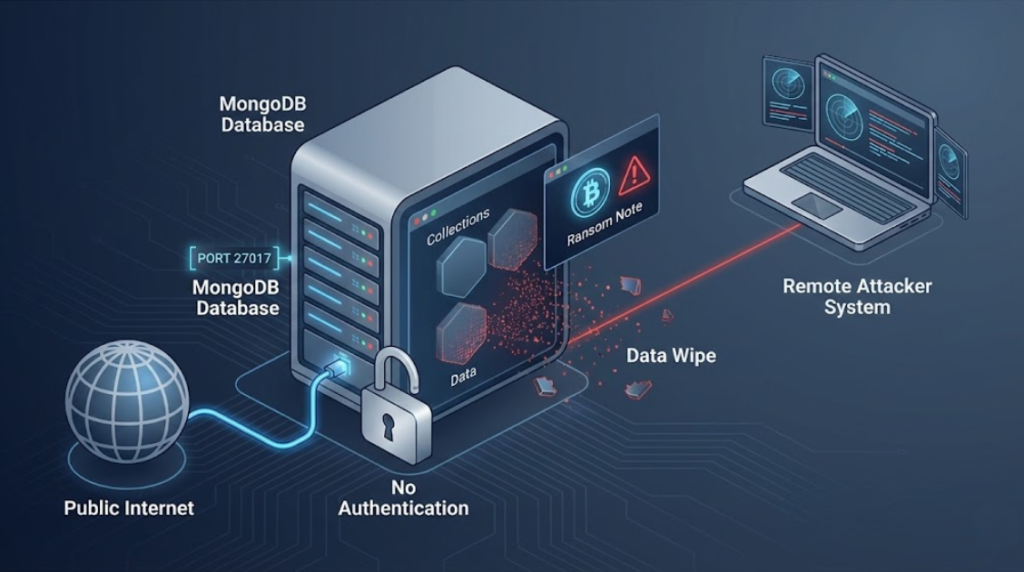
    Researchers have observed that thousands of MongoDB instances remain publicly exposed, often due to default configurations, lack of firewall rules, or databases being directly accessible from the internet. These attacks do not rely on advanced vulnerabilities or zero-day exploits — they succeed mainly because of basic security misconfigurations.

    Administrators are strongly advised to restrict public access to MongoDB, enable authentication, use network firewalls, and ensure regular backups are in place. Experts emphasize that properly configured MongoDB servers are not affected by this campaign.

    This incident is a reminder that even simple configuration mistakes can lead to serious data loss. Organizations and developers using MongoDB must treat database exposure as a critical risk, not a minor oversight.

    Related Articles

  • How to Recover a Hacked Instagram Account — India’s Complete Step-by-Step Guide Introduction: How to Recover a Hacked Instagram Account — Why...
  • Signal Backup Recovery Key Phishing: Critical FBI Warning Introduction: Signal Backup Recovery Key Phishing — Why It Matters...
  • Ransomware-as-a-Service: How Criminals Scale Cyberattacks Introduction: Ransomware-as-a-Service — Why It Matters Ransomware-as-a-Service has transformed ransomware...
  • Oracle E-Business Suite Flaw CVE-2026-46817 Under Active Attack Oracle E-Business Suite Flaw CVE-2026-46817 — Why It Matters Security...
  • Kairos Data-Theft Extortion: $1M Government Payment Introduction: Kairos Data-Theft Extortion — Why It Matters The Kairos...
  • Share. Facebook Twitter LinkedIn Email Telegram

    latest news

    Child Online Safety India: Protect Kids from Cyber Threats

    July 28, 2026

    Vatican Click to Pray API Flaw Exposes 700K Users

    July 28, 2026

    Bank of Baroda Data Breach: Alleged 1TB Leak Investigated

    July 27, 2026

    TELESHIM Malware Campaign: Telegram C2 Targets Governments

    July 27, 2026

    Credential Stuffing: Your Leaked Password Is Being Tested on Every Account You Own Right Now

    July 27, 2026

    PentesterFlow AI Tool: Open-Source Pentesting Assistant

    July 26, 2026

    GitLab RCE Vulnerability: Critical Flaws Expose Default Installations

    July 26, 2026

    Mobile Banking Fraud Tricks: 8 Scams You Must Avoid

    July 26, 2026

    Bing Images RCE Vulnerability: Critical Flaws Patched

    July 25, 2026

    Free vs Paid Cybersecurity Certifications: Honest Comparison

    July 25, 2026
    Recent Posts
    • Child Online Safety India: Protect Kids from Cyber Threats
    • Vatican Click to Pray API Flaw Exposes 700K Users
    • Bank of Baroda Data Breach: Alleged 1TB Leak Investigated
    Top Posts

    Child Online Safety India: Protect Kids from Cyber Threats

    July 28, 2026

    Unauthorized Access Incident at Coupang Exposes Customer Data

    December 29, 2025

    Significant Data Breach at Korean Air Subcontractor Exposes Employee Records

    December 29, 2025
    About

    CyberNexora Blog provides trusted cybersecurity news, attack analysis, and security awareness updates. Our goal is to educate and inform readers about emerging cyber threats and best protection practices.

    Facebook X (Twitter) Instagram Pinterest LinkedIn
    Pages
    • Home
    • Cyber Incidents
    • laws & government
    • Penalties
    • Learn & Protect
    • Resources
    • Contact Us

    Get Cyber Security Alerts

    Thanks! Please check your email to confirm subscription.

    • About CyberNexora News
    • Privacy Policy
    © 2026 CyberNexora News. All Rights Reserved.

    Type above and press Enter to search. Press Esc to cancel.