
Introduction: HEAVYGRAM Malware — Why It Matters
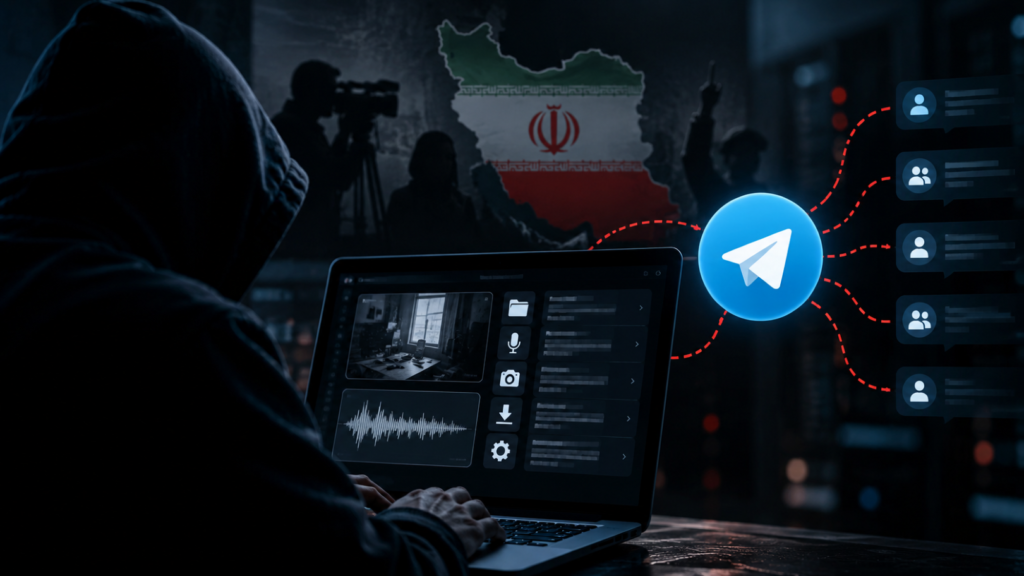
HEAVYGRAM Malware is a Windows surveillance backdoor that uses Telegram accounts, bots, and groups as an attacker-controlled command-and-control channel. Group-IB reported its analysis on September 17, 2026, linking the operation to Handala Hack with moderate confidence.
The campaign has been observed since fall 2023 and has reportedly targeted journalists, Iranian dissidents, and people opposing Iran’s government. Victims were socially engineered through messaging applications and sent malicious files disguised as legitimate programs or services.
Who Is Behind HEAVYGRAM?
Group-IB attributes HEAVYGRAM to Handala Hack with moderate confidence. The attribution is therefore an intelligence assessment rather than an absolute determination.
The malware is notable because Telegram is used as part of its command-and-control infrastructure. Attackers can use the platform to exchange commands, files, and stolen information, potentially blending malicious traffic with legitimate messaging activity.
HEAVYGRAM Malware: Technical Breakdown
Timeline of Events
The campaign has been observed since fall 2023. During its investigation, Group-IB identified 29 additional HEAVYGRAM samples, loaders, and payloads.
The attack begins with social engineering. Threat actors contact targets through messaging applications and present malicious files as legitimate applications or services. Once executed, the initial stage can lead to the persistent HEAVYGRAM backdoor.
What Data and Systems Are Affected?
Reported capabilities include:
- Capturing screenshots.
- Recording audio.
- Stealing Telegram Desktop data and cached information.
- Receiving and executing commands.
- Downloading additional payloads.
- Deleting files and traces.
- Sending collected information through Telegram.
- Maintaining persistence through Windows Registry entries.
Potential Risks and Impact
Privacy and Information Risk
Screen captures, audio recordings, Telegram data, and cached information can expose private conversations, documents, contacts, work activity, and other sensitive material.
Business and Reputational Risk
A compromised endpoint may expose confidential communications and files. For journalists and organizations handling sensitive information, such access can create risks for sources, internal discussions, and unpublished work.
Security and Compliance Risk
If a compromised device contains sensitive information, organizations should investigate possible exposure and preserve evidence.
Official Response / Statement
The HEAVYGRAM findings are based on Group-IB threat intelligence and related U.S. government disclosures. No direct statement from Telegram is included in the supplied information.
The Handala Hack connection remains a moderate-confidence attribution. Security teams should distinguish confirmed technical evidence from attribution assessments when documenting incidents.
Industry Context: Why Telegram-Based Malware Matters
HEAVYGRAM highlights how attackers can abuse legitimate online services as command-and-control infrastructure. Security teams should monitor unusual Telegram Bot API connections and endpoint behavior that combines messaging traffic with PowerShell, Registry persistence, suspicious downloads, or unexpected process execution.
For related malware and cyberattack reporting, readers can explore CyberNexora News’ Cyber Incidents coverage.
How to Protect Yourself and Your Organization
- Avoid unexpected files. Treat applications, archives, scripts, and documents received through messaging platforms as untrusted until verified.
- Verify contacts independently. Confirm unusual file requests through a separate trusted communication channel.
- Keep systems updated. Apply Windows, browser, application, and endpoint-security updates promptly.
- Monitor Telegram-related traffic. Investigate unusual Telegram Bot API activity from systems that do not normally need it.
- Review Registry autorun entries. Unexpected persistence entries should be investigated, especially alongside unfamiliar executables.
- Monitor PowerShell activity. Suspicious downloads, scripts, and execution chains can provide useful detection opportunities.
- Use endpoint monitoring. EDR or equivalent controls can help identify unusual process behavior, persistence, and file activity.
- Preserve evidence. After suspected compromise, isolate the endpoint according to incident-response procedures and preserve relevant logs and files before remediation.
See CyberNexora News’ Learn & Protect section for additional security guidance.
Indicators of Compromise (IoCs)
The available reporting identifies these behavioral indicators:
- Windows executables disguised as legitimate applications.
- Unexpected Telegram Bot API communication.
- Suspicious Registry persistence entries.
- Unexplained screen or audio capture.
- Unexpected downloads or execution of additional payloads.
- Security-exclusion changes associated with CRUDEEXCLUDE.
- Unusual access to Telegram Desktop data or cache.
Specific hashes, domains, and bot identifiers should be obtained from current threat-intelligence reporting before production detection rules are created.
Key Takeaways
- HEAVYGRAM Malware is a Windows surveillance backdoor using Telegram-based command-and-control.
- The campaign has reportedly been active since fall 2023.
- Targets include journalists, Iranian dissidents, and people opposing Iran’s government.
- Group-IB linked the operation to Handala Hack with moderate confidence.
- Defenders should focus on social engineering, endpoint monitoring, Registry persistence, and unusual Telegram API activity.
Conclusion: HEAVYGRAM Malware and What Happens Next
HEAVYGRAM Malware shows how social engineering, legitimate messaging services, and persistent Windows malware can be combined into a surveillance operation. The use of Telegram also means defenders need visibility beyond traditional malicious domains and dedicated C2 servers.
Security teams should watch for new HEAVYGRAM samples, related loaders, payloads, and changes in Telegram infrastructure. Readers can also review CyberNexora News’ Resources section for additional security guidance.
Frequently Asked Questions (FAQs)
HEAVYGRAM Malware is a Windows surveillance backdoor that uses Telegram-based infrastructure for command-and-control. It can capture information, execute commands, and maintain persistence.
Reported targets include journalists, Iranian dissidents, and individuals or organizations opposing Iran’s government. The campaign has been observed since fall 2023.
HEAVYGRAM is delivered through social engineering, with malicious files presented as legitimate applications or services. Victims may receive these files through messaging applications.
The malware can use Telegram bots, accounts, and groups to receive commands and transfer information. This creates a command-and-control channel through a legitimate messaging platform.
Organizations can look for suspicious Registry entries, unusual Telegram Bot API traffic, PowerShell activity, unauthorized security exclusions, and unexplained screen or audio capture.
Group-IB linked HEAVYGRAM to Handala Hack with moderate confidence. That attribution should be treated as a threat-intelligence assessment rather than an absolute determination.