
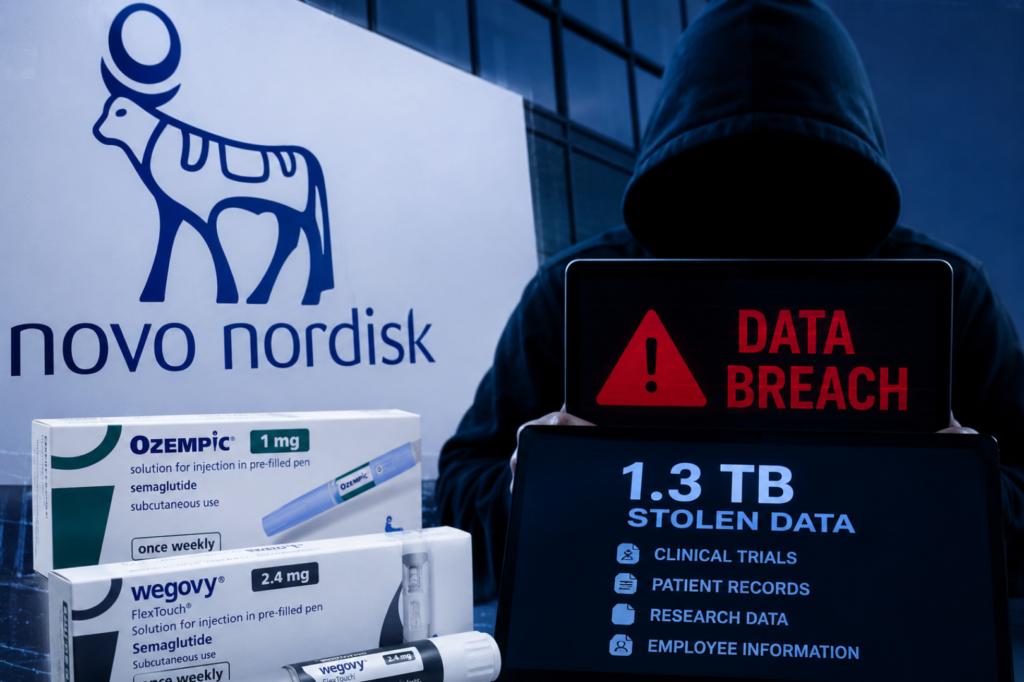
The Novo Nordisk Data Breach 2026 has emerged as one of the most significant cybersecurity incidents affecting the global pharmaceutical sector this year. Novo Nordisk, the company behind widely known medications such as Wegovy and Ozempic, confirmed that unauthorized actors gained access to portions of its internal systems and copied sensitive data. Meanwhile, the cyber-extortion group FulcrumSec has claimed responsibility for a much larger compromise involving approximately 1.3TB of stolen information.
The incident has attracted global attention because it highlights the growing risks facing pharmaceutical organizations that store valuable intellectual property, clinical research records, healthcare information, and proprietary technology. While Novo Nordisk has stated that exposed clinical trial information was pseudonymized and did not contain direct identifiers, the scale of the alleged breach continues to raise concerns among security experts and regulators.
The Novo Nordisk Data Breach 2026 demonstrates how cybercriminal groups are increasingly targeting healthcare and pharmaceutical companies where research data can be more valuable than traditional financial information.
What Happened in the Novo Nordisk Data Breach 2026?
According to Novo Nordisk’s official disclosure, the company identified unauthorized access affecting a limited number of internal IT systems. During the investigation, it was discovered that certain non-public information had been copied externally without authorization. The organization responded by taking affected systems offline and engaging cybersecurity specialists to investigate the incident.
However, the situation escalated when the cybercriminal group FulcrumSec Ransomware publicly claimed responsibility for the attack. The group alleged that it spent more than two months inside Novo Nordisk’s network environment and exfiltrated approximately 1.3TB of sensitive information. According to the threat actor, the stolen data includes clinical trial records, source code, pharmaceutical research data, employee information, internal AI assets, and proprietary drug development materials. These claims have not been fully verified by Novo Nordisk.
The Novo Nordisk Data Breach 2026 therefore consists of two separate narratives: the confirmed security incident disclosed by the company and the broader allegations made by the attackers.
Understanding the Scope of the Clinical Trial Data Breach
One of the most sensitive aspects of the Clinical Trial Data Breach involves patient-related information associated with ongoing and completed research programs.
Novo Nordisk stated that the exposed information may include:
- Patient identification numbers
- Year of birth
- Gender information
- Health-related biomarkers
- Immunogenicity data
- Clinical research participation details
The company emphasized that names, addresses, and direct personal identifiers were not exposed, reducing the likelihood of direct patient identification. Nevertheless, cybersecurity professionals note that pseudonymized healthcare information still carries risk when combined with other datasets.
The Clinical Trial Data Breach element of the incident is particularly important because pharmaceutical research data represents years of scientific investment and regulatory work.
How the Novo Nordisk Cyberattack Could Have Occurred
While the complete technical details remain under investigation, threat intelligence reports suggest attackers may have maintained access to company systems for an extended period before detection. Reports indicate that the intrusion potentially lasted more than two months, allowing attackers to identify, collect, and exfiltrate large quantities of information.
Cybersecurity analysts frequently observe the following attack patterns in major healthcare breaches:
Initial Access
- Compromised credentials
- Phishing campaigns
- Misconfigured cloud services
- Third-party supplier vulnerabilities
Privilege Escalation
- Expansion of access rights
- Movement across internal systems
- Discovery of sensitive repositories
Data Exfiltration
- Collection of research files
- Download of internal documents
- Theft of intellectual property
Extortion Phase
- Ransom demand
- Threat of public disclosure
- Sale of stolen information
The Novo Nordisk Cyberattack reflects tactics increasingly used against organizations that possess valuable intellectual property.
FulcrumSec Ransomware and the $25 Million Extortion Claim
The group known as FulcrumSec Ransomware claims it demanded approximately $25 million from Novo Nordisk after stealing the data. Following the alleged refusal to pay, the group stated it may sell portions of the information or release selected datasets publicly.
According to public statements attributed to the threat actor, the stolen information allegedly includes:
- Drug development documentation
- Clinical research information
- Internal software source code
- Employee records
- AI-related assets
- Manufacturing-related information
While these claims remain partially unverified, the incident demonstrates how modern ransomware operations increasingly focus on data theft and extortion rather than encryption alone.
The emergence of FulcrumSec Ransomware also reflects the broader trend of cybercriminal groups targeting high-value intellectual property assets.
Why Pharmaceutical Cybersecurity Is Becoming a Major Target
The Pharmaceutical Cybersecurity landscape has changed dramatically over the last several years.
Cybercriminal groups now view pharmaceutical organizations as attractive targets because they store:
- Clinical trial datasets
- Drug research information
- Intellectual property
- Healthcare records
- Manufacturing processes
- Proprietary AI models
Unlike conventional financial data, stolen pharmaceutical information may retain value for years. Research documents, drug formulations, and clinical studies can be leveraged for espionage, extortion, competitive intelligence, or underground market sales.
The Pharmaceutical Cybersecurity challenge therefore extends beyond protecting customer information and now includes safeguarding scientific innovation itself.
Potential Risks Following the Novo Nordisk Data Breach 2026
Although Novo Nordisk reports no immediate risk to affected individuals, security experts continue to monitor several potential consequences.
Operational Risks
- Regulatory investigations
- Compliance reviews
- Security remediation costs
Research Risks
- Exposure of proprietary research
- Competitive intelligence concerns
- Delays in drug development
Cybersecurity Risks
- Secondary phishing campaigns
- Credential abuse attempts
- Targeted social engineering
Reputation Risks
- Public trust concerns
- Investor confidence impacts
- Increased regulatory scrutiny
The Novo Nordisk Data Breach 2026 highlights how cybersecurity incidents can affect multiple aspects of business operations simultaneously.
Security Lessons for Healthcare and Pharmaceutical Organizations
The Novo Nordisk Data Breach 2026 provides important lessons for organizations across the healthcare ecosystem.
Strengthen Identity Security
- Enforce multi-factor authentication
- Limit privileged access
- Conduct regular access reviews
Protect Research Assets
- Encrypt sensitive datasets
- Segment research environments
- Monitor data movement
Improve Threat Detection
- Deploy advanced monitoring solutions
- Conduct continuous security assessments
- Establish incident response procedures
Enhance Employee Awareness
- Train staff against phishing attacks
- Promote secure credential practices
- Report suspicious activity immediately
Strong Pharmaceutical Cybersecurity programs must balance operational efficiency with the protection of highly valuable scientific assets.
Conclusion
The Novo Nordisk Data Breach 2026 serves as a reminder that healthcare and pharmaceutical organizations remain among the most attractive targets for cybercriminals. While Novo Nordisk has confirmed unauthorized access to internal systems and exposure of limited clinical trial information, allegations regarding the theft of 1.3TB of data continue to be investigated.
Whether the full claims of FulcrumSec Ransomware are ultimately verified or not, the incident underscores the increasing importance of Pharmaceutical Cybersecurity, the protection of clinical research assets, and the need for resilient security programs capable of defending against sophisticated extortion operations.