
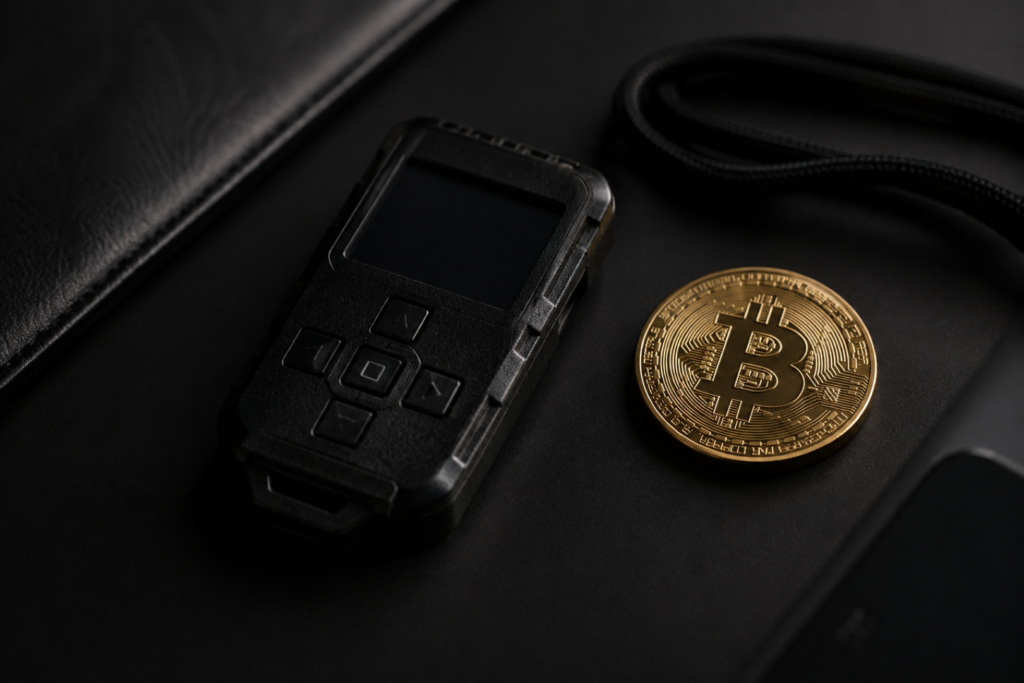
Introduction: Coldcard Hardware Wallet Flaw — Why It Matters
The Coldcard Hardware Wallet Flaw has drawn widespread attention after researchers linked a coordinated theft of approximately 1,082.65 Bitcoin (BTC)—worth nearly $70.2 million—to a weakness in the firmware of Coldcard hardware wallets. On July 30, an unknown operator swept funds from 1,196 Bitcoin addresses within just 41 minutes, making it one of the largest coordinated Bitcoin wallet incidents reported this year.
According to Galaxy Research, the theft appears to be connected to a firmware bug introduced years earlier that weakened the randomness used during wallet seed generation. While no attacker has been identified, the findings have raised fresh concerns about cryptographic randomness, firmware security, and the long-term safety of hardware wallet seed phrases.
What is Coldcard Hardware Wallet Flaw?
Coldcard Hardware Wallet Flaw affects the Bitcoin-only hardware wallet developed by Coinkite, a Canadian company known for building security-focused cryptocurrency storage devices. Unlike software wallets, hardware wallets are designed to keep private keys offline, significantly reducing exposure to online attacks.
Coldcard devices are widely used by Bitcoin holders because they emphasize offline transactions, secure key storage, multisignature support, and advanced recovery options. However, as this incident demonstrates, hardware security also depends heavily on secure firmware and high-quality random number generation.
What Caused the Incident?
Researchers traced the issue to a firmware integration mistake introduced in March 2021.
Instead of using the STM32 hardware random number generator (RNG) during seed creation, affected firmware versions relied on a deterministic software-based pseudorandom number generator (PRNG). The software fallback was initialized using predictable hardware values such as the device’s unique identifier (UID) and timer registers, rather than continuously collecting fresh entropy.
Because of this implementation, an attacker capable of estimating device-specific startup conditions could potentially recreate candidate wallet seeds offline. These candidate seeds could then be tested by deriving Bitcoin addresses and comparing them with publicly visible blockchain transactions.
Researchers emphasized that practical exploitation depends on several variables, including:
- Device UID information
- Startup timing
- Previous RNG calls
- Seed derivation cost
Although these conditions increase attack complexity, they also reduce the overall unpredictability expected from secure wallet generation.
Coldcard Hardware Wallet Flaw: Full Technical Breakdown
Timeline of Events
- March 2021: Firmware integration error introduced into Coldcard firmware.
- July 30, 2026: 1,196 Bitcoin addresses were drained within 41 minutes.
- July 31, 2026: Coinkite released emergency firmware updates for affected devices.
- Researchers subsequently linked the theft pattern to the firmware weakness after analyzing blockchain transactions.
Affected Firmware Versions
Exposure depends on the firmware running when the wallet seed was originally created, not the version currently installed.
The affected releases include:
- Mk3: Versions 4.0.0–4.1.9 (Coinkite identifies 4.0.1–4.1.9)
- Mk4 and Mk5: Versions earlier than 5.6.0
- Coldcard Q: Versions earlier than 1.5.0Q
- Edge builds: Earlier than 6.6.0X (Mk4/Mk5) and 6.6.0QX (Q)
Installing updated firmware prevents future vulnerable seed generation but does not secure an existing wallet created using an affected firmware version.
Potential Risks & Impact
Financial Risk
The most immediate concern is cryptocurrency theft. If attackers successfully reconstruct vulnerable wallet seeds, they may gain access to stored Bitcoin without directly compromising the physical device.
The reported theft of over 1,082 BTC demonstrates the potential financial consequences of predictable seed generation, particularly for long-term holders who created wallets using affected firmware.
Business and Reputation Risk
The incident highlights how firmware implementation errors can undermine trust in hardware wallets despite strong physical security. Cryptocurrency custody providers, institutional investors, and enterprises relying on Coldcard devices may reassess firmware validation processes and supply-chain security controls.
Regulatory and Compliance Risk
Although no regulatory action has been announced, incidents involving large-scale cryptocurrency losses often attract increased scrutiny from regulators and cybersecurity researchers. The disclosure may encourage hardware wallet vendors to strengthen firmware auditing and independent security testing.
Official Response
Coinkite released emergency firmware updates to address the Coldcard Hardware Wallet Flaw across all affected Coldcard models on July 31 and advised users to immediately migrate to newly generated wallet seeds using patched firmware.
The company cautioned that simply updating firmware is not sufficient if the existing seed was generated on vulnerable versions. Users should create an entirely new seed after installing the update and transfer all funds to addresses derived from the new wallet.
Coinkite also stated that wallets generated using at least 50 private, fair, and independent dice rolls are not affected by this specific vulnerability. Likewise, a strong and unique BIP-39 passphrase provides an additional security layer, although the company still recommends replacing vulnerable seeds.
Galaxy Research noted that while the blockchain transaction pattern strongly suggests coordination by a single operator, the transaction pattern alone does not conclusively prove theft, as similar movements could theoretically be performed by the legitimate owner.
Industry Context: Why This Type of Vulnerability is Increasing
The disclosure follows growing concerns over weak random number generation in cryptocurrency software and hardware.
Earlier this year, researchers disclosed the Ill Bloom vulnerability affecting older software wallets, which was associated with cryptocurrency theft exceeding $5 million across Bitcoin, Ethereum, Tron, Polygon, Rootstock, and other blockchain networks.
The Coldcard Hardware Wallet Flaw reinforces an important cybersecurity lesson: even when cryptographic algorithms remain mathematically secure, implementation mistakes—particularly those involving entropy generation—can significantly reduce overall security. As cryptocurrency adoption continues to expand, vendors are expected to place greater emphasis on firmware auditing, secure development practices, and independent code reviews before releasing production updates. Readers interested in recent cybersecurity incidents, practical cybersecurity tips and best practices, and security resources and guides can explore more coverage on CyberNexora News.
How to Protect Yourself and Your Organization
If you own or manage a wallet affected by the Coldcard Hardware Wallet Flaw, consider the following security measures to reduce potential risk:
- Check the firmware version used when your wallet seed was created. The vulnerability depends on the firmware version that generated the seed, not the version currently installed.
- Update to the latest firmware immediately. Install Coinkite’s patched firmware for your device model to prevent future vulnerable seed generation.
- Generate a completely new wallet seed. If your wallet was initialized using an affected firmware version, create a new seed after updating the firmware and transfer all funds to addresses derived from the new seed.
- Use a strong BIP-39 passphrase. A unique passphrase provides an additional layer of protection beyond the recovery seed.
- Consider multisignature (multisig) storage. A multisig setup using different hardware wallet vendors can reduce the impact of a single-device vulnerability.
- Monitor wallet activity regularly. Unexpected outgoing transactions should be investigated immediately, and compromised wallets should be abandoned.
- Follow official firmware advisories. Download firmware updates only from Coinkite’s official website and verify update instructions before installation.
Indicators of Compromise (IoCs)
While this vulnerability does not involve malware, users should watch for the following indicators:
- Wallet seed generated using an affected firmware version.
- Unexpected Bitcoin transfers from previously inactive addresses.
- Unrecognized transactions appearing on blockchain explorers.
- Recovery seed created before installing patched firmware.
- Funds remaining in wallets initialized on vulnerable firmware despite available security updates.
Key Takeaways
- A coordinated theft drained 1,196 Bitcoin addresses, resulting in losses of approximately 1,082.65 BTC (around $70.2 million).
- Researchers linked the incident to a firmware flaw affecting randomness during Coldcard wallet seed generation.
- Updating firmware alone does not protect wallets whose recovery seeds were created using vulnerable firmware.
- Users should generate a new recovery seed on patched firmware and migrate all cryptocurrency to newly derived addresses.
- The incident highlights the critical importance of secure random number generation in cryptographic systems.
Conclusion: Coldcard Hardware Wallet Flaw and What Happens Next
The Coldcard Hardware Wallet Flaw serves as a reminder that even highly trusted hardware wallets can become vulnerable through implementation errors rather than weaknesses in cryptographic algorithms themselves. A seemingly small firmware integration mistake can significantly reduce entropy during seed generation, potentially exposing users to long-term risks.
Although Coinkite has released emergency firmware updates, affected users should remember that installing the update alone is not enough. Organizations, cryptocurrency investors, and individual wallet owners should verify when their wallet seed was created, migrate vulnerable wallets, and continue following vendor security advisories as researchers further investigate the incident.
Frequently Asked Questions(FAQs)
The Coldcard Hardware Wallet Flaw refers to a firmware vulnerability that weakened the randomness used during wallet seed generation. Researchers believe it may have enabled attackers to reconstruct wallet seeds under specific conditions, potentially leading to cryptocurrency theft.
The affected firmware includes Mk3 versions 4.0.0–4.1.9, Mk4 and Mk5 versions before 5.6.0, Coldcard Q versions before 1.5.0Q, and certain Edge builds released before the latest patched versions. Exposure depends on the firmware used when the wallet seed was originally created.
No. According to Coinkite, updating firmware prevents future vulnerable seed generation but does not secure an existing recovery seed created using affected firmware. Users should generate a new seed and transfer their funds.
No. Researchers linked the attack to the firmware flaw based on blockchain analysis, but Galaxy Research noted that transaction patterns alone cannot conclusively prove the theft resulted from this specific vulnerability.
Users should install the latest firmware, generate a new recovery seed if their wallet was initialized using affected firmware, migrate funds to the new wallet, use a strong BIP-39 passphrase, and monitor wallet activity for unauthorized transactions.