
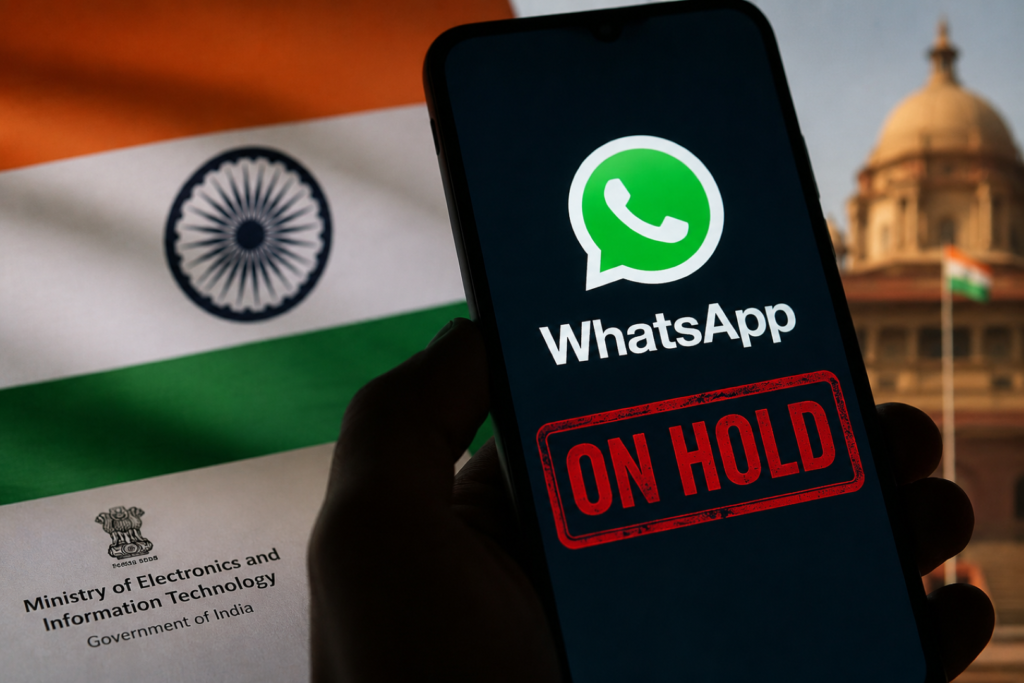
Introduction: WhatsApp Usernames Feature — Why It Matters
India has directed Meta-owned WhatsApp to immediately halt the rollout of the WhatsApp Usernames Feature, citing concerns that the new functionality could increase cybercrime, identity fraud, phishing attacks, and impersonation scams. The decision comes after the Indian government issued a formal notice requiring WhatsApp to justify why regulatory action should not be taken before the feature is introduced nationwide.
The WhatsApp Usernames Feature is designed to let users communicate through unique usernames instead of sharing their phone numbers. While the change aims to improve privacy, Indian authorities believe it could unintentionally create new opportunities for cybercriminals to hide their identities and deceive victims.
According to the notice, WhatsApp has been instructed not to activate the feature in India until consultations with government authorities are completed. The company has also been asked to submit its explanation within three days regarding the security implications of the rollout.
The move reflects India’s increasing focus on balancing digital privacy with cybersecurity, particularly as phishing campaigns, financial fraud, and digital arrest scams continue to rise across the country. As discussions continue, the WhatsApp Usernames Feature is expected to remain under close regulatory scrutiny, making it one of the most significant cybersecurity and privacy developments for messaging platforms this year.
What is WhatsApp?
WhatsApp is one of the world’s largest instant messaging platforms and is owned by Meta Platforms. The application is used by more than two billion people worldwide for messaging, voice calls, video calls, file sharing, and business communications.
In India, WhatsApp has hundreds of millions of active users, making it one of the country’s most widely used communication platforms. Businesses, educational institutions, government agencies, and individuals rely heavily on the application for day-to-day communication.
To enhance user privacy, WhatsApp has been developing a usernames system that would allow people to connect without revealing their mobile numbers, similar to features already available on several other messaging platforms. The WhatsApp Usernames Feature is designed to improve privacy by replacing visible phone numbers with unique usernames. However, Indian regulators are evaluating whether the WhatsApp Usernames Feature provides sufficient safeguards against misuse.
Although the concept is intended to improve privacy protection, regulators are evaluating whether it could also reduce accountability for malicious actors.
Background of the Government Review
The Ministry of Electronics and Information Technology (MeitY) has reportedly been reviewing the usernames feature for several weeks due to concerns surrounding cybersecurity and digital safety.
According to government officials, hiding phone numbers could make it easier for cybercriminals to:
- Create fake digital identities
- Impersonate government officials
- Conduct phishing campaigns
- Carry out financial fraud
- Launch social engineering attacks
- Operate anonymous scam accounts
- Evade traditional identity verification methods
Authorities have therefore instructed WhatsApp to suspend the feature until discussions with regulators are completed.
The review forms part of India’s broader efforts to strengthen online safety while ensuring that new digital services comply with existing cybersecurity and information technology regulations. The review focuses on whether the WhatsApp Usernames Feature aligns with India’s cybersecurity and digital safety requirements before its nationwide rollout.
WhatsApp Usernames Feature: Full Factual Breakdown
Timeline of Events
- Meta announced the upcoming usernames feature for WhatsApp.
- The feature was planned to roll out across multiple countries.
- Indian authorities began reviewing the security implications shortly after the announcement.
- The Ministry of Electronics and Information Technology issued a formal notice to WhatsApp.
- WhatsApp was instructed not to launch the feature in India.
- The company has been given three days to explain why regulatory action should not be initiated.
- The rollout will remain suspended until consultations with the Indian government are completed.
- The WhatsApp Usernames Feature remains suspended in India pending further consultations with government authorities.
What Does the New Feature Introduce?
The proposed usernames feature would significantly change how users connect on WhatsApp.
Instead of sharing a personal mobile number, users would receive a unique username that others could use to:
- Start conversations
- Add contacts
- Locate users
- Connect without exchanging phone numbers
The feature is intended to improve user privacy by limiting the exposure of personal phone numbers.
However, regulators believe the same privacy mechanism could also make malicious users harder to identify. The WhatsApp Usernames Feature is intended to enhance user privacy by allowing people to communicate without revealing their phone numbers. However, regulators are assessing whether these privacy benefits outweigh the potential cybersecurity risks.
Why is the Government Concerned?
Government officials have highlighted several cybersecurity risks associated with anonymous usernames.
Potential concerns include:
- Increased phishing attacks
- Fake customer support accounts
- Identity impersonation
- Digital arrest scams
- Investment fraud
- Romance scams
- Social engineering attacks
- Anonymous scam operations
- Difficulty tracing cybercriminals
Officials also warned that criminals could combine deceptive usernames with fake profile photographs and foreign phone numbers to impersonate police officers, government officials, bank representatives, or trusted organizations. According to officials, the WhatsApp Usernames Feature could unintentionally make it easier for cybercriminals to conceal their identities during phishing and impersonation campaigns. The government is therefore carefully evaluating whether the WhatsApp Usernames Feature requires additional security controls before approval.
These tactics have already been observed in several cyber fraud campaigns targeting Indian citizens.
Potential Risks & Impact
Identity and Financial Risk
The introduction of usernames could provide cybercriminals with an additional layer of anonymity, making it more difficult for victims to verify who they are communicating with.
Security experts warn that attackers may exploit trusted-looking usernames to:
- Steal banking credentials
- Conduct UPI fraud
- Trick victims into installing malware
- Distribute phishing links
- Request OTPs or financial information
- Impersonate relatives or colleagues
If users rely solely on usernames without verifying identities through other trusted methods, the likelihood of successful phishing attacks may increase.
Business and Reputational Risk
Businesses that use WhatsApp for customer support may also face increased impersonation attempts.
Fraudsters could create usernames that closely resemble legitimate brands, customer support teams, or financial institutions.
Possible consequences include:
- Brand impersonation
- Customer trust erosion
- Fraudulent payment requests
- Fake support scams
- Reputation damage
- Increased cybersecurity costs
Organizations may therefore need stronger verification processes if username-based communication becomes available in the future. Businesses should closely monitor developments surrounding the WhatsApp Usernames Feature and prepare stronger identity verification processes if the feature is introduced.
Regulatory and Compliance Risk
The government’s notice indicates that failure to adequately address security concerns could expose WhatsApp to regulatory action under Indian law.
Authorities have referenced possible action under:
- Information Technology Act
- Information Technology Rules
- Other applicable Indian digital regulations
The outcome of the consultations could influence not only WhatsApp’s rollout in India but also future privacy-focused features introduced by global technology companies.
Official Response / Statement
The Indian government has formally instructed WhatsApp not to enable the usernames feature in India until consultations with regulators have concluded.
Authorities have asked the company to explain within three days why regulatory action should not be taken against the proposed rollout.
According to the notice, officials believe the feature may unintentionally facilitate phishing, impersonation, and digital fraud if introduced without adequate safeguards.
The future of the WhatsApp Usernames Feature in India will depend on the outcome of regulatory consultations between Meta and government authorities. As of the latest available information, WhatsApp has not publicly announced any changes to its global rollout plans. However, the launch of the usernames feature remains suspended in India pending the outcome of discussions between Meta and Indian authorities.
Industry Context: Why This Type of Regulation is Increasing
Governments worldwide are increasingly scrutinizing privacy-focused messaging features as cybercriminals continue to exploit anonymous communication channels for phishing, fraud, and identity theft. While features such as usernames improve user privacy by reducing the need to share personal phone numbers, regulators are evaluating whether these capabilities could inadvertently make cybercrime investigations more difficult.
India has witnessed a sharp increase in cyber-enabled financial fraud, fake customer support scams, investment fraud, and so-called “digital arrest” scams over the past few years. In many cases, attackers impersonate law enforcement agencies, banks, or government officials to deceive victims into transferring money or revealing sensitive information.
The government’s review of WhatsApp’s usernames feature reflects a broader effort to ensure that privacy enhancements do not undermine digital accountability or public safety.
Readers interested in similar cybersecurity regulations can explore CyberNexora News’ Laws & Government section.
Similarly, readers can stay updated on emerging cyber incidents affecting businesses and consumers through CyberNexora News’ Cyber Incidents section.
As messaging platforms continue introducing privacy-enhancing technologies, regulators across different countries are expected to examine how these features balance user privacy with law enforcement and cybersecurity requirements.
How to Protect Yourself from Username-Based Scams
Even if the usernames feature eventually becomes available in India, users can significantly reduce their exposure to cyber threats by following good cybersecurity practices.
- Always verify the identity of unknown contacts before sharing personal or financial information.
- Do not trust usernames alone. Fraudsters can create names that closely resemble legitimate organizations or individuals.
- Enable Two-Step Verification on your WhatsApp account to prevent unauthorized access.
- Never share OTPs, banking credentials, passwords, or UPI PINs through messaging applications.
- Be cautious of urgent requests involving money transfers, investment opportunities, or government-related claims.
- Verify official accounts through trusted websites rather than relying solely on profile names or display pictures.
- Report suspicious accounts immediately using WhatsApp’s built-in reporting tools.
- Keep WhatsApp updated to ensure you receive the latest security improvements and protection against emerging threats.
If the WhatsApp Usernames Feature is introduced in India in the future, users should remain cautious when interacting with unknown usernames and always verify identities before sharing personal or financial information.
For more cybersecurity awareness tips, visit CyberNexora News’ Learn & Protect category.
Businesses can also explore additional cybersecurity guidance and best practices through the Resources section.
Key Takeaways
- India has instructed WhatsApp to halt the rollout of its usernames feature until regulatory consultations are completed.
- The government believes anonymous usernames could increase phishing, impersonation, online fraud, and digital arrest scams.
- WhatsApp has been given three days to explain why regulatory action should not be initiated.
- Officials are reviewing whether the feature complies with India’s cybersecurity and digital safety framework.
- The usernames feature remains suspended in India while discussions between Meta and the government continue.
- The outcome may influence how future privacy-focused messaging features are introduced in the Indian market.
- The WhatsApp Usernames Feature will remain unavailable in India until the government completes its regulatory review and approves the rollout.
Conclusion: WhatsApp Usernames Feature and What Happens Next
The WhatsApp Usernames Feature has become a major topic in India’s cybersecurity and digital policy landscape. While the WhatsApp Usernames Feature aims to strengthen user privacy, regulators remain focused on ensuring that the feature cannot be exploited for fraud, impersonation, or phishing attacks.
For now, the rollout remains paused in India as government authorities evaluate the cybersecurity implications of the feature. The discussions between Meta and the Ministry of Electronics and Information Technology are likely to determine whether additional safeguards, verification mechanisms, or regulatory requirements will be introduced before the feature is approved for Indian users.
As cyber threats continue to evolve, organizations and individuals alike should remain vigilant and follow cybersecurity best practices regardless of the communication platform they use.
For the latest cybersecurity policy updates and government actions, continue following CyberNexora News.
Frequently Asked Questions(FAQs)
The WhatsApp Usernames Feature allows users to communicate using unique usernames instead of sharing their mobile phone numbers. The feature is intended to improve privacy by reducing the need to disclose personal contact information.
The Indian government has paused the rollout due to concerns that anonymous usernames could increase phishing attacks, impersonation, financial fraud, and digital arrest scams. Authorities are reviewing whether additional safeguards are necessary before the feature is introduced.
No. WhatsApp continues to operate normally in India. Only the proposed usernames feature has been temporarily suspended pending regulatory consultations.
Yes. Security experts believe attackers could create deceptive usernames that imitate banks, government agencies, businesses, or trusted individuals to trick victims into revealing sensitive information or making fraudulent payments.
If the government’s concerns are not satisfactorily addressed, authorities may consider action under the Information Technology Act, the IT Rules, and other applicable Indian regulations. Any regulatory decision will depend on the outcome of ongoing consultations.
There is currently no confirmed launch date. The feature will remain unavailable in India until the government completes its review and grants approval.