
Introduction: iPhone Scam Websites — Why It Matters
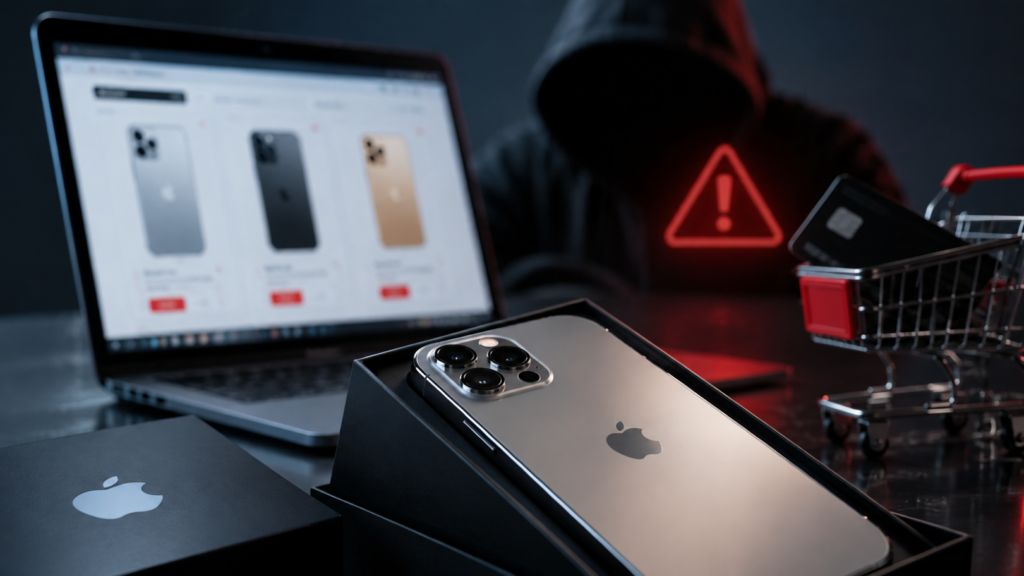
iPhone Scam Websites are emerging rapidly as criminals exploit consumer demand for Apple’s newest devices. Following the launch of new iPhone models, security researchers have reported a surge in suspicious websites using “Apple” and “iPhone” in their domain names.
These sites reportedly imitate legitimate retailers, promote unusually cheap devices and use realistic product information to convince shoppers to make payments. Some fraudulent websites are also being created with the help of AI, making them harder for consumers to distinguish from genuine stores.
The campaign highlights why iPhone Scam Websites are a growing problem in online shopping: criminals can quickly create convincing storefronts around major product launches and use urgency, discounts and fake availability to pressure buyers.
What Caused the iPhone Shopping Scam Surge?
The latest Apple product launch created a strong opportunity for scammers to target consumers searching for early access or discounted prices. Researchers observed an increase in newly registered domains containing popular Apple-related keywords around the launch period.
Some fraudulent stores reportedly copy the appearance of genuine retailers and use official-looking specifications, product images and marketing language. AI can make this process faster by helping scammers generate realistic website content and layouts.
Consumers searching for the newest models may therefore encounter websites that appear professional but have no legitimate connection to Apple or an authorized retailer.
iPhone Scam Websites: Full Technical and Factual Breakdown
Timeline of Events
- Suspicious domains began appearing around the latest iPhone announcement.
- Researchers observed increased registrations using “Apple” and “iPhone” keywords.
- Fake stores promoted discounted devices and supposed early access.
- Some sites reportedly advertised models or availability that consumers should treat with caution.
- Security researchers warned that AI can help criminals produce convincing fake storefronts quickly.
What Are the Main Scam Indicators?
Consumers should be particularly cautious when a website:
- Offers an iPhone at an unusually low price.
- Demands payment only through bank transfer or cryptocurrency.
- Uses strong countdown timers or limited-time purchase pressure.
- Has a newly registered or suspicious-looking domain.
- Claims to sell unreleased devices.
- Uses Apple branding without clearly establishing that it is an authorized retailer.
A professional-looking design does not prove that a website is legitimate. Attackers can reproduce familiar branding and product information to make fraudulent stores appear trustworthy.
Potential Risks & Impact
Financial and Identity Risk
The immediate risk is financial loss when victims send money for devices that never arrive. Payment information or personal details entered into fraudulent stores could also be collected for additional fraud or phishing campaigns.
The risk from iPhone Scam Websites becomes greater when scammers combine fake shopping sites with urgency. Consumers may make rushed decisions without checking the domain, payment method or retailer credentials.
Business and Reputational Risk
Fake stores can also damage consumer trust in legitimate brands and retailers. During major product launches, customers may encounter numerous misleading advertisements and websites using familiar brand names.
For businesses, impersonation campaigns can generate customer-support complaints and create confusion around legitimate promotions.
Technology and AI Risk
The use of AI adds another layer to the threat. Instead of relying on poorly designed scam pages, criminals can produce polished websites with realistic descriptions and product information, reducing obvious warning signs.
Official Response / Apple Warning
Apple provides security guidance warning users about phishing and scams designed to steal personal or financial information. Apple also recommends using Safari’s security protections and avoiding suspicious websites or messages.
Safari includes a Fraudulent Website Warning feature that can alert users when a website is suspected of phishing or other malicious activity. Apple also warns that HTTPS or encryption alone does not prove that a website is trustworthy, so users should verify the actual website address.
Industry Context: Why iPhone Shopping Scams Are Increasing
The rise of iPhone Scam Websites reflects a broader trend in online fraud where criminals exploit major events, product launches and consumer demand.
Cybercriminals do not necessarily need to compromise Apple’s infrastructure to profit from an Apple-themed attack. Instead, they can use phishing, domain impersonation, fake advertising and fraudulent payment pages to target customers directly.
CyberNexora’s Cyber Incidents coverage tracks similar cyber threats and incidents affecting consumers and organizations.
The growing availability of AI-generated content may make these campaigns more scalable. As fake websites become more convincing, consumers increasingly need to verify the source rather than judging a store by its appearance.
How to Protect Yourself From Fake iPhone Websites
- Check the domain carefully: Look for misspellings, unusual extensions and suspicious subdomains. Apple also recommends verifying the actual website address because fraudulent websites can imitate trusted businesses.
- Verify the retailer: Confirm that the seller is Apple or a reputable authorized retailer.
- Avoid unrealistic deals: Extremely low prices for newly launched devices are a major warning sign.
- Use safer payment methods: Avoid sellers demanding bank transfers or cryptocurrency for purchases.
- Do not rush: Countdown timers and limited-stock messages can be designed to prevent careful verification.
- Check product availability: Be suspicious of websites claiming to sell models that are not officially available.
- Enable browser protections: Keep Safari’s fraudulent website warnings enabled.
- Report suspicious activity: If payment or account information was entered on a suspected scam site, contact the relevant financial provider and secure affected accounts.
For additional security guidance, CyberNexora’s Learn & Protect resources provide practical cybersecurity awareness information.
Indicators of Compromise (IoCs)
For consumers, the main indicators associated with these shopping scams include:
- Suspicious Apple- or iPhone-themed domains
- Unusually cheap iPhone offers
- Cryptocurrency or bank-transfer-only payments
- Fake countdowns and urgent purchase prompts
- Claims of early access to unavailable products
- Requests for unnecessary personal or payment information
These indicators are warning signs rather than definitive proof that every website exhibiting one is malicious.
Key Takeaways
- iPhone Scam Websites are exploiting demand for Apple’s latest devices.
- Fake stores can closely imitate legitimate retailers.
- iPhone Scam Websites show how AI can help criminals create convincing fraudulent stores more quickly.
- Extremely low prices and unusual payment methods are major warning signs.
- Consumers should verify domains and retailers before making purchases.
Conclusion: iPhone Scam Websites and What Happens Next
iPhone Scam Websites demonstrate how quickly cybercriminals can turn major technology launches into opportunities for online fraud. The combination of fake storefronts, social engineering and AI-generated content can make shopping scams increasingly convincing.
Consumers should expect similar campaigns around future device launches and major sales events. Checking the website address, verifying the seller and refusing high-pressure payment requests remain essential defenses. CyberNexora’s cybersecurity incident coverage can help readers stay informed about emerging threats.
Frequently Asked Questions (FAQs)
iPhone Scam Websites refers to fraudulent online stores targeting consumers looking for Apple’s latest iPhones. These websites may imitate legitimate retailers and advertise unrealistic discounts.
Check the domain, retailer credentials, pricing and payment methods before purchasing. Extremely low prices, urgent countdowns and bank-transfer-only payments are major warning signs.
Yes, security researchers have reported that scammers can use AI to create realistic website designs and product information. This can make fraudulent stores more convincing.
No. HTTPS protects the connection but does not prove that the website itself is genuine. Apple recommends verifying the website address and avoiding suspicious sites.
Contact your bank or payment provider immediately and secure any accounts whose credentials may have been exposed. If an Apple Account was involved, follow Apple’s account-security guidance.
Yes. Safari has a Fraudulent Website Warning feature that can alert users when a site is suspected of phishing or other malicious activity.