

As Valentine’s Day approaches, Indian cybercrime authorities have issued a high alert warning citizens about a sharp rise in online fraud and digital scams. Law enforcement agencies report that cybercriminals actively exploit this period by targeting users through romance scams, fake gift offers, phishing links, and UPI-based frauds.
According to media reports, including coverage by Times of India, cybercrime complaints tend to spike significantly in the days leading up to February 14, making this one of the most vulnerable periods of the year for online users.
Types of Scams Reported Ahead of Valentine’s Day
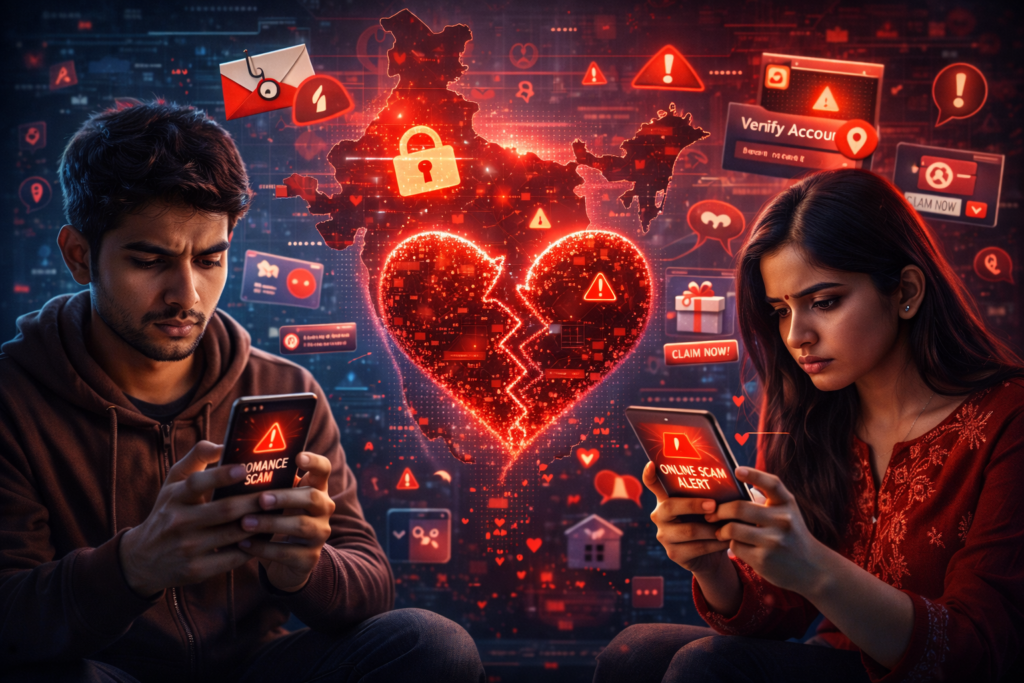
Cybersecurity officials and investigators have identified several recurring fraud patterns during Valentine’s Week:
- Romance and dating scams: Fraudsters create fake profiles on social media and dating platforms to build emotional trust and later demand money or sensitive information.
- Fake gift and flower delivery messages: Victims receive messages claiming a gift is stuck at customs or requires a delivery fee.
- Phishing links via SMS and WhatsApp: Malicious links disguised as offers, greetings, or surprise messages.
- UPI and QR code fraud: Scammers trick users into scanning QR codes under the pretext of refunds or gifts.
- Email-based phishing: Fake brand promotions used to steal login credentials or spread malware.
What Authorities Are Saying
Cyber police units across multiple Indian cities have advised citizens to remain cautious during this period. Officials state that Valentine’s Day creates a psychological advantage for attackers, as emotions, urgency, and trust are commonly exploited to manipulate victims into quick decisions.
Law enforcement agencies have emphasized that these crimes are not limited to a single city or state and are being reported nationwide.
Public Safety Advisory
To reduce the risk of falling victim to online fraud, authorities recommend the following precautions:
- Do not click on unknown or suspicious links.
- Avoid sharing personal, financial, or OTP details with online contacts.
- Verify any payment request, especially involving UPI or QR codes.
- Be cautious of unsolicited gift or delivery claims.
- Report suspicious activity immediately on the official cybercrime portal (cybercrime.gov.in).
Why Cybercrime Peaks During Valentine’s Season
Cybersecurity experts describe this trend as a form of seasonal social engineering, where attackers time their operations around emotional or festive events. Valentine’s Day, in particular, is used to exploit trust, curiosity, and emotional attachment, increasing the success rate of scams.
Conclusion
While Valentine’s Day is a time for celebration, authorities stress that digital safety should not be overlooked. A moment of inattention can result in financial loss, identity theft, or account compromise. Staying informed and cautious remains the most effective defense against cybercrime.