
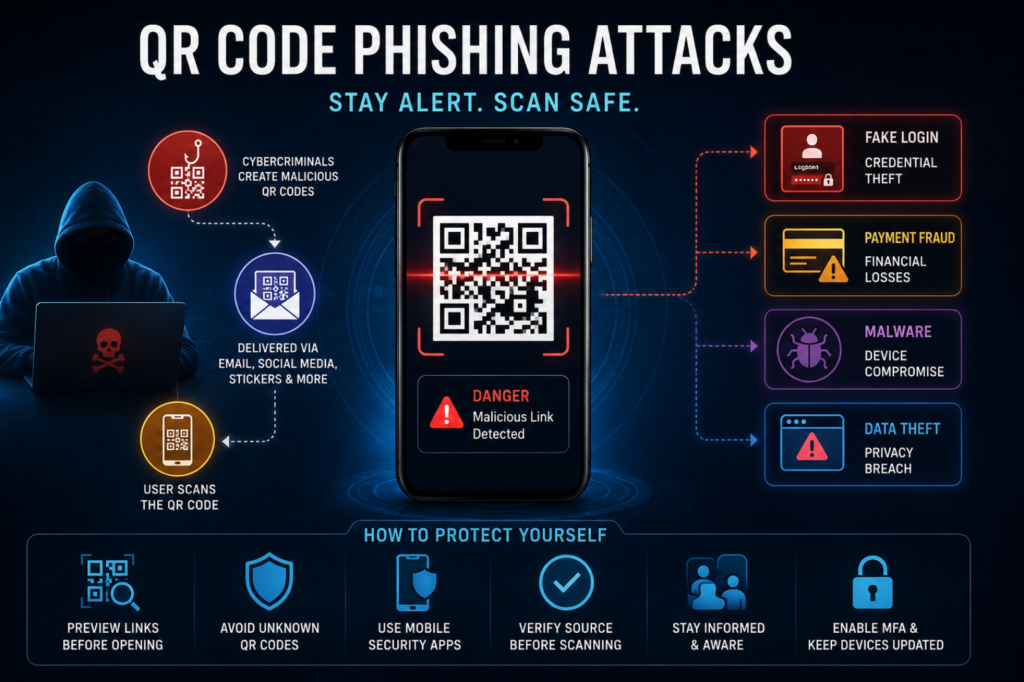
Introduction: QR Code Phishing Attacks Are Rapidly Increasing
QR Code Phishing Attacks, commonly known as “Quishing” attacks, have become one of the fastest-growing cyber threats in 2026. Cybercriminals are increasingly using malicious QR codes to hide phishing links, distribute malware, steal credentials, and redirect victims to fake payment pages.
Unlike traditional phishing emails where suspicious links can often be identified visually, QR codes conceal the actual destination URL. This makes QR Code Phishing Attacks highly effective because users tend to trust QR codes found in emails, restaurant menus, advertisements, parking meters, payment systems, and social media promotions.
Security researchers have observed a sharp increase in mobile-focused phishing campaigns where attackers exploit user convenience and trust in QR technology. Since QR codes are designed for quick access and seamless interactions, many users scan them without verifying their authenticity creating a major cybersecurity risk.
As organizations and consumers continue adopting contactless systems, understanding Quishing Scams and implementing proper security measures has become essential.
What Are QR Code Phishing Attacks?
QR Code Phishing Attacks are cyberattacks where malicious actors embed harmful links inside QR codes to trick users into visiting fraudulent websites or downloading malicious content.
Once scanned, the QR code may redirect users to:
- Fake login portals
- Banking phishing pages
- Malware download sites
- Credential harvesting forms
- Fake payment gateways
- Cryptocurrency scam pages
Because mobile devices automatically open QR links through browsers or applications, attackers can bypass traditional email filtering systems and exploit mobile security weaknesses.
These attacks are particularly dangerous because QR codes visually appear harmless and do not reveal suspicious URLs before scanning.
How Quishing Scams Work
Cybercriminals use several techniques to execute successful Quishing Scams.
1. QR Code Creation
Attackers generate malicious QR codes containing:
- Phishing URLs
- Redirect chains
- Malware delivery links
- Fake payment portals
- Credential collection forms
These QR codes are designed to appear legitimate and often imitate trusted brands or services.
2. Delivery Methods
Attackers distribute QR codes through multiple channels, including:
Email Campaigns
Victims receive emails containing QR codes disguised as:
- Security verification requests
- Invoice payments
- Account recovery messages
- Multi-factor authentication prompts
Physical Stickers
Attackers place fake QR stickers over legitimate ones in:
- Restaurants
- Parking machines
- Public transport stations
- Event venues
Social Media Promotions
Fraudulent advertisements and giveaways use QR codes to redirect users to scam websites.
Payment Systems
Fake QR payment codes are increasingly used to steal digital wallet transactions.
3. User Interaction
When users scan the QR code:
- The device opens the malicious website
- Victims are prompted to enter credentials
- Malware may be downloaded automatically
- Payment information can be stolen
- Device permissions may be abused
Because scanning occurs on mobile devices, many users fail to inspect URLs carefully before proceeding.
Mobile QR Code Security Risks
Mobile devices are the primary target of QR Code Phishing Attacks because smartphones are heavily integrated with payment apps, authentication systems, and business communication platforms.
Key Mobile Security Risks
Credential Theft
Attackers steal usernames, passwords, and authentication tokens through fake login pages.
Financial Fraud
Fake QR payment systems redirect transactions to attacker-controlled accounts.
Malware Installation
Some QR codes initiate downloads of malicious APK files or spyware applications.
Device Exploitation
Malicious websites may exploit browser vulnerabilities or abuse mobile permissions.
Session Hijacking
Attackers can capture active session cookies through phishing interfaces.
QR Payment Fraud Is Becoming a Major Threat
QR Payment Fraud has become one of the most common forms of Quishing Scams in 2026.
Many businesses now use QR codes for:
- Digital payments
- Contactless billing
- Online ordering
- Cryptocurrency transfers
Cybercriminals exploit this trend by replacing legitimate payment QR codes with fraudulent ones.
Common QR Payment Fraud Scenarios
Restaurant Table Scams
Attackers replace payment QR codes on tables with fake codes linked to their own wallets.
Parking Meter Fraud
Victims scan fake parking QR codes and unknowingly submit card details to phishing pages.
Charity Donation Scams
Fraudsters use fake donation QR codes during events or disasters.
Cryptocurrency Theft
Malicious QR codes redirect crypto transactions to attacker-controlled wallets.
Because QR payments rely heavily on trust and speed, users often fail to verify transaction details before confirming payments.
Why QR Code Phishing Attacks Are Difficult to Detect
QR Code Phishing Attacks are harder to identify than traditional phishing attempts for several reasons.
Hidden URLs
QR codes visually conceal malicious destinations.
Mobile Interface Limitations
Smartphones display shortened or incomplete URLs, reducing visibility.
User Trust
People assume QR codes are safe because they are widely used in legitimate services.
Fast User Behavior
Users scan QR codes quickly without performing security checks.
Bypassing Traditional Filters
QR images can bypass email security systems that typically detect malicious text links.
These factors make Quishing Scams highly effective against both individuals and organizations.
Indicators of a QR Code Phishing Attack
Users and organizations should monitor for warning signs associated with QR Code Cybersecurity Risks.
Common Indicators
- QR codes attached to urgent emails
- Requests for immediate payment
- Unexpected authentication prompts
- Poorly printed QR stickers placed over originals
- Redirects to unfamiliar websites
- Misspelled domains after scanning
- Requests for sensitive information
- Suspicious app download prompts
Early detection significantly reduces the risk of compromise.
Security Recommendations to Prevent Quishing Scams
1. Preview QR Links Before Opening
Many smartphones allow users to preview URLs before opening them. Always verify the destination domain carefully.
2. Avoid Unknown QR Payment Codes
Never scan payment QR codes from untrusted or modified sources.
3. Use Mobile Security Applications
Install trusted mobile security solutions capable of detecting phishing websites and malicious downloads.
4. Verify Physical QR Codes
Inspect QR stickers for tampering, especially in public places.
5. Educate Employees and Users
Organizations should provide awareness training focused on QR Code Cybersecurity Risks and mobile phishing techniques.
6. Enable Multi-Factor Authentication
Even if credentials are stolen, MFA can reduce the impact of account compromise.
7. Keep Devices Updated
Regular software updates help protect against browser and operating system vulnerabilities.
Business Impact of QR Code Phishing Attacks
Organizations face growing operational and financial risks from QR-based attacks.
Potential Business Consequences
Financial Losses
Fraudulent transactions and payment redirection can result in direct monetary damage.
Brand Reputation Damage
Customers may lose trust in businesses associated with compromised QR systems.
Credential Compromise
Employee login theft can lead to unauthorized access to corporate systems.
Compliance Risks
Data exposure incidents may trigger regulatory investigations and legal penalties.
As QR technology becomes more common across industries, organizations must integrate Mobile QR Code Security into broader cybersecurity strategies.
Future Trends in QR Code Cybersecurity Risks
Cybersecurity experts expect QR Code Phishing Attacks to evolve rapidly in the coming years.
Emerging Threat Trends
- AI-generated phishing pages
- Dynamic QR codes with changing destinations
- Deepfake payment verification scams
- Malware delivery through mobile browsers
- QR attacks targeting cryptocurrency users
- QR-based social engineering campaigns
Attackers are increasingly combining QR scams with advanced phishing infrastructure to improve success rates.
Conclusion: QR Code Phishing Attacks Require Stronger Mobile Security Awareness
QR Code Phishing Attacks are becoming one of the most dangerous forms of mobile phishing in 2026. By hiding malicious links inside trusted QR systems, attackers exploit user convenience, fast interactions, and weak mobile verification practices.
From QR Payment Fraud to credential theft and malware distribution, Quishing Scams present serious cybersecurity risks for both individuals and businesses.
Organizations should strengthen Mobile QR Code Security practices through user awareness, secure payment verification, endpoint protection, and phishing prevention strategies. Individual users should remain cautious when scanning unknown QR codes, especially those related to payments or account verification.
As digital payments and contactless systems continue expanding worldwide, proactive security awareness will remain critical in defending against evolving QR-based cyber threats.