
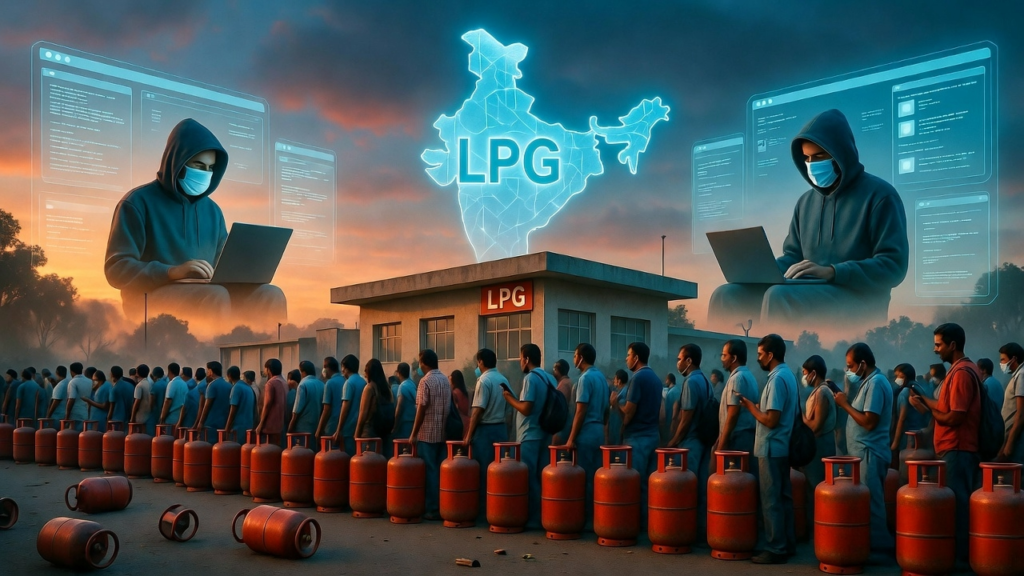
Reports of cyber fraud related to LPG cylinder bookings have increased across several parts of India, prompting warnings from cybercrime units and consumer protection authorities. Investigators say fraudsters are taking advantage of delivery delays, rising demand, and public concern about gas availability to trick consumers into making payments through fake booking links and fraudulent websites.
Cooking gas is an essential household service in India, and millions of consumers depend on timely LPG cylinder deliveries for daily use. Over the past few weeks, many consumers have reported delays in gas delivery due to factors such as high seasonal demand, logistical issues at some distribution points, and increased booking volumes in certain regions. Although authorities have clarified that there is no nationwide LPG shortage, rumours about limited supply and delayed deliveries have spread rapidly through social media and messaging platforms.
How Scammers Are Exploiting Delivery Panic
Cybercriminals are exploiting this situation by sending misleading messages that claim gas cylinders are running out of stock and that users must immediately confirm their booking to avoid losing their delivery slot. These messages are often circulated through WhatsApp, SMS, Telegram channels, and even online advertisements. The message typically contains a link that appears similar to official LPG company booking portals.
When consumers click these links, they are redirected to fraudulent websites designed to look like legitimate booking platforms of LPG distributors. Victims are asked to enter details such as their mobile number, consumer ID, address, or bank details to confirm the booking. In many cases, users are then prompted to make a small payment for delivery confirmation or booking verification through UPI or online payment gateways. Once the payment is made, the scammers disappear and the gas cylinder is never delivered.
Fake Customer Care Numbers Used in the Scam
Cybercrime investigators say another common method involves fake customer care numbers that appear in online searches. When consumers search for LPG booking help or delivery complaints, they sometimes encounter fraudulent phone numbers that appear to belong to gas agencies.
When victims call these numbers, fraudsters pose as customer support representatives and guide them through a fake booking or refund process. During this interaction, victims may be asked to share OTPs, install remote access applications, or authorize payments that ultimately transfer money to the scammers.
Organized Cybercrime Networks Behind the Fraud
Authorities believe organized cybercrime groups are responsible for many of these scams. These groups create temporary websites and domain names that resemble official LPG booking portals. They also run targeted online advertisements to capture users searching for urgent cylinder bookings.
In several investigations, police have discovered networks operating from different states using disposable SIM cards and bank accounts to receive stolen funds and quickly transfer the money before victims realize they have been defrauded.
Fake Subsidy and Government Benefit Scams
In some cases, scammers also claim that consumers are eligible for a pending LPG subsidy or a government benefit related to gas connections. Victims receive calls stating that their subsidy payment has been approved and that they must verify their bank details to receive the amount.
Once the victim provides the requested information, fraudsters use it to gain access to the victim’s bank account or initiate unauthorized transactions.
Why These Scams Are Effective
Cybersecurity experts say these scams are effective because they exploit urgency and trust. Most consumers rely heavily on LPG for cooking, and when they believe there may be delays or supply issues, they are more likely to follow instructions quickly without verifying the source.
Fraudsters take advantage of this behavior by creating messages that create panic or urgency.
Safety Warning from Authorities
Authorities have clarified that LPG companies and government agencies never ask customers to share OTPs, UPI PINs, or banking credentials over phone calls or through external links.
Consumers are advised to book cylinders only through official mobile applications, authorized distributor websites, or verified gas agency numbers. Any message asking for payment through unknown links should be treated with suspicion.
How to Report LPG Cyber Fraud
Cybercrime departments across India have urged citizens to remain cautious while interacting with online booking services and to verify the authenticity of websites before entering personal information.
If someone suspects they have become a victim of LPG booking fraud, they should immediately report the incident through the national cybercrime helpline number 1930 or the official cybercrime reporting portal. Early reporting increases the chances of freezing fraudulent transactions and tracing the criminals involved.
Officials emphasize that while LPG delivery delays may occur occasionally due to operational factors, consumers should not rely on links or messages received from unknown sources for gas bookings. Public awareness and careful verification remain the most effective ways to prevent such cyber fraud incidents from spreading further.