
Introduction: Delta Dental Data Breach Penalty Draws Regulatory Attention
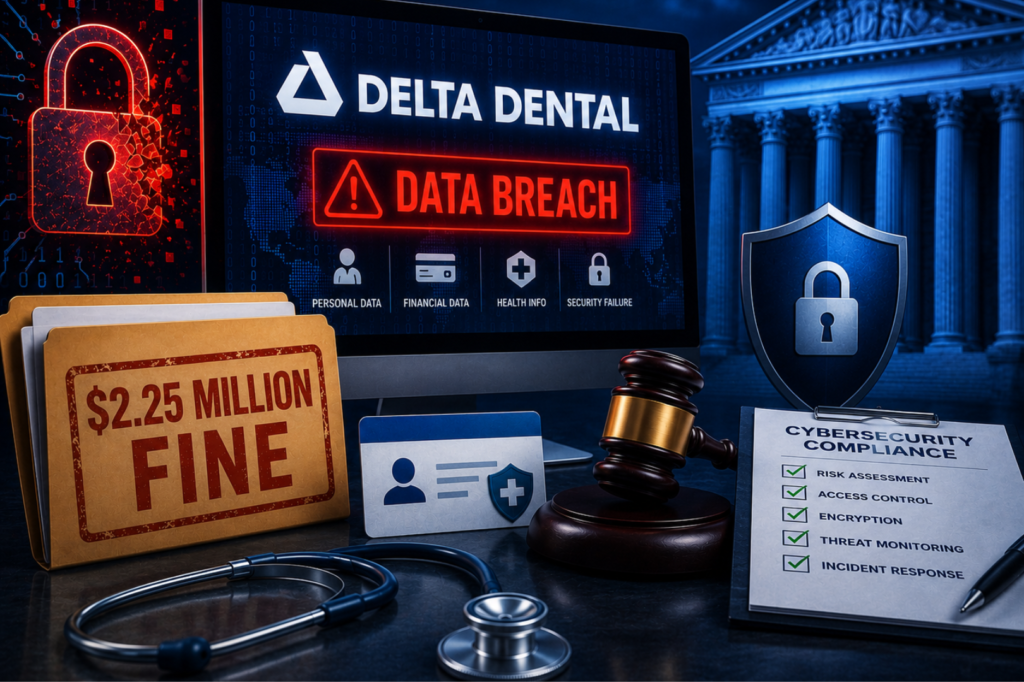
The Delta Dental Data Breach Penalty has become a major cybersecurity discussion after New York regulators imposed a $2.25 million fine against Delta Dental over inadequate cybersecurity practices. According to investigators, weak security controls and insufficient protection measures contributed to a cybersecurity breach involving sensitive customer information.
The Delta Dental Data Breach Penalty highlights the growing pressure on healthcare organizations to strengthen cybersecurity infrastructure and improve data protection strategies. Healthcare companies continue to face increasing cyber threats, including ransomware attacks, phishing campaigns, credential theft, and unauthorized network access.
Regulators stated that organizations managing sensitive healthcare and insurance information must maintain stronger cybersecurity defenses, continuous monitoring systems, and proper incident response procedures. The Delta Dental Data Breach Penalty demonstrates how poor cybersecurity governance can create serious financial, operational, and reputational consequences.
What Happened in the Delta Dental Cybersecurity Incident?
The Delta Dental cybersecurity incident involved security weaknesses that allegedly failed to protect customer information against unauthorized access. Regulatory findings suggest that inadequate cybersecurity practices increased the overall impact of the breach.
The Delta Dental Data Breach Penalty was issued after investigators identified multiple security deficiencies inside the organization’s cybersecurity framework.
Key Security Issues Identified
- Weak cybersecurity monitoring systems
- Insufficient access management controls
- Failure to maintain strong security safeguards
- Delayed detection of suspicious activity
- Inadequate cybersecurity risk management
- Poor incident response preparedness
- Lack of proactive vulnerability management
Authorities concluded that these weaknesses created security gaps that exposed sensitive information to elevated cyber risk.
Why the Delta Dental Data Breach Penalty Matters
The Delta Dental Data Breach Penalty is important because it reflects a broader regulatory shift toward stronger cybersecurity enforcement across healthcare and insurance industries.
Healthcare organizations manage large volumes of highly sensitive information, including:
- Customer personal data
- Insurance account information
- Financial records
- Healthcare-related details
- Employee information
Cybercriminals frequently target healthcare providers because healthcare data is highly valuable on underground cybercrime markets.
The Delta Dental Data Breach Penalty also shows that regulators expect organizations to implement industry-standard cybersecurity controls capable of detecting and preventing modern cyberattacks
How Cybercriminals Commonly Target Healthcare Organizations
Although full technical details of the Delta Dental cybersecurity incident have not been publicly disclosed, security experts believe attackers may have used common intrusion methods frequently seen in healthcare breaches.
Credential Theft Attacks
Cybercriminals often use phishing emails and stolen credentials to access healthcare systems. Weak password policies and insufficient authentication protections increase the likelihood of unauthorized access.
Exploitation of Unpatched Systems
Healthcare organizations sometimes rely on outdated infrastructure containing known vulnerabilities. Attackers actively scan for vulnerable systems to exploit.
Weak Access Controls
Insufficient access restrictions may allow attackers to move across internal networks after gaining entry.
Third-Party Security Risks
Healthcare providers frequently work with vendors, external applications, and cloud services that can expand the attack surface.
Lack of Continuous Monitoring
Without advanced monitoring systems, attackers may remain undetected for extended periods.
The Delta Dental Data Breach Penalty reinforces the importance of proactive cybersecurity management and continuous security monitoring.
Financial and Business Impact of the Delta Dental Data Breach Penalty
The Delta Dental Data Breach Penalty extends beyond the $2.25 million regulatory fine. Cybersecurity incidents often create long-term financial and operational damage.
Potential Business Consequences
- Regulatory penalties
- Legal investigations
- Reputation damage
- Loss of customer trust
- Increased cybersecurity spending
- Operational disruption
- Compliance remediation costs
For healthcare companies, cybersecurity incidents can significantly affect public trust because customers expect organizations to securely protect sensitive healthcare and insurance information.
The Delta Dental Data Breach Penalty serves as a warning for organizations that fail to maintain strong cybersecurity standards.
Regulatory Expectations After the Delta Dental Data Breach Penalty
Regulators are increasingly enforcing cybersecurity compliance requirements across healthcare and financial sectors.
The Delta Dental Data Breach Penalty demonstrates that organizations are expected to maintain:
- Multi-factor authentication (MFA)
- Strong endpoint protection
- Continuous threat monitoring
- Vulnerability management programs
- Data encryption policies
- Employee cybersecurity training
- Incident response procedures
- Access control management
Organizations that fail to implement these protections may face significant legal and financial consequences following a cybersecurity incident.
Warning Signs of a Healthcare Cybersecurity Breach
Security teams should monitor systems for indicators of compromise that may signal unauthorized activity.
Common Cybersecurity Warning Signs
- Unusual login behavior
- Multiple failed authentication attempts
- Suspicious network traffic
- Unauthorized privilege escalation
- Unexpected system changes
- Unknown device connections
- Abnormal account activity
Rapid detection is critical for reducing the impact of cybersecurity incidents.
The Delta Dental Data Breach Penalty highlights how delayed threat detection can increase organizational risk exposure.
How Healthcare Organizations Can Prevent Similar Cybersecurity Incidents
The Delta Dental Data Breach Penalty demonstrates why proactive cybersecurity strategies are essential for healthcare organizations.
Strengthen Identity and Access Security
Organizations should implement:
- Strong password policies
- Multi-factor authentication
- Role-based access controls
- Continuous login monitoring
Improve Threat Detection Capabilities
Advanced cybersecurity tools help detect malicious activity before attackers expand access.
Recommended solutions include:
- Endpoint detection and response (EDR)
- Security information and event management (SIEM)
- Real-time threat intelligence monitoring
Conduct Regular Security Assessments
Routine vulnerability testing helps identify weaknesses before cybercriminals exploit them.
Healthcare organizations should:
- Patch outdated software
- Audit internal systems
- Review third-party vendor risks
- Test backup recovery procedures
Train Employees Against Phishing Attacks
Employee awareness remains one of the most effective cybersecurity defenses.
Training programs should cover:
- Phishing email identification
- Social engineering risks
- Safe password practices
- Suspicious attachment handling
Develop a Strong Incident Response Plan
Organizations should maintain a documented cybersecurity response strategy that includes:
- Threat containment procedures
- Internal communication workflows
- Recovery planning
- Regulatory reporting processes
The Delta Dental Data Breach Penalty demonstrates the importance of preparedness in reducing breach impact.
Strategic Cybersecurity Lessons From the Delta Dental Data Breach Penalty
The Delta Dental Data Breach Penalty reflects broader cybersecurity challenges facing healthcare providers worldwide.
Key Industry Lessons
- Healthcare remains a major cyberattack target
- Weak cybersecurity governance increases breach risks
- Continuous monitoring is essential
- Regulatory scrutiny is increasing
- Employee awareness remains critical
- Strong compliance programs reduce organizational risk
Healthcare organizations can no longer treat cybersecurity as a secondary operational issue. Modern cyber threats require continuous investment in security infrastructure, monitoring systems, and employee training.
The Delta Dental Data Breach Penalty shows that regulators expect organizations to maintain strong cybersecurity frameworks capable of protecting sensitive customer data.
Conclusion: Delta Dental Data Breach Penalty Highlights Modern Cybersecurity Risks
The Delta Dental Data Breach Penalty demonstrates how inadequate cybersecurity practices can create severe financial, legal, and reputational consequences for healthcare organizations. As cyber threats continue evolving, regulators are increasing pressure on companies to strengthen data protection and cybersecurity compliance.
The Delta Dental Data Breach Penalty also highlights the importance of proactive threat detection, strong access controls, continuous monitoring, and employee cybersecurity awareness.
Organizations that fail to modernize their cybersecurity defenses face increasing risks from both cybercriminals and regulatory agencies. In today’s digital environment, strong cybersecurity practices are essential for protecting customer trust, sensitive information, and long-term business stability.