
Introduction: Foxconn Cyberattack Creates Global Cybersecurity Concerns
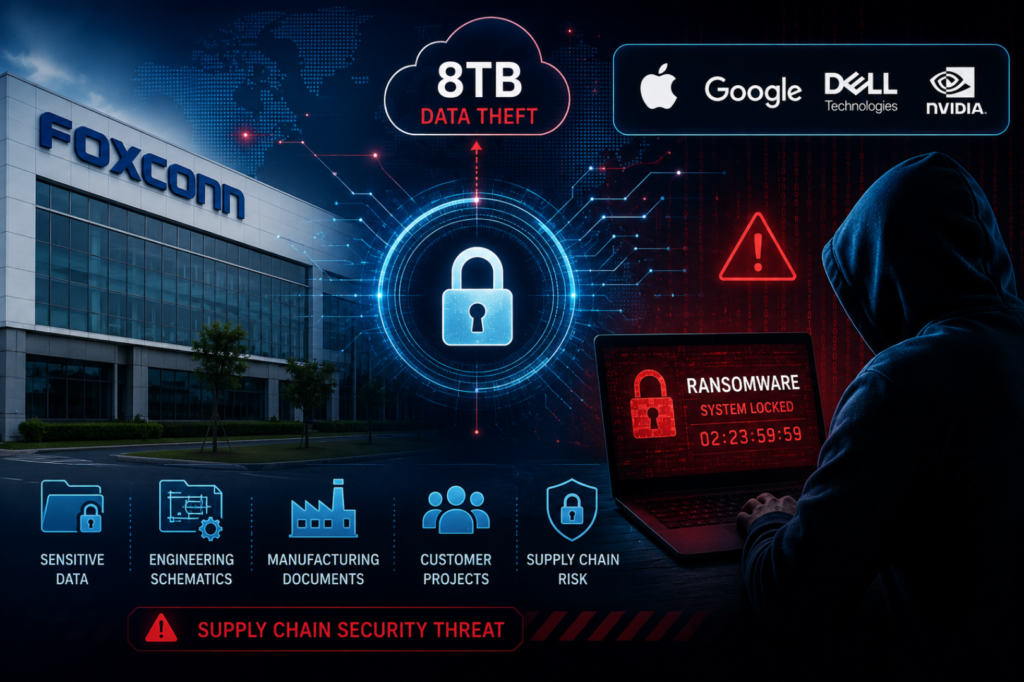
Foxconn Ransomware Attack reports have raised major cybersecurity concerns after threat actors claimed they stole nearly 8TB of sensitive enterprise data from the global electronics manufacturing giant. The incident has intensified discussions around supply chain cybersecurity, enterprise data protection, and ransomware threats targeting major technology manufacturers.
The recent ransomware attack targeting Foxconn has become one of the most discussed cybersecurity incidents in the manufacturing sector after threat actors claimed they stole nearly 8 terabytes of sensitive enterprise data from the company’s internal systems.
Foxconn, one of the world’s largest electronics manufacturers and a major supplier for global technology companies, confirmed that several North American manufacturing facilities experienced a cyberattack. The company stated that affected operations were gradually returning to normal production, but it did not publicly confirm the exact scope of the compromise.
The ransomware group behind the incident alleges that the stolen information includes confidential project files, engineering schematics, manufacturing documents, and enterprise-related records connected to major technology companies including Apple, Google, Dell Technologies, and NVIDIA.
The claim involving 8TB of stolen data significantly increases the severity of the Foxconn ransomware attack because it suggests attackers may have maintained prolonged access inside enterprise infrastructure before detection.
What is Foxconn and Why This Cyberattack Matters
Foxconn is one of the most important companies in the global technology supply chain. The organization manufactures electronics, servers, AI hardware, networking infrastructure, and consumer devices for some of the world’s largest technology brands.
Foxconn supports:
- Electronics manufacturing operations
- Enterprise hardware production
- Semiconductor and AI infrastructure
- Cloud server manufacturing
- Global supply Chain Cybersecurity logistics
Because Foxconn handles sensitive manufacturing and enterprise information for multiple global organizations, a Ransomware Data Breach attack against the company creates broader concerns beyond a single corporate incident.
Cybersecurity experts warn that attacks against major manufacturing providers can create ripple effects across interconnected supply Chain Cybersecurity ecosystems.
Foxconn Ransomware Attack Technical Overview
The Foxconn ransomware attack appears to follow the growing trend of modern double-extortion ransomware campaigns. In these attacks, cybercriminals not only encrypt systems but also steal sensitive data to pressure victims into paying ransom demands.
Key Findings From Early Reports
- Threat actors claimed theft of approximately 8TB of data
- Sensitive enterprise files were allegedly exfiltrated
- Customer-related project information may have been exposed
- Manufacturing facilities in North America were impacted
- Attackers referenced major technology companies in leaked claims
- Operations were temporarily disrupted before recovery efforts began
The reported volume of stolen information indicates that attackers may have spent significant time inside enterprise systems before the ransomware incident became publicly known.
Large-scale data exfiltration operations of this size often involve advanced reconnaissance, privilege escalation, and lateral movement across corporate infrastructure.
Massive 8TB Data Theft Raises Enterprise Security Risks
One of the most alarming aspects of the Foxconn ransomware attack is the alleged theft of nearly 8 terabytes of internal enterprise data.
Cybersecurity analysts explain that data volumes of this scale may include:
- Internal engineering schematics
- Manufacturing infrastructure documents
- Operational records
- Customer project details
- Network architecture information
- Internal communications
- Enterprise planning files
If confirmed, the exposure of such information could create long-term cybersecurity risks for both Foxconn and connected business partners.
The mention of customer-related data connected to Apple, Google, Dell Technologies, and NVIDIA has also intensified concerns regarding third-party supply chain security.
Although there is currently no public confirmation that customer systems themselves were compromised, the possibility of sensitive project exposure increases the overall severity of the incident.
Potential Attack Methods Used in the Foxconn Cyberattack
While detailed forensic findings have not yet been officially released, ransomware groups targeting enterprise manufacturers commonly use several advanced intrusion techniques.
Possible Initial Access Methods
- Phishing campaigns targeting employees
- Compromised remote access systems
- Stolen administrator credentials
- Exploitation of unpatched vulnerabilities
- Third-party vendor compromise
Post-Compromise Activities
After gaining initial access, attackers often:
- Escalate privileges across systems
- Move laterally through enterprise networks
- Disable security monitoring tools
- Identify valuable enterprise assets
- Exfiltrate sensitive information
- Deploy ransomware payloads
The reported theft of 8TB of data strongly suggests the attackers prioritized data exfiltration before operational disruption.
Supply Chain Cybersecurity Risks Continue to Grow
The Foxconn ransomware attack demonstrates why supply chain cybersecurity has become a major global concern.
Modern manufacturing ecosystems rely on interconnected infrastructure involving suppliers, contractors, cloud services, and enterprise platforms. A compromise affecting one major manufacturer can potentially create indirect risks across multiple organizations.
Major Supply Chain Risks Include
- Exposure of sensitive project information
- Increased phishing and impersonation attacks
- Third-party infrastructure compromise
- Leakage of engineering documentation
- Operational disruption across vendors
Cybercriminal groups increasingly target manufacturers because disrupting a single supplier may impact numerous global enterprises simultaneously.
Operational Impact of the Foxconn Ransomware Attack
Foxconn confirmed that several North American facilities experienced operational disruption following the cyberattack. Although the company stated that affected factories were returning to normal production, ransomware incidents involving manufacturing environments can create serious operational challenges.
Potential Operational Consequences
- Production delays
- Supply Chain Cybersecurity interruptions
- Manufacturing downtime
- Logistics disruption
- Delayed hardware shipments
- Increased recovery costs
For large manufacturing organizations, even temporary downtime can result in major financial and operational losses.
Security Recommendations for Organizations
The Foxconn ransomware attack highlights the importance of stronger enterprise cybersecurity and supply Chain Cybersecurity protection strategies.
Strengthen Access Security
- Implement multi-factor authentication
- Restrict privileged account access
- Monitor remote login activity
- Enforce zero-trust security models
Improve Threat Detection
- Deploy advanced endpoint monitoring
- Monitor unusual data transfers
- Detect lateral movement activity
- Conduct continuous threat hunting
Protect Critical Infrastructure
- Segment enterprise and operational networks
- Secure backup infrastructure
- Test ransomware recovery plans
- Monitor third-party vendor access
Enhance Supply Chain Security
- Review partner cybersecurity controls
- Audit vendor access permissions
- Monitor shared enterprise systems
- Develop supply Chain Cybersecurity incident response plans
Strategic Cybersecurity Implications
The Foxconn ransomware attack reflects the growing evolution of ransomware operations targeting high-value enterprise environments.
Emerging Threat Trends
- Large-scale enterprise data theft
- Double-extortion ransomware tactics
- Supply Chain Cybersecurity -focused cyberattacks
- Targeting of manufacturing infrastructure
- Increased attacks on global technology ecosystems
Cybersecurity experts warn that ransomware groups are increasingly focusing on organizations where operational disruption and sensitive intellectual property can maximize extortion pressure.
Conclusion
The Foxconn ransomware attack has become a major cybersecurity concern after attackers claimed they stole nearly 8TB of sensitive enterprise data from the company’s infrastructure. The incident highlights the growing risks facing global manufacturers, supply chain ecosystems, and interconnected enterprise networks.
Although Foxconn confirmed operational disruption at several North American facilities, the full scope of the compromise remains under investigation. The alleged exposure of sensitive project information connected to major technology companies has further intensified concerns surrounding enterprise cybersecurity and third-party supply Chain Cybersecurity risks.
The incident demonstrates how modern ransomware campaigns are evolving beyond simple file encryption into large-scale enterprise extortion operations involving data theft, operational disruption, and supply Chain Cybersecurity pressure.