
Introduction
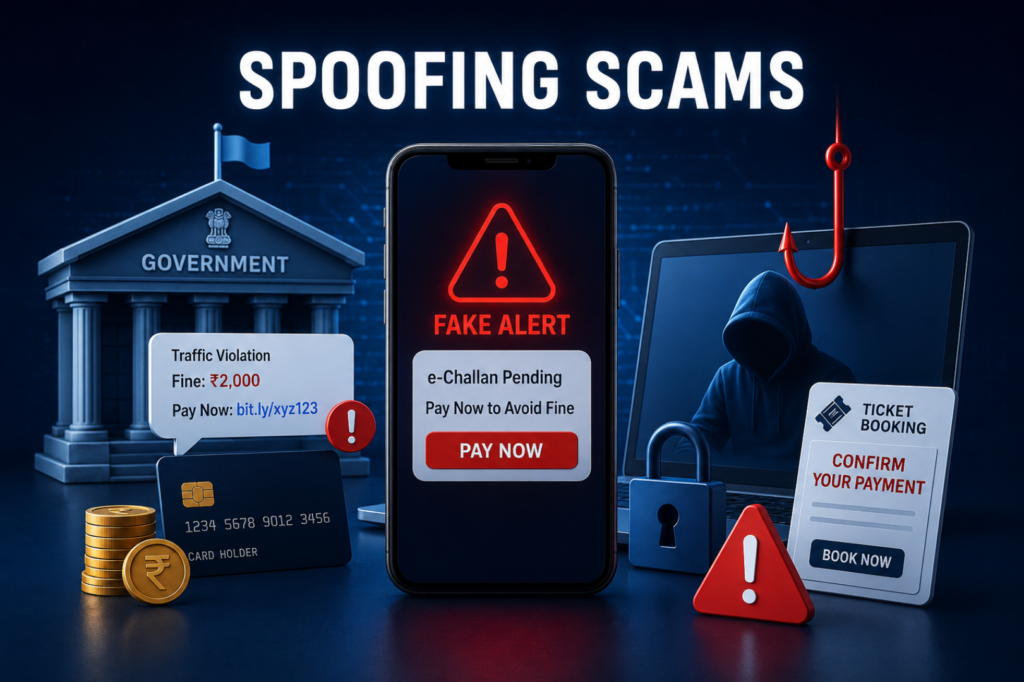
Mobile and Government Spoofing Scams have emerged as one of the most concerning cybersecurity threats in recent months. Cybercriminals are increasingly exploiting the trust people place in government agencies, public service portals, and major event organizers to launch sophisticated phishing and malware campaigns.
Security researchers have reported a significant rise in fraudulent websites and malicious mobile applications impersonating official entities. Popular scams include fake RTO e-Challan notifications, counterfeit government payment portals, and fraudulent ticket booking websites claiming to sell tickets for high-profile sporting and entertainment events.
These attacks are designed to trick users into revealing sensitive information, making unauthorized payments, or installing malware that can compromise their devices and financial accounts.
What Are Mobile and Government Spoofing Scams?
Mobile and Government Spoofing Scams involve cybercriminals pretending to be legitimate government organizations, public authorities, or trusted service providers. Attackers create convincing messages, websites, and mobile applications that closely resemble official platforms.
Their goal is to persuade users to:
- Click malicious links
- Download infected applications
- Share personal information
- Submit banking details
- Make fraudulent payments
Because these scams appear to come from trusted sources, many victims unknowingly provide sensitive information before realizing they have been targeted.
Rise of Fake e-Challan Scam Campaigns
One of the most common cyber threats currently affecting users is the Fake e-Challan Scam.
Victims receive SMS messages, emails, or WhatsApp notifications claiming that a traffic violation has been issued against their vehicle. The message typically contains:
- A pending fine amount
- An urgent payment request
- A payment deadline
- A link to view violation details
The provided link directs users to a fake website that closely imitates an official transport department portal.
The fraudulent site may ask users to enter:
- Vehicle registration information
- Mobile numbers
- Aadhaar details
- Debit or credit card information
- UPI payment credentials
In some cases, users are instructed to install an application to access challan details. These applications often contain malware capable of stealing sensitive information from the device.
Government Impersonation Fraud Is Increasing
Cybercriminals are expanding beyond traffic-related scams and launching broader Government Impersonation Fraud campaigns.
Attackers create fake portals that mimic:
- Government service websites
- Tax departments
- Utility payment services
- Citizen registration portals
- Digital identity platforms
These fake websites are often distributed through:
- SMS phishing campaigns
- Email attacks
- Social media advertisements
- Messaging applications
- Search engine advertisements
Many fraudulent sites now use HTTPS certificates, making them appear secure to unsuspecting users. However, HTTPS only encrypts communication and does not guarantee that a website is legitimate.
Malicious APK Malware Distribution Through Fake Alerts
A growing component of Mobile and Government Spoofing Scams involves the distribution of Malicious APK Malware.
Attackers frequently send messages claiming that users must install an application to:
- Pay a traffic fine
- Verify their identity
- Access government services
- Download official documents
- Confirm ticket bookings
Instead of a legitimate application, victims install malware that can perform various malicious activities, including:
- Reading SMS messages
- Capturing one-time passwords (OTPs)
- Recording keystrokes
- Monitoring device activity
- Stealing login credentials
- Accessing banking applications
Some advanced malware variants can even provide remote access to attackers, allowing them to control infected devices without the user’s knowledge.
Fake Ticket Booking Websites Targeting Event Fans
Major sporting events, concerts, and entertainment programs are increasingly being used as bait by cybercriminals.
Researchers have identified numerous Fake Ticket Booking Websites designed to exploit excitement around popular events.
These fraudulent platforms often:
- Display official event branding
- Use professional website designs
- Offer limited-time discounts
- Claim tickets are almost sold out
- Request immediate payment
Victims who make purchases may receive:
- Fake tickets
- Invalid booking confirmations
- No tickets at all
In many cases, the real objective is to collect payment card information or personal data that can be used for future fraud.
How These Attacks Work
Most Mobile and Government Spoofing Scams follow a similar attack chain.
Step 1: Initial Contact
The victim receives:
- SMS messages
- WhatsApp notifications
- Emails
- Social media advertisements
Step 2: Building Trust
Attackers use:
- Government logos
- Official-looking language
- Familiar branding
- Professional website layouts
Step 3: Creating Urgency
Victims are pressured to act quickly through warnings such as:
- Pending fines
- Account suspension notices
- Expiring ticket offers
- Legal consequences
Step 4: Data Theft or Malware Installation
The victim either:
- Shares sensitive information
- Makes fraudulent payments
- Installs malware
- Grants unauthorized access
Warning Signs of Mobile and Government Spoofing Scams
Users should be cautious if they notice:
- Unexpected payment requests
- Messages demanding urgent action
- Requests to install APK files
- Suspicious website URLs
- Unverified government notices
- Poor grammar or unusual language
- Unofficial payment methods
- Communications from unknown numbers
Recognizing these indicators early can help prevent financial and data loss.
How to Protect Yourself
Verify Official Communications
Always confirm notices directly through official government websites or authorized customer support channels.
Avoid Downloading APK Files
Never install applications received through text messages, emails, or social media platforms.
Use Official App Stores
Download apps only from trusted sources such as:
- Google Play Store
- Apple App Store
Check Website URLs Carefully
Ensure websites belong to legitimate organizations before entering personal information.
Keep Devices Updated
Regular software updates help protect against newly discovered security vulnerabilities.
Enable Security Software
Mobile security applications can help detect malicious downloads and suspicious activity.
Stay Alert
Cybercriminals often rely on urgency and fear. Verify information before taking action.
Cybersecurity Impact
The rise in Mobile and Government Spoofing Scams highlights how attackers are increasingly targeting trust rather than technical vulnerabilities.
These campaigns can result in:
- Financial fraud
- Identity theft
- Mobile device compromise
- Credential theft
- Unauthorized account access
As more services move online, users must become increasingly vigilant when interacting with digital communications claiming to come from government agencies or event organizers.
Conclusion
Mobile and Government Spoofing Scams continue to pose a significant cybersecurity threat, with attackers leveraging fake government notices, counterfeit payment portals, malicious mobile applications, and fraudulent ticket booking websites to target unsuspecting users.
The growing prevalence of Fake e-Challan Scam campaigns, Government Impersonation Fraud, Malicious APK Malware, and Fake Ticket Booking Websites demonstrates the need for stronger digital awareness and safer online practices.
Users who verify communications, avoid unofficial downloads, and rely on trusted platforms can significantly reduce their risk of falling victim to these increasingly sophisticated cyber threats.
What is a Mobile and Government Spoofing Scam?
A Mobile and Government Spoofing Scam is a cyberattack where criminals impersonate government agencies or trusted organizations to steal personal information, money, or install malware on victims’ devices.
How does a Fake e-Challan Scam work?
Attackers send fake traffic violation messages containing malicious links that direct users to fraudulent websites requesting payments or sensitive information.
Are HTTPS websites always safe?
No. HTTPS only encrypts communication between the user and the website. Cybercriminals can also obtain HTTPS certificates for fraudulent websites.
Why are APK files dangerous?
APK files received from unknown sources may contain malware capable of stealing passwords, OTPs, banking details, and personal information.
How can I verify a government notification?
Visit the official government website directly or contact the relevant department through verified contact information instead of clicking links provided in messages.