
Introduction
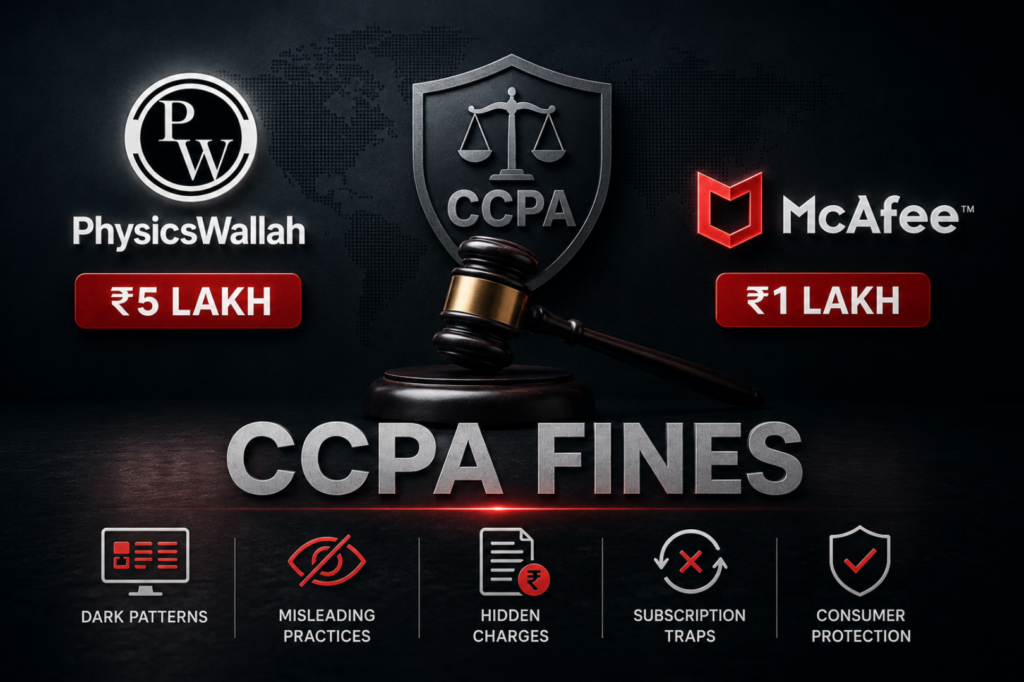
CCPA Fines PhysicsWallah and McAfee after the Central Consumer Protection Authority (CCPA) found that both companies deployed prohibited dark patterns on their digital platforms. The regulator imposed a ₹5 lakh penalty on PhysicsWallah and a ₹1 lakh penalty on McAfee Software India, bringing the total enforcement action to ₹6 lakh. The case highlights India’s growing focus on consumer protection, digital transparency, and compliance with dark pattern regulations.
Under the order, PhysicsWallah was fined ₹5 lakh, while McAfee Software India received a penalty of ₹1 lakh. The case has attracted attention across the technology, cybersecurity, and digital business sectors because it demonstrates the increasing regulatory focus on how companies design and operate consumer-facing digital platforms.
The decision highlights a growing expectation that businesses must provide users with clear, transparent, and non-manipulative digital experiences.
What Is the CCPA and Why Did It Take Action?
The Central Consumer Protection Authority (CCPA) is India’s primary consumer rights enforcement body. It is responsible for protecting consumers against unfair trade practices, misleading advertisements, and violations of consumer rights.
In this case, the authority found that certain digital practices used by PhysicsWallah and McAfee fell within the category of Dark Patterns India, which are interface designs or user experience tactics that can influence consumers into making decisions they may not have otherwise chosen.
The CCPA has been actively monitoring digital platforms as part of a broader effort to improve online consumer protection and ensure compliance with India’s consumer protection framework.
PhysicsWallah Receives ₹5 Lakh Fine
PhysicsWallah, one of India’s leading EdTech companies, was fined ₹5 lakh by the CCPA.
The platform has grown rapidly over recent years and serves millions of students preparing for competitive examinations and academic programs. As educational services increasingly move online, regulators are paying closer attention to how digital learning platforms interact with consumers.
The penalty serves as a reminder that high-growth technology companies must ensure that customer acquisition and engagement strategies comply with consumer protection regulations.
The action against PhysicsWallah is one of the most notable recent examples of regulatory scrutiny within India’s education technology sector.
McAfee Software India Penalized ₹1 Lakh
Global cybersecurity provider McAfee Software India was fined ₹1 lakh following the CCPA’s findings.
McAfee offers cybersecurity products including antivirus software, identity protection services, privacy tools, and endpoint security solutions.
Although cybersecurity companies focus on protecting users from online threats, they are also expected to maintain transparency in how they market products, present subscriptions, and manage customer interactions.
The penalty demonstrates that consumer protection obligations apply across industries, including cybersecurity and digital security services.
Understanding Dark Pattern Violations
Dark Patterns India are design techniques used on websites or applications that may influence user decisions through confusing, misleading, or manipulative methods.
Regulators worldwide are increasingly targeting such practices because they can undermine informed consumer choice.
Examples include:
Hidden Charges
Additional costs that appear only at the final stage of a purchase.
Subscription Traps
Making it easy to subscribe but difficult to cancel.
False Urgency
Creating artificial pressure through countdown timers or limited-offer claims.
Misleading Buttons
Using confusing wording or button placement that encourages unintended actions.
Forced Actions
Requiring users to perform unnecessary steps before accessing services.
Authorities believe such practices can negatively impact Online Consumer Protection trust and decision-making.
Why This CCPA Consumer Protection Action Matters
The penalties against PhysicsWallah and McAfee are significant for several reasons.
Stronger Regulatory Enforcement
The action signals that regulators are prepared to impose penalties when companies fail to meet Online Consumer Protection standards.
Greater Accountability for Digital Platforms
Businesses can no longer assume that interface design choices will escape regulatory scrutiny.
Increased Consumer Awareness
The case helps educate Digital Consumer Rights about manipulative online practices and their rights when using digital services.
Industry-Wide Compliance Impact
Organizations across multiple sectors may review their websites, mobile applications, and subscription systems to avoid similar penalties.
Impact on Businesses
The consequences of Dark Patterns India violations often extend beyond financial penalties.
Reputational Damage
Consumer trust can be affected when regulatory enforcement actions become public.
Compliance Costs
Companies may need to redesign user interfaces, review customer journeys, and conduct compliance audits.
Regulatory Monitoring
Organizations penalized by regulators often face increased oversight in the future.
Customer Retention Challenges
Users may prefer platforms that provide transparent and user-friendly experiences.
As Digital Consumer Rights regulations evolve, businesses are expected to place greater emphasis on ethical digital design.
India’s Growing Focus on Digital Consumer Rights
India’s digital economy Digital Consumer Rights continues to expand rapidly, with millions of consumers relying on online platforms daily.
As digital transactions increase, regulators are focusing on:
- Consumer transparency
- Ethical online marketing
- Subscription management practices
- Fair pricing disclosures
- Digital consent mechanisms
- User rights protection
The CCPA fines PhysicsWallah and McAfee case reflects a broader regulatory trend aimed at improving consumer confidence in digital services.
Experts expect additional enforcement actions in the future as authorities continue monitoring compliance across online platforms.
Lessons for Digital Businesses
The case provides several important lessons for organizations operating online.
Prioritize Transparency
All pricing, subscription details, and terms should be clearly disclosed.
Simplify User Choices
Avoid complicated cancellation procedures or misleading prompts.
Conduct Regular Compliance Reviews
Evaluate digital interfaces for potential Dark Patterns India risks.
Build Trust Through Ethical Design
Focus on helping users make informed decisions rather than influencing behavior through manipulation.
Companies that adopt transparent digital practices are more likely to maintain consumer trust and avoid regulatory challenges.
Future Outlook
The CCPA’s enforcement action against PhysicsWallah and McAfee is expected to encourage stronger compliance efforts across India’s digital ecosystem.
As regulators increase scrutiny, organizations will need to demonstrate that their platforms are designed with consumer interests in mind.
Industry experts believe future regulatory efforts may focus on:
- Subscription services
- Educational technology platforms
- E-commerce businesses
- Software providers
- Online marketplaces
The trend indicates that ethical digital design is becoming a critical component of corporate compliance strategies.
Conclusion
The decision by the Central Consumer Protection Authority to fine PhysicsWallah ₹5 lakh and McAfee ₹1 lakh highlights India’s growing commitment to addressing dark pattern violations and protecting digital consumers.
The enforcement action reinforces the importance of transparency, fair user experiences, and ethical digital business practices. As regulatory oversight continues to expand, organizations will need to ensure that customer interactions are designed to inform and empower users rather than influence them through deceptive techniques.
The case serves as a clear warning that consumer protection compliance is now a fundamental requirement for businesses operating in India’s rapidly growing digital economy.
Why did the CCPA fine PhysicsWallah and McAfee?
The CCPA imposed penalties after identifying prohibited dark pattern practices on their digital platforms that were considered inconsistent with consumer protection guidelines.
How much was PhysicsWallah fined?
PhysicsWallah received a penalty of ₹5 lakh.
How much was McAfee fined?
McAfee Software India was fined ₹1 lakh.
What are dark patterns?
Dark patterns are website or application design techniques that may influence consumers into making decisions through misleading, confusing, or manipulative user experiences.
What is the role of the CCPA?
The Central Consumer Protection Authority (CCPA) is responsible for protecting consumer rights and taking action against unfair trade practices and misleading business conduct.