
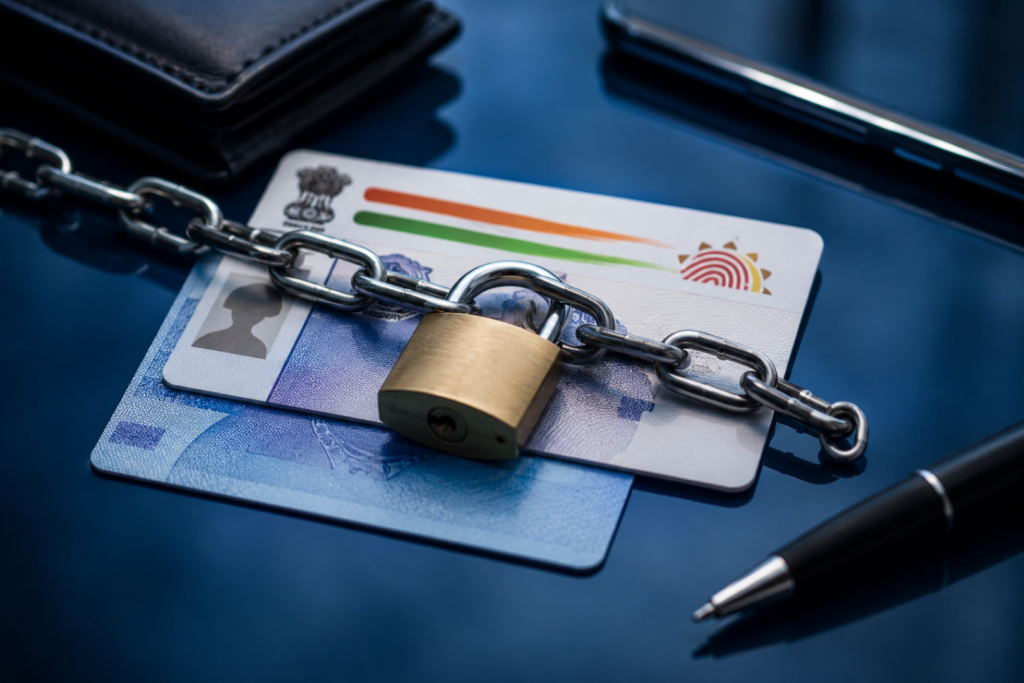
Introduction: Aadhaar PAN Dark Web Leak — Why It Matters
The Aadhaar PAN Dark Web Leak has renewed concerns about the growing trade of stolen identity documents on cybercriminal marketplaces. According to cybersecurity researchers, stolen Aadhaar and PAN card details continue to circulate across dark web forums, increasing the likelihood of identity theft, financial fraud, and targeted phishing attacks.
The Aadhaar PAN Dark Web Leak does not point to a newly confirmed breach of government databases. Instead, researchers warn that identity documents obtained through previous data breaches, phishing campaigns, malware infections, fraudulent KYC collections, and other unauthorized sources remain actively traded among cybercriminals.
For millions of Indian citizens, Aadhaar and PAN are among the most valuable identity documents. Once these credentials are exposed, cybercriminals can combine them with other leaked personal information to impersonate victims, bypass identity verification processes, or execute sophisticated financial scams.
The warning also highlights the importance of stronger digital hygiene. While organizations must improve data protection practices, individuals play an equally important role by protecting identity documents, recognizing phishing attempts, and monitoring financial accounts for suspicious activity.
What are Aadhaar and PAN?
Aadhaar
Aadhaar is India’s 12-digit unique identity number issued by the Unique Identification Authority of India. It is widely used for identity verification, government services, banking, telecom services, insurance, taxation, and various Know Your Customer (KYC) processes.
Because Aadhaar is accepted across numerous public and private services, unauthorized access to Aadhaar details can significantly increase the risk of identity fraud if additional verification measures are bypassed.
Permanent Account Number (PAN)
The Permanent Account Number (PAN) is a unique ten-character alphanumeric identifier issued by the Income Tax Department. PAN is essential for:
- Filing income tax returns
- Opening bank accounts
- Applying for loans
- High-value financial transactions
- Investment activities
- Business registrations
Unlike passwords, Aadhaar and PAN cannot simply be changed after exposure. This makes the protection of these identity documents especially important.
What Caused This Security Concern?
Cybersecurity researchers have warned that stolen Aadhaar and PAN details continue to appear on underground marketplaces frequented by cybercriminals. Rather than representing one single incident, these listings are believed to originate from multiple sources accumulated over several years.
Potential sources include:
- Historic third-party data breaches
- Phishing campaigns
- Fake KYC verification portals
- Malware infections
- Fraudulent mobile applications
- Insider threats
- Poorly secured databases
- Unauthorized document sharing
Many cybercriminal groups aggregate information obtained from different breaches into large databases before selling access through dark web forums.
Researchers note that identity records become increasingly valuable when combined with leaked phone numbers, email addresses, banking information, or login credentials obtained from unrelated cyber incidents.
Aadhaar PAN Dark Web Leak: Full Technical Breakdown
Timeline of Events
Although researchers have recently highlighted renewed activity involving Aadhaar and PAN records on dark web marketplaces, no single breach has been publicly confirmed as the sole source of these documents. Instead, the issue reflects an ongoing cybercrime ecosystem in which previously compromised personal information continues to circulate.
General progression includes:
- Sensitive identity information is exposed through various attack methods.
- Stolen records are aggregated into underground databases.
- Cybercriminals advertise datasets on dark web marketplaces.
- Buyers use the information for financial fraud and identity theft.
- Victims often remain unaware until suspicious activity occurs.
What Information May Be Exploited?
Depending on the source of exposure, cybercriminals may obtain:
- Aadhaar number
- PAN number
- Full name
- Date of birth
- Mobile number
- Email address
- Residential address
- Identity document copies
- Financial account information (when linked)
- KYC documentation
While the exact contents vary between datasets, the combination of multiple identity attributes significantly increases the effectiveness of social engineering and fraud campaigns.
Potential Risks & Impact
Identity Theft
Identity theft remains the most immediate concern when Aadhaar or PAN information becomes available to cybercriminals. Fraudsters may attempt to impersonate victims during financial transactions, account verification processes, or customer support interactions.
Potential consequences include:
- Creation of fake identities
- Fraudulent account registrations
- Unauthorized financial transactions
- Loan applications using stolen identities
- Fake KYC submissions
- Criminal impersonation
Financial Risk
Financial institutions increasingly rely on digital identity verification. If cybercriminals successfully combine Aadhaar or PAN information with other leaked credentials, victims may face:
- Unauthorized banking activity
- Fraudulent credit applications
- SIM-swap attacks
- UPI fraud
- Digital wallet abuse
- Tax-related fraud
Victims often discover these activities only after receiving bank alerts, loan notices, or tax discrepancies.
Phishing and Social Engineering
Attackers frequently use leaked identity information to make phishing attacks appear more convincing.
Examples include:
- Fake Income Tax refund emails
- Fraudulent Aadhaar update requests
- Counterfeit KYC verification portals
- Banking verification scams
- Fake telecom SIM verification messages
- Investment fraud
Because these messages often contain genuine personal details, victims may mistakenly believe they originate from legitimate organizations.
Official Response / Statement
At the time of writing, there has been no official confirmation of a new nationwide breach involving Aadhaar or PAN databases. Instead, cybersecurity researchers have warned that identity documents stolen through previous incidents and cybercriminal activities continue to be traded on dark web marketplaces. This distinction is important, as the current warning focuses on the ongoing circulation and misuse of already compromised personal information rather than a newly confirmed compromise of government systems.
Authorities have consistently encouraged citizens to safeguard identity documents, avoid sharing unnecessary copies, and promptly report suspected identity misuse. Individuals are also advised to verify any requests for Aadhaar or PAN details before providing them to organizations or online platforms.
Organizations that collect Aadhaar or PAN information are expected to implement robust cybersecurity controls, encrypt sensitive data, enforce strict access management, and comply with applicable Indian data protection requirements.
Industry Context: Why Identity Document Abuse is Increasing
Identity documents have become one of the most valuable commodities traded in cybercrime marketplaces. Unlike passwords, which can be reset after a compromise, Aadhaar and PAN numbers generally remain permanent identifiers. As a result, once exposed, they may continue circulating among threat actors for years.
Cybercriminal groups increasingly purchase large identity datasets to support various criminal operations, including financial fraud, phishing campaigns, account takeovers, and social engineering attacks. Rather than targeting individuals one by one, attackers often automate these activities using extensive collections of stolen personal information.
Several factors are contributing to this growing threat:
- Increase in phishing campaigns targeting Indian citizens.
- More online KYC verification processes.
- Growth of digital banking and UPI services.
- Expansion of digital government services.
- Data collected by numerous third-party organizations.
- Availability of dark web marketplaces specializing in personal information.
Organizations should also recognize that protecting customer identity information is no longer only a compliance requirement—it has become a fundamental cybersecurity responsibility.
Readers interested in similar cybersecurity incidents can explore CyberNexora’s Cyber Incidents section for the latest reports on data breaches, ransomware, malware, and phishing attacks.
To understand practical cybersecurity awareness and defensive strategies, visit the Learn & Protect section for expert guides, security tips, and best practices.
Businesses looking for security guidance, cybersecurity tools, and implementation best practices can also explore CyberNexora’s Resources section.
How to Protect Yourself and Your Organization
Individuals and organizations should adopt proactive security measures to reduce the risk of identity theft and financial fraud.
1. Use Masked Aadhaar Whenever Possible
Whenever an organization accepts it, use Masked Aadhaar instead of sharing the complete Aadhaar number. This limits unnecessary exposure of sensitive information.
2. Enable Aadhaar Biometric Lock
The Aadhaar Biometric Lock feature helps prevent unauthorized biometric authentication attempts. Enable this feature through the official UIDAI portal whenever biometric authentication is not required.
3. Never Share Identity Documents Unnecessarily
Before uploading Aadhaar or PAN copies:
- Verify the legitimacy of the requesting organization.
- Ask whether complete documents are actually required.
- Avoid sharing identity documents through messaging applications unless absolutely necessary.
- Never upload documents to suspicious websites.
4. Watch for Phishing Attempts
Be cautious of:
- Fake KYC update emails
- Fraudulent bank verification messages
- Fake Income Tax notices
- SMS requesting Aadhaar updates
- WhatsApp verification scams
- Fake customer support numbers
Always verify requests through official channels before responding.
5. Monitor Financial Activity Regularly
Regularly review:
- Bank statements
- Credit card transactions
- Credit reports
- Income Tax records
- Loan history
- UPI transaction history
Early detection significantly reduces potential financial damage.
6. Secure Your Digital Accounts
Strengthen online security by:
- Using strong, unique passwords.
- Enabling multi-factor authentication (MFA).
- Updating devices regularly.
- Installing security patches promptly.
- Using reputable antivirus software.
7. Report Suspicious Activity Immediately
If you suspect misuse of your Aadhaar or PAN:
- Contact your bank immediately.
- Notify the relevant government authority.
- Report phishing websites.
- Change passwords linked to affected accounts.
- Monitor future financial activity closely.
Rapid reporting often limits additional fraudulent activity.
8. Organizations Must Strengthen Data Protection
Businesses handling customer identity documents should:
- Encrypt stored documents.
- Apply least-privilege access controls.
- Conduct regular security audits.
- Train employees against phishing.
- Monitor suspicious access attempts.
- Maintain secure backup strategies.
- Implement continuous vulnerability management.
Protecting customer identity data should remain a top organizational priority.
Indicators of Compromise (Potential Warning Signs)
Although this is not a malware incident, several indicators may suggest your identity information has been misused.
Watch for:
- Unexpected OTP messages.
- Unknown loan approvals.
- Bank accounts opened without your knowledge.
- Credit cards you never requested.
- Income Tax notices for unfamiliar transactions.
- UPI registrations you did not perform.
- Telecom SIM suddenly losing network connectivity.
- Unauthorized changes to banking information.
- Suspicious login alerts.
- Unexpected KYC verification requests.
If any of these occur, immediate investigation is recommended.
Key Takeaways
- Cybersecurity researchers warn that stolen Aadhaar and PAN details continue circulating on dark web marketplaces.
- Exposed identity documents significantly increase the risk of identity theft, phishing, financial fraud, and SIM-swap attacks.
- No new nationwide Aadhaar or PAN database breach has been officially confirmed in relation to this warning.
- Individuals should minimize sharing identity documents, use Masked Aadhaar whenever possible, and enable Aadhaar Biometric Lock.
- Organizations handling identity documents should strengthen cybersecurity controls and improve data protection practices.
- Continuous monitoring of financial accounts and tax records can help detect fraudulent activity early.
Conclusion: Aadhaar PAN Dark Web Leak and What Happens Next
The Aadhaar PAN Dark Web Leak warning highlights a broader cybersecurity challenge rather than a single isolated incident. Personal identity information remains one of the most valuable assets traded within underground cybercrime ecosystems, making both individuals and organizations attractive targets for fraudsters.
While there is currently no official confirmation of a new government database compromise, the continued circulation of previously stolen identity records demonstrates the long-term impact of data exposure. Cybersecurity awareness, cautious sharing of identity documents, strong authentication practices, and continuous financial monitoring remain among the most effective defenses against identity theft.
For more cybersecurity awareness articles and practical security guidance, readers can also explore CyberNexora’s Learn & Protect and Cyber Incidents sections to stay informed about emerging cyber threats and recommended defensive practices.
Frequently Asked Questions(FAQs)
The Aadhaar PAN Dark Web Leak refers to cybersecurity warnings that stolen Aadhaar and PAN card details continue circulating on dark web marketplaces. Researchers indicate that these records may originate from previously compromised data, phishing campaigns, malware infections, or other unauthorized sources rather than a newly confirmed government database breach.
Cybercriminals can exploit exposed identity information to commit identity theft, apply for fraudulent loans, conduct SIM-swap attacks, open fake financial accounts, bypass KYC verification, or launch targeted phishing campaigns. The risk increases when Aadhaar and PAN information is combined with leaked phone numbers, email addresses, or banking credentials.
You can reduce the risk by using Masked Aadhaar wherever accepted, enabling Aadhaar Biometric Lock, avoiding unnecessary sharing of identity documents, verifying KYC requests, enabling multi-factor authentication on important accounts, and regularly monitoring bank accounts and tax records for suspicious activity.
At the time of publication, there has been no official confirmation of a new nationwide Aadhaar database breach related to this warning. The advisory highlights the continued circulation of previously stolen identity information on dark web marketplaces rather than confirming a fresh compromise of government infrastructure.
Immediately contact your bank, report the incident to the relevant authorities, monitor your financial accounts for unauthorized transactions, review your Income Tax records, and change passwords associated with sensitive online accounts if necessary. Prompt reporting can help minimize financial losses and prevent further misuse.
Aadhaar and PAN are widely used for identity verification across banking, taxation, telecom, and government services. Unlike passwords, these identifiers cannot be easily changed after exposure, making them highly valuable for long-term identity fraud and financial crimes.