
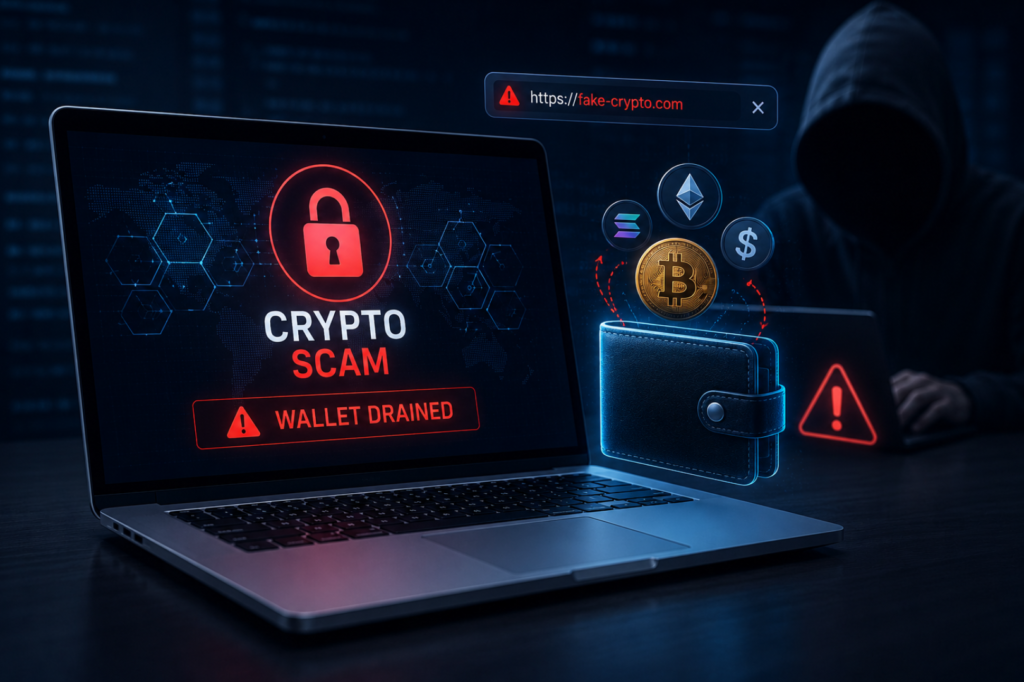
Introduction: Rising Cryptocurrency Wallet Drainer Attacks
Cryptocurrency Wallet Drainer Attacks have become one of the fastest-growing cybercrime trends affecting the global digital asset ecosystem. Security researchers are observing a sharp increase in fake crypto websites, malicious browser extensions, fraudulent Web3 applications, and phishing campaigns specifically designed to compromise crypto wallets and steal digital assets.
The growing popularity of decentralized finance (DeFi), NFT trading, crypto staking, and blockchain-based applications has created new opportunities for cybercriminals. Attackers are no longer focusing only on traditional malware. Instead, they are exploiting user trust, browser-based wallet systems, and unsafe smart contract permissions to execute highly effective Cryptocurrency Wallet Drainer Attacks.
Unlike conventional financial fraud, blockchain transactions are mostly irreversible. Once a victim approves a malicious transaction or signs a harmful smart contract, attackers can instantly transfer cryptocurrencies, NFTs, and tokens to anonymous wallets across multiple blockchain networks.
Recent cybersecurity investigations show that attackers are heavily targeting users of MetaMask, Trust Wallet, Phantom Wallet, Coinbase Wallet, and other popular Web3 wallets through phishing infrastructure that appears highly legitimate.
What Are Cryptocurrency Wallet Drainer Attacks?
Cryptocurrency Wallet Drainer Attacks refer to cyberattacks where malicious actors trick users into granting unauthorized wallet permissions, revealing recovery phrases, or connecting wallets to fraudulent platforms.
The primary objective of Cryptocurrency Wallet Drainer Attacks is to gain access to digital assets and silently transfer funds to attacker-controlled wallets.
These attacks commonly involve:
- Fake crypto websites
- Browser extension malware
- Malicious NFT minting pages
- Fraudulent token airdrops
- Smart contract manipulation
- Wallet phishing campaigns
- Fake customer support portals
Modern Cryptocurrency Wallet Drainer Attacks are highly automated and often use prebuilt “drainer kits” sold on underground cybercrime marketplaces.
Fake Crypto Websites Fueling Cryptocurrency Wallet Drainer Attacks
Fake crypto websites are currently one of the most dangerous components of Cryptocurrency Wallet Drainer Attacks. Cybercriminals create cloned versions of legitimate crypto platforms that look nearly identical to trusted websites.
Common Fake Website Techniques
Wallet Connection Scams
Users are asked to connect their wallets to access fake rewards, staking platforms, or NFT launches.
Fake Airdrop Campaigns
Attackers promise free tokens in exchange for wallet verification or transaction approval.
Phishing Login Pages
Victims are tricked into entering recovery phrases or private keys.
Malicious Smart Contract Prompts
Users unknowingly approve harmful contract permissions that allow attackers to drain assets.
Search Engine Poisoning
Fraudulent crypto websites appear in sponsored ads or manipulated search engine results.
These fake crypto websites heavily contribute to the rapid rise of Cryptocurrency Wallet Drainer Attacks globally.
Malicious Browser Extensions and Web3 Wallet Theft
Malicious browser extensions have become another major delivery mechanism for Cryptocurrency Wallet Drainer Attacks.
Cybercriminals distribute harmful extensions disguised as:
- MetaMask enhancement tools
- NFT rarity checkers
- Crypto portfolio trackers
- Web3 security plugins
- Blockchain analytics utilities
Once installed, malicious extensions can:
- Monitor wallet activity
- Steal browser sessions
- Capture private keys
- Replace crypto wallet addresses
- Inject phishing windows into legitimate sites
- Modify transaction details
Some advanced browser malware used in Cryptocurrency Wallet Drainer Attacks can silently alter clipboard data during cryptocurrency transfers.
Because browser-based wallets depend heavily on extension permissions, attackers continue exploiting weak browser security models.
Technical Breakdown of Cryptocurrency Wallet Drainer Attacks
Modern Cryptocurrency Wallet Drainer Attacks typically follow a structured attack chain designed for speed and automation.
Step 1: Victim Targeting
Attackers target users through:
- Social media advertisements
- Discord spam campaigns
- Telegram crypto groups
- Fake influencer promotions
- Compromised crypto accounts
Step 2: Fake Website Redirection
Users are redirected to malicious crypto platforms designed to mimic trusted Web3 services.
Step 3: Wallet Connection Request
Victims connect wallets believing the website is legitimate.
Step 4: Permission Approval
The malicious platform requests dangerous permissions including:
- Unlimited token approvals
- NFT transfer access
- Smart contract execution rights
Step 5: Wallet Draining
Automated scripts transfer:
- Bitcoin (BTC)
- Ethereum (ETH)
- Stablecoins
- NFTs
- Governance tokens
Step 6: Asset Laundering
Attackers move stolen funds through:
- Cross-chain bridges
- Crypto mixers
- Layered wallet networks
- Privacy-focused blockchain services
This automated process allows Cryptocurrency Wallet Drainer Attacks to compromise large numbers of users within minutes.
Web3 Security Risks Behind Cryptocurrency Wallet Drainer Attacks
The rise of Cryptocurrency Wallet Drainer Attacks highlights several major security weaknesses within the Web3 ecosystem.
Key Web3 Security Risks
Over-Permissioned Smart Contracts
Many users approve unlimited wallet permissions without verification.
Weak Domain Verification
Users often fail to confirm legitimate crypto website domains.
Browser Dependency
Browser-based wallets increase exposure to extension-based attacks.
Social Engineering
Attackers exploit urgency, hype, and fear of missing out (FOMO).
Lack of User Awareness
New crypto investors are often unfamiliar with wallet security risks.
These Web3 weaknesses continue enabling large-scale Cryptocurrency Wallet Drainer Attacks across global crypto communities.
Indicators of Compromise (IoCs)
Users should immediately investigate suspicious behavior that may indicate Cryptocurrency Wallet Drainer Attacks.
Common Warning Signs
- Unexpected wallet approval requests
- Unknown smart contract interactions
- Unauthorized token transfers
- Suspicious browser extensions
- Fake NFT minting pages
- Crypto giveaway scams
- Redirects to cloned websites
- Browser pop-ups requesting wallet access
Rapid detection is critical because blockchain transactions cannot usually be reversed after confirmation.
Impact of Cryptocurrency Wallet Drainer Attacks
Financial Impact
Victims may lose:
- Cryptocurrency holdings
- NFT collections
- Staking assets
- Stablecoins
- DeFi investments
Business Impact
Crypto businesses may experience:
- Reputation damage
- Reduced customer trust
- Increased fraud investigations
- Regulatory pressure
Security Impact
Successful Cryptocurrency Wallet Drainer Attacks may lead to:
- Persistent wallet compromise
- Long-term smart contract abuse
- Multi-wallet exposure
- Ongoing phishing targeting
Several cybersecurity firms have linked organized cybercrime groups to large-scale Cryptocurrency Wallet Drainer Attacks involving millions of dollars in stolen assets.
How to Protect Against Cryptocurrency Wallet Drainer Attacks
Use Hardware Wallets
Hardware wallets provide stronger protection because private keys remain offline.
Popular hardware wallets include:
- Ledger
- Trezor
- Keystone
Verify Crypto Website Domains
Before connecting wallets:
- Double-check domain names
- Avoid sponsored search ads
- Use official project links
- Confirm HTTPS encryption
Avoid Unknown Browser Extensions
Install extensions only from trusted sources and verified developers.
Users should regularly:
- Remove unused extensions
- Audit permissions
- Monitor suspicious browser behavior
Review Smart Contract Permissions
Before approving transactions:
- Read wallet prompts carefully
- Avoid unlimited token approvals
- Revoke unnecessary permissions regularly
Separate Crypto Browsing Activity
Security experts recommend using:
- Dedicated browsers for crypto
- Separate wallet environments
- Anti-phishing tools
- Secure password managers
These measures significantly reduce exposure to Cryptocurrency Wallet Drainer Attacks.
Future Trends in Cryptocurrency Wallet Drainer Attacks
Cybersecurity analysts predict that Cryptocurrency Wallet Drainer Attacks will continue evolving through:
- AI-generated phishing pages
- Deepfake crypto influencers
- Automated scam networks
- Advanced browser malware
- Cross-chain attack automation
As the Web3 ecosystem expands, attackers are increasingly targeting users instead of blockchain protocols themselves.
This shift demonstrates why Web3 security awareness and wallet protection strategies are becoming essential for all cryptocurrency users.
Conclusion
Cryptocurrency Wallet Drainer Attacks are now among the most serious cybersecurity threats facing crypto users. Through fake crypto websites, malicious browser extensions, phishing campaigns, and dangerous smart contract approvals, attackers can rapidly steal digital assets from unsuspecting victims.
The rise of browser-based wallets and decentralized applications has created a larger attack surface for cybercriminals. Although blockchain networks remain technically secure, user-focused attacks continue increasing across the Web3 ecosystem.
Preventing Cryptocurrency Wallet Drainer Attacks requires strong security awareness, careful wallet permission management, verified browsing practices, and the use of trusted security tools. As cybercriminals continue refining their techniques, proactive Web3 security measures will remain critical for protecting digital assets and maintaining trust in the cryptocurrency ecosystem.
What are Cryptocurrency Wallet Drainer Attacks?
Cryptocurrency Wallet Drainer Attacks are cyberattacks where malicious websites, browser extensions, or smart contracts steal funds from connected crypto wallets.
How do fake crypto websites steal cryptocurrency?
Fake crypto websites trick users into connecting wallets or approving malicious smart contracts that allow attackers to transfer assets.
Are browser extensions dangerous for crypto wallets?
Yes. Malicious browser extensions can monitor wallet activity, capture sensitive information, and manipulate crypto transactions.
Can stolen cryptocurrency be recovered?
In most cases, blockchain transactions are irreversible, making recovery extremely difficult after Cryptocurrency Wallet Drainer Attacks.
How can users protect themselves from wallet drainers?
Users should use hardware wallets, verify website domains, avoid unknown extensions, and carefully review smart contract permissions.