Close Menu
    What's Hot

    QR Code Phishing Attacks : How Quishing Scams Are Targeting Mobile Users

    May 15, 2026

    Gujarat Fake Trading App Cyber Fraud Case: ₹49 Lakh Investment Scam Exposes Rising Digital Fraud Threats

    May 14, 2026

    Australian Financial Firm Cybersecurity Failure 2026: FIIG Securities Fined $2.5 Million After Major Data Breach

    May 13, 2026

    Foxconn Ransomware Attack: 8TB Data Theft Claims Raise Major Supply Chain Security Concerns

    May 13, 2026

    Google AI-Generated Zero-Day Exploit 2026: Cybersecurity Enters a New Era of AI-Powered Attacks

    May 12, 2026
    Facebook X (Twitter) Instagram
    Friday, May 15
    CyberNexora News
    X (Twitter) Instagram LinkedIn
    • Home
    • Cyber Incidents
    • laws & government
    • Penalties
    • Learn & Protect
    • Resources
    • Contact Us
    Get Cyber Alerts
    CyberNexora News
    Home»laws & government»DoT’s SIM-Binding Rule Comes Into Effect from March 1: What It Means for WhatsApp, Telegram and Other Messaging Apps

    DoT’s SIM-Binding Rule Comes Into Effect from March 1: What It Means for WhatsApp, Telegram and Other Messaging Apps

    Zeel_CyberexpertBy Zeel_CyberexpertMarch 1, 2026Updated:March 4, 20263 Mins Read
    Facebook Twitter LinkedIn Email Telegram

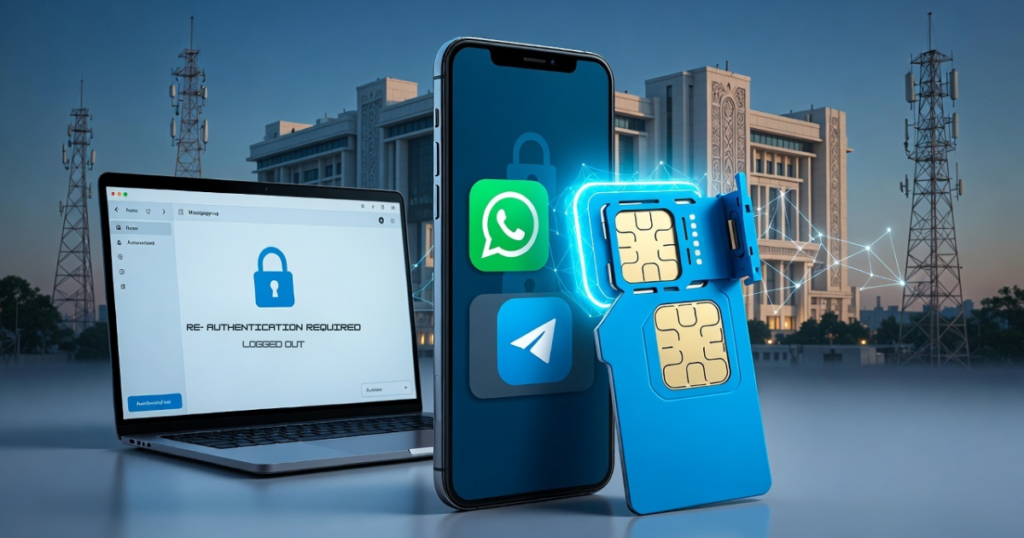
    India’s Department of Telecommunications (DoT) has enforced a new SIM-binding rule starting March 1, 2026. The directive applies to messaging platforms that use mobile numbers for user authentication, including WhatsApp, Telegram, Signal and similar apps.

    The order was originally issued on November 28, 2025, giving companies 90 days to comply.

    What Is SIM-Binding?

    Currently, most messaging apps verify users using a one-time password (OTP) sent to their registered mobile number during sign-up. After verification, the app can continue functioning even if the SIM card is removed or deactivated, particularly in multi-device and web versions.

    Under the new SIM-binding rule:

    • The messaging app must function only when the registered SIM card is present in the user’s primary mobile device.
    • If the registered SIM is removed, swapped, or inactive, the app may stop working until re-verified.
    • Web-based services (such as WhatsApp Web or Telegram Web) must automatically log out at least once every six hours.
    • Users will need to re-authenticate periodically for web access.

    The six-hour auto-logout rule applies only to web sessions, not to the main mobile app, provided the SIM remains active in the device.

    Why Has This Rule Been Introduced?

    According to DoT, cybercriminals have been exploiting messaging platforms by operating accounts without the original SIM present. In some reported cases, fraudsters used such gaps to carry out phishing, impersonation, and financial scams.

    The SIM-binding requirement aims to:

    • Ensure every active account is linked to a verified SIM issued under KYC norms.
    • Improve traceability of digital communications.
    • Reduce misuse of telecom identifiers.
    • Strengthen fraud prevention measures.

    Officials state that this is part of a broader effort to curb online financial fraud and digital identity misuse.

    What Changes for Users?

    From March 1 onward:

    • Messaging apps must verify that the registered SIM is physically present in the primary device.
    • Web and desktop sessions will auto-logout at least every six hours.
    • Users who are travelling or roaming will not be affected, as long as the SIM remains active in the phone.

    Users who frequently switch devices or remove their SIM cards may experience additional verification prompts.

    Industry Response

    Reports indicate that some messaging platforms have already begun testing updates to comply with the directive. Beta versions of certain apps reportedly include prompts asking users to confirm that their registered SIM is inserted in the device.

    At the same time, an industry body representing major messaging platforms has challenged aspects of the rule in court, arguing that it may exceed regulatory authority. The government maintains that SIM-binding is necessary for cybersecurity and fraud prevention.

    What Users Should Do

    • Keep your registered SIM active in your primary device.
    • Avoid removing or swapping SIM cards unnecessarily.
    • Enable two-step verification where available.
    • Regularly review linked devices in messaging app settings.
    Share. Facebook Twitter LinkedIn Email Telegram

    latest news

    QR Code Phishing Attacks : How Quishing Scams Are Targeting Mobile Users

    May 15, 2026

    Gujarat Fake Trading App Cyber Fraud Case: ₹49 Lakh Investment Scam Exposes Rising Digital Fraud Threats

    May 14, 2026

    Australian Financial Firm Cybersecurity Failure 2026: FIIG Securities Fined $2.5 Million After Major Data Breach

    May 13, 2026

    Foxconn Ransomware Attack: 8TB Data Theft Claims Raise Major Supply Chain Security Concerns

    May 13, 2026

    Google AI-Generated Zero-Day Exploit 2026: Cybersecurity Enters a New Era of AI-Powered Attacks

    May 12, 2026

    South Staffordshire Water Data Breach Fine 2026: ICO Issues Nearly £1 Million Penalty After Cybersecurity Failures

    May 11, 2026

    OWASP Mobile Top 10-2024: Critical Mobile App Security Risks Every Security Professional Should Know

    May 10, 2026

    LockBit 5.0 Ransomware Attack on VP Brands International: Cybersecurity Threat Analysis and Business Impact

    May 10, 2026

    Vidar Malware Campaign: Fake Software Downloads Used to Steal Corporate Credentials

    May 9, 2026

    AI Phishing Attacks-2026: How Cybercriminals Use ChatGPT and Claude

    May 9, 2026
    Recent Posts
    • QR Code Phishing Attacks : How Quishing Scams Are Targeting Mobile Users
    • Gujarat Fake Trading App Cyber Fraud Case: ₹49 Lakh Investment Scam Exposes Rising Digital Fraud Threats
    • Australian Financial Firm Cybersecurity Failure 2026: FIIG Securities Fined $2.5 Million After Major Data Breach
    Top Posts

    Unauthorized Access Incident at Coupang Exposes Customer Data

    December 29, 2025

    Significant Data Breach at Korean Air Subcontractor Exposes Employee Records

    December 29, 2025

    New York Passes Cybersecurity Procurement Law for State and Local Agencies

    December 30, 2025
    About

    CyberNexora Blog provides trusted cybersecurity news, attack analysis, and security awareness updates. Our goal is to educate and inform readers about emerging cyber threats and best protection practices.

    Facebook X (Twitter) Instagram Pinterest LinkedIn
    Pages
    • Home
    • Cyber Incidents
    • laws & government
    • Penalties
    • Learn & Protect
    • Resources
    • Contact Us

    Get Cyber Security Alerts

    Thanks! Please check your email to confirm subscription.

    • About CyberNexora News
    • Privacy Policy
    © 2026 CyberNexora News. All Rights Reserved.

    Type above and press Enter to search. Press Esc to cancel.