
Close Menu
    What's Hot

    Scanning & Enumeration in Cyber Attacks: How Hackers Discover Systems, Services, and Hidden Vulnerabilities

    March 31, 2026

    European Commission Confirms Cyberattack on Public Web Systems, Possible Data Breach Under Investigation

    March 30, 2026

    Uber Fined €290 Million for Data Transfer Violations – A Major Cybersecurity and Privacy Case Study (2024)

    March 29, 2026

    Anthropic Claude Leak Sparks Global Cybersecurity Shock: A Turning Point for the Industry

    March 28, 2026

    How Hackers Use Reconnaissance to Collect Information Before an Attack: Tools and Techniques Explained

    March 27, 2026
    Facebook X (Twitter) Instagram
    Tuesday, March 31
    CyberNexora News
    X (Twitter) Instagram LinkedIn
    • Home
    • Cyber Incidents
    • laws & government
    • Penalties
    • Learn & Protect
    • Resources
    • Contact Us
    Get Cyber Alerts
    CyberNexora News
    Home»Learn & Protect»Learn & Protect: How Cybercriminals Exploit Year-End Activity and How Systems Stay Secure

    Learn & Protect: How Cybercriminals Exploit Year-End Activity and How Systems Stay Secure

    Common Year-End Cyber Attack Patterns and Security Defenses
    Zeel_CyberexpertBy Zeel_CyberexpertDecember 30, 2025Updated:March 4, 20263 Mins Read
    Facebook Twitter LinkedIn Email Telegram

    At the end of the year, digital activity increases sharply across the world. People shop online, send holiday messages, reset passwords, update systems, and close business accounts. This high level of online movement creates patterns that cybercriminals often try to exploit.

    Understanding how attacks happen and how systems protect themselves helps individuals and organizations reduce risk.

    This article explains the most common year-end cyber attack patterns and the protection mechanisms used to stop them.

    1. Why Year-End Periods Attract Cyber Attacks

    The final weeks of the year involve:

    • High email volume (invoices, greetings, reports, resets)
    • Financial transactions (bonuses, settlements, refunds)
    • Account changes (password resets, access removals, contract closures)

    This creates noise and urgency, which attackers rely on.

    Attackers do not rely on technical hacking alone. Most successful cyber incidents use human behavior and process gaps rather than pure system flaws.

    2. Most Common Cyber Threats During High-Activity Periods

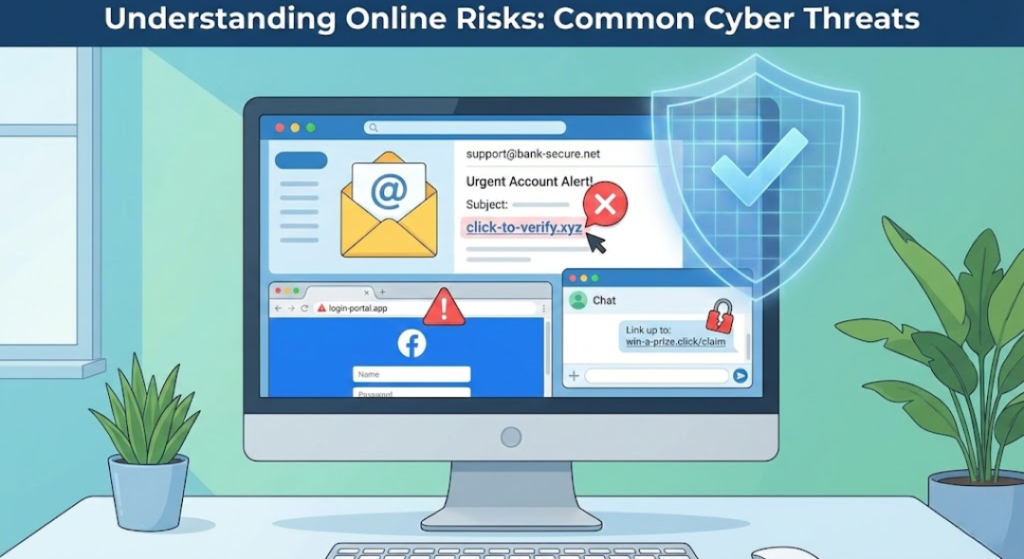
    Phishing and Social Engineering

    Attackers send messages that appear routine:

    • “Invoice attached”
    • “Password expires today”
    • “End-of-year account update required”

    The goal is to make the message blend into normal business flow.
    Account Takeover Attempts

    If attackers already have leaked credentials from earlier breaches, they test them during this period because monitoring teams are often slower and users are distracted.

    Fake Service Notifications

    Attackers mimic cloud services, payment gateways, delivery companies, and internal IT departments to push users to fake login pages.

    Malware Through Attachments and Links

    Files labelled as reports, statements, greetings, or tax documents are used to deliver malicious code.

    3. How Modern Systems Detect and Block These Attacks

    Email Security Filters

    Emails are scanned for known malicious domains, abnormal language patterns, and suspicious attachments.

    Behavior Monitoring

    Systems monitor login patterns, location changes, device fingerprints, and session behavior to detect anomalies.

    Multi-Factor Authentication

    Even if a password is stolen, attackers cannot log in without the second verification step.

    Network Segmentation

    If one system is compromised, segmentation prevents lateral movement into sensitive systems.

    Automated Incident Response

    When abnormal behavior is detected, systems can automatically block accounts, isolate devices, or revoke sessions.

    4. How Human Actions Still Play a Role

    Even with strong technical controls, many breaches still start with:

    • Clicking a link without verifying sender identity
    • Entering credentials on a fake page
    • Reusing passwords across services
    • Ignoring unusual system warnings

    This is why cybersecurity remains a combination of technology, process, and user awareness.

    5. What This Means for Digital Safety

    Cybersecurity is no longer only about stopping hackers — it is about managing digital behavior, identity trust, and system visibility.

    Most attacks today are not sophisticated code exploits. They are simple actions performed at scale, relying on speed, volume, and confusion.

    Protection is therefore not only about stronger firewalls, but about:

    • Clear verification processes
    • Strong identity controls
    • Real-time monitoring
    • Rapid response mechanisms

    Conclusion

    High-activity digital periods such as year-end do not create new threats — they amplify existing ones.

    Cybersecurity works best when systems assume that attempts will happen, and are built to detect, limit, and recover from them rather than expecting them not to occur.

    Learning how threats operate and how protection works is the foundation of digital resilience.

    Share. Facebook Twitter LinkedIn Email Telegram

    letest news

    Scanning & Enumeration in Cyber Attacks: How Hackers Discover Systems, Services, and Hidden Vulnerabilities

    March 31, 2026

    European Commission Confirms Cyberattack on Public Web Systems, Possible Data Breach Under Investigation

    March 30, 2026

    Uber Fined €290 Million for Data Transfer Violations – A Major Cybersecurity and Privacy Case Study (2024)

    March 29, 2026

    Anthropic Claude Leak Sparks Global Cybersecurity Shock: A Turning Point for the Industry

    March 28, 2026

    How Hackers Use Reconnaissance to Collect Information Before an Attack: Tools and Techniques Explained

    March 27, 2026

    ₹10.6 Crore Cyber Fraud Network Busted by Delhi Police; Multiple Arrests Across States

    March 26, 2026

    DarkSword Spyware Exposes Millions of Apple Devices to Critical Cyber Risk

    March 25, 2026

    Telegram “Easy Task” Scam: How Small Payments Turn Into Big Losses (And How to Stay Safe)

    March 24, 2026

    AU Small Finance Bank Fraud Probe Deepens: Former Regional Head Under Scanner in ₹590 Crore Case

    March 23, 2026

    Pune Online Scam: Senior Citizen Loses ₹3.10 Lakh in Fake Electric Stove Purchase Amid Gas Shortage

    March 22, 2026
    Recent Posts
    • Scanning & Enumeration in Cyber Attacks: How Hackers Discover Systems, Services, and Hidden Vulnerabilities
    • European Commission Confirms Cyberattack on Public Web Systems, Possible Data Breach Under Investigation
    • Uber Fined €290 Million for Data Transfer Violations – A Major Cybersecurity and Privacy Case Study (2024)
    Top Posts

    Unauthorized Access Incident at Coupang Exposes Customer Data

    December 29, 2025

    Significant Data Breach at Korean Air Subcontractor Exposes Employee Records

    December 29, 2025

    Scanning & Enumeration in Cyber Attacks: How Hackers Discover Systems, Services, and Hidden Vulnerabilities

    March 31, 2026
    About

    CyberNexora Blog provides trusted cybersecurity news, attack analysis, and security awareness updates. Our goal is to educate and inform readers about emerging cyber threats and best protection practices.

    Facebook X (Twitter) Instagram Pinterest LinkedIn
    Pages
    • Home
    • Cyber Incidents
    • laws & government
    • Penalties
    • Learn & Protect
    • Resources
    • Contact Us
    Subscribe to Our Newsletter

    Get Cyber Security Alerts

    Get trusted cybercrime alerts and security updates.

    Thanks! Please check your email to confirm subscription.

    • About Us
    • Privacy Policy
    © 2025 CyberNexora News. All Rights Reserved.

    Type above and press Enter to search. Press Esc to cancel.