Close Menu
    What's Hot

    Scanning & Enumeration in Cyber Attacks: How Hackers Discover Systems, Services, and Hidden Vulnerabilities

    March 31, 2026

    European Commission Confirms Cyberattack on Public Web Systems, Possible Data Breach Under Investigation

    March 30, 2026

    Uber Fined €290 Million for Data Transfer Violations – A Major Cybersecurity and Privacy Case Study (2024)

    March 29, 2026

    Anthropic Claude Leak Sparks Global Cybersecurity Shock: A Turning Point for the Industry

    March 28, 2026

    How Hackers Use Reconnaissance to Collect Information Before an Attack: Tools and Techniques Explained

    March 27, 2026
    Facebook X (Twitter) Instagram
    Tuesday, March 31
    CyberNexora News
    X (Twitter) Instagram LinkedIn
    • Home
    • Cyber Incidents
    • laws & government
    • Penalties
    • Learn & Protect
    • Resources
    • Contact Us
    Get Cyber Alerts
    CyberNexora News
    Home»Learn & Protect»How AI Is Used to Steal Personal Data in 2026 — And How to Protect Yourself

    How AI Is Used to Steal Personal Data in 2026 — And How to Protect Yourself

    How Cybercriminals Use Artificial Intelligence to Steal Personal Data
    Zeel_CyberexpertBy Zeel_CyberexpertJanuary 13, 2026Updated:March 4, 20264 Mins Read
    Facebook Twitter LinkedIn Email Telegram

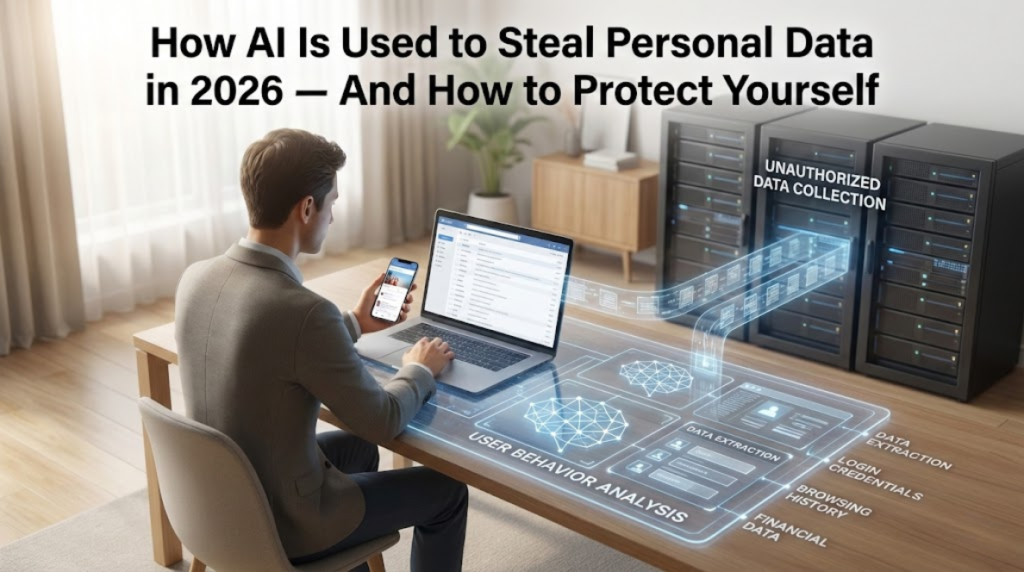
    Artificial intelligence is not only being used for innovation — it is also being abused by cybercriminals to steal personal data at scale. In 2026, attackers no longer rely on basic phishing emails or malware alone. Instead, they use AI to automate, personalize, and scale attacks that trick people and systems into handing over sensitive information.

    This article explains how AI-powered data theft works and what individuals and businesses can do to reduce their risk.

    How AI Is Used to Steal Personal Data
    1. AI-Generated Phishing That Looks Real
    Modern phishing is no longer poorly written or easy to detect.

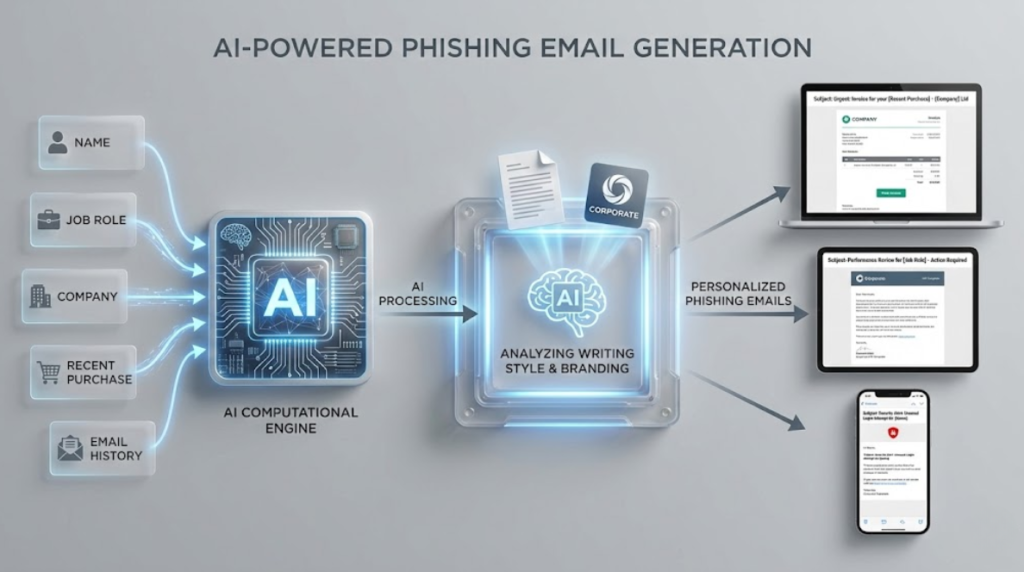
    AI tools are now used to:

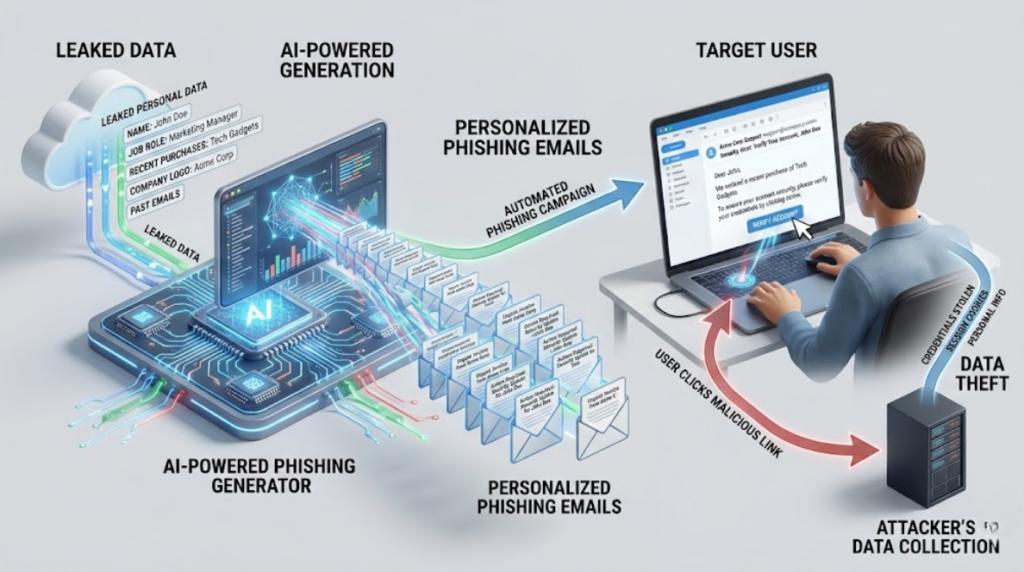
    • Generate perfect emails in the victim’s language and writing style
    • Mimic company branding and communication tone
    • Customize messages using leaked data from past breaches

    Attackers can automatically create thousands of unique, personalized phishing emails that look legitimate, making detection difficult.

    2. AI Voice Cloning and Impersonation
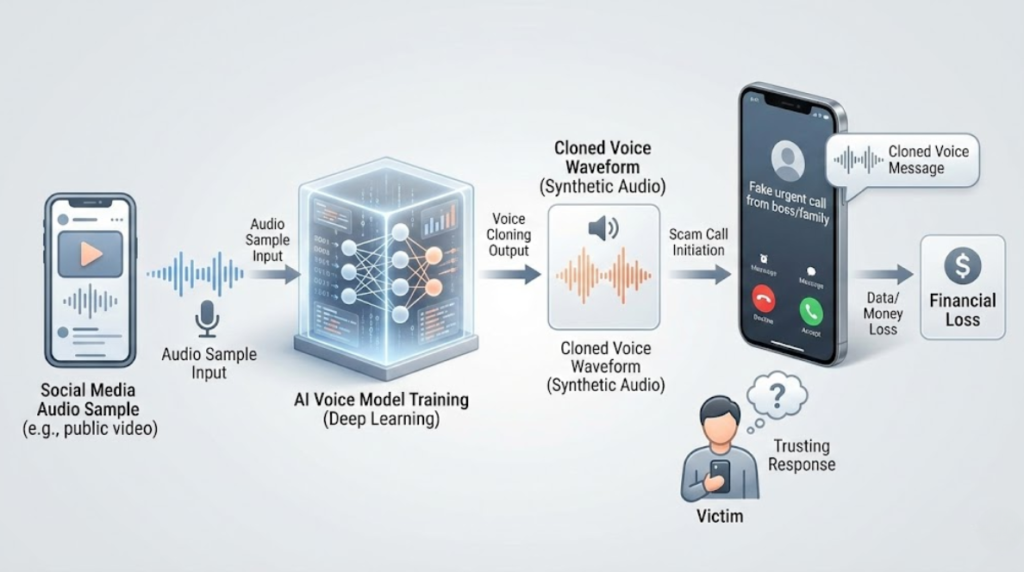
    AI voice cloning can recreate a person’s voice using just a few seconds of audio from social media, videos, or calls.

    Attackers use this to:

    • Impersonate company executives
    • Call finance or HR teams requesting urgent transfers
    • Trick family members into sending money or information

    These scams work because the voice sounds authentic and familiar.

    3. AI-Powered Fake Websites and Portals
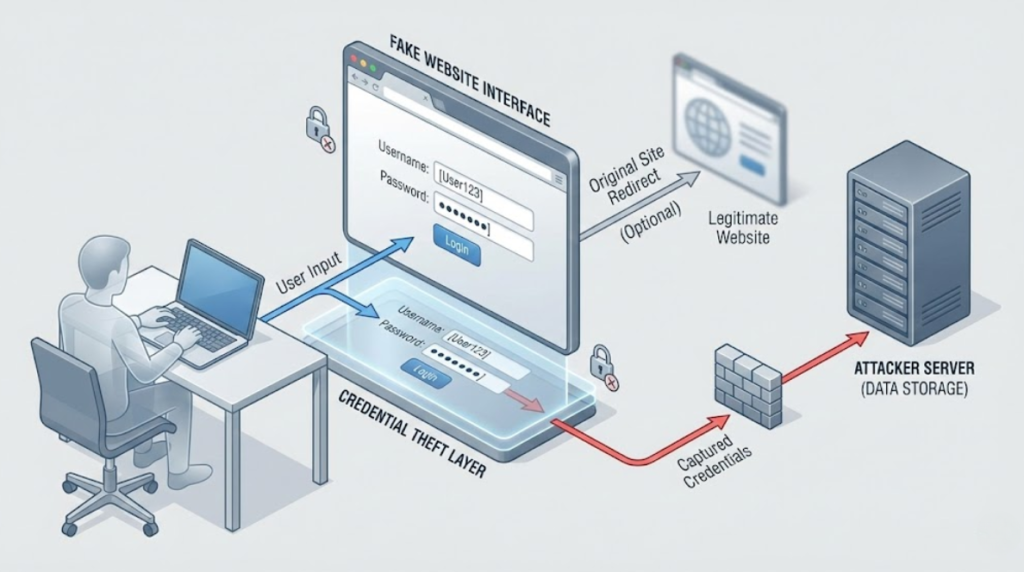
    AI can instantly generate:

    • Fake login pages that look exactly like Google, banks, or social platforms
    • Fake customer support chats that behave like real agents
    • Fake verification portals that collect identity documents

    Victims believe they are interacting with a real company, but they are actually giving data to attackers.

    4. AI-Driven Data Correlation
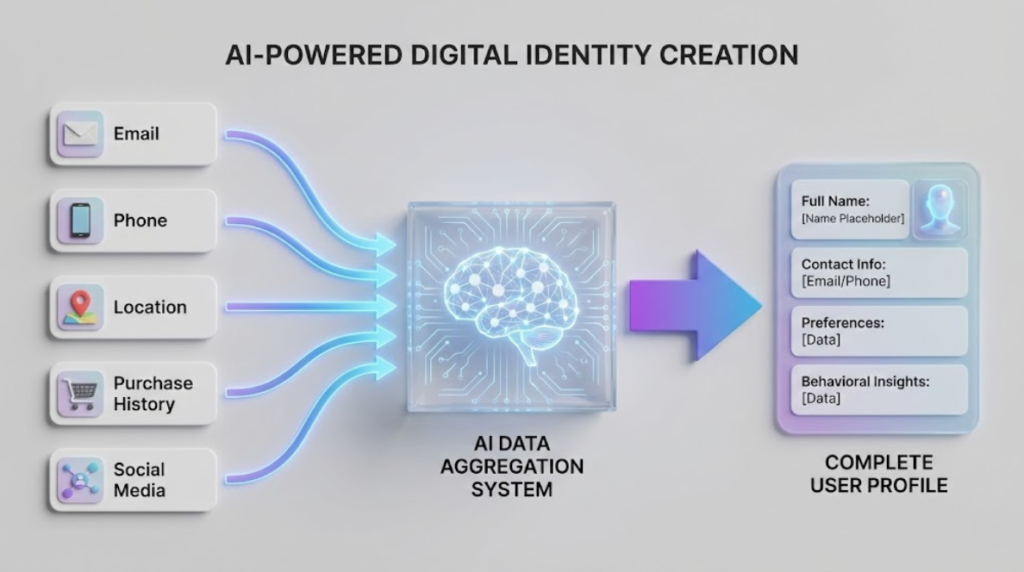
    Instead of stealing all data from one source, attackers now:

    • Combine small leaks from multiple breaches
    • Use AI to match emails, phone numbers, names, and behavior patterns
    • Build complete digital profiles of individuals

    This allows identity theft, account takeovers, and financial fraud using partial data that seems harmless on its own.

    5. AI-Enhanced Malware and Info-Stealers
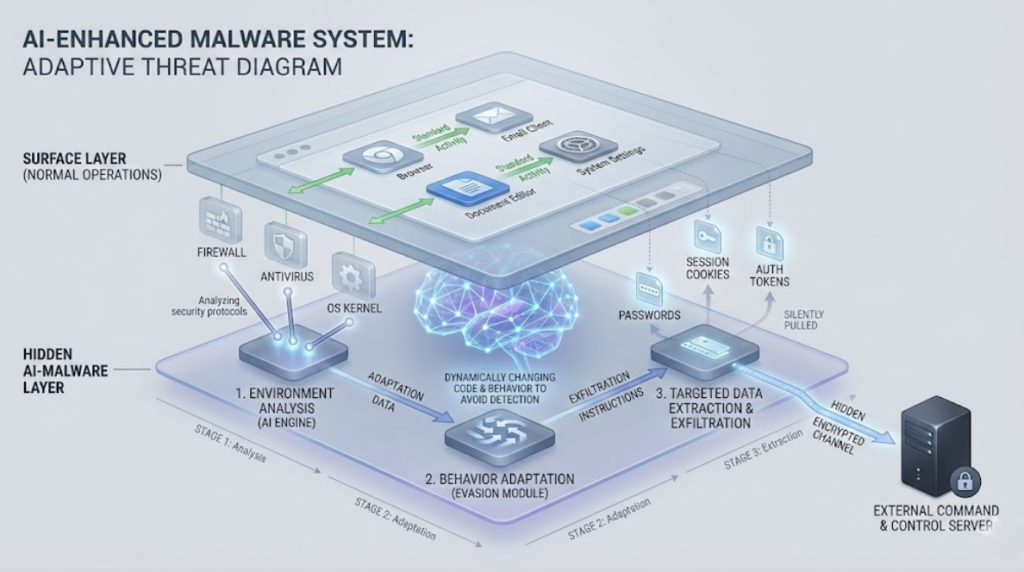
    AI is also used to improve malicious software by:

    • Making it adapt to different security environments
    • Avoiding detection by changing behavior dynamically
    • Selecting high-value data like passwords, cookies, and tokens

    This increases the success rate of attacks while lowering visibility.

    The Impact of AI-Driven Data Theft

    • Personal identities can be misused for loans, SIM swaps, and financial fraud
    • Business accounts can be compromised through credential theft
    • Reputations can be damaged using impersonation and fake content
    • Victims often realize the damage only after financial or legal consequences occur

    How to Protect Yourself and Your Organization
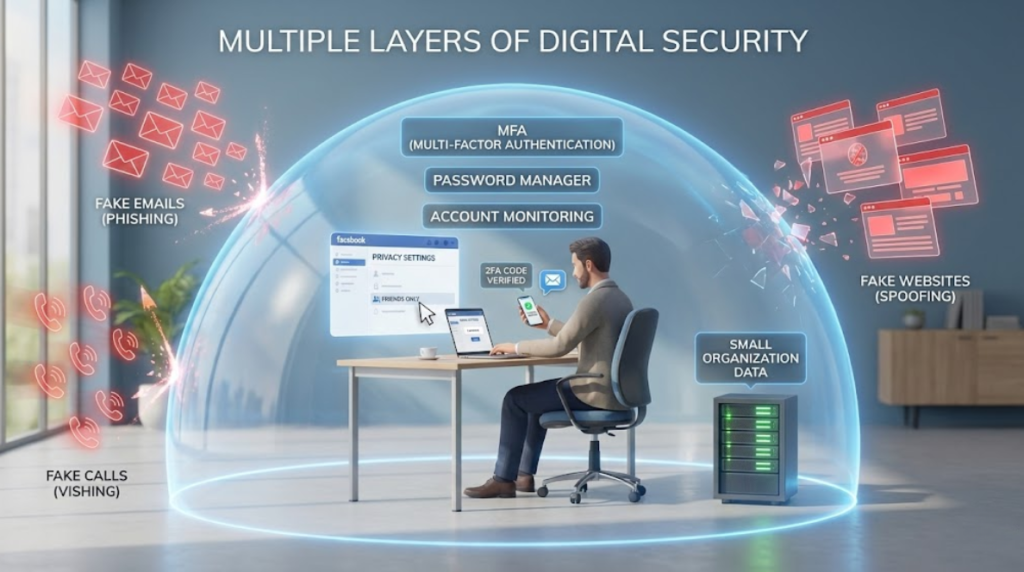
    1. Strengthen Identity Protection

    • Use multi-factor authentication (MFA) everywhere possible
    • Avoid SMS-based verification when better options exist
    • Use a password manager with unique passwords per service

    2. Be Skeptical of Urgent or Emotional Requests

    AI scams often create urgency:

    • “Immediate action required”
    • “Your account will be closed”
    • “Emergency transfer needed”

    Always verify using a second communication channel.

    3. Verify Voices and Messages

    If you receive a sensitive request:

    • Call back using a known number
    • Confirm internally before taking action
    • Never trust voice alone for financial or data-related decisions

    4. Reduce Public Exposure

    • Limit personal information shared publicly on social media
    • Avoid posting phone numbers, birthdays, or documents
    • Review privacy settings on platforms regularly

    5. Monitor for Data Exposure

    • Use breach monitoring tools or alerts
    • Watch for suspicious account activity
    • Act immediately if you see unusual logins or messages

    Conclusion

    AI has changed the way cybercrime operates. Attacks are no longer random, noisy, or obvious — they are personalized, automated, and psychologically convincing.

    Understanding how AI is used for data theft is the first step toward reducing your risk. By strengthening authentication, verifying communications, limiting data exposure, and staying alert, individuals and organizations can significantly reduce the impact of these emerging threats.

    Share. Facebook Twitter LinkedIn Email Telegram

    letest news

    Scanning & Enumeration in Cyber Attacks: How Hackers Discover Systems, Services, and Hidden Vulnerabilities

    March 31, 2026

    European Commission Confirms Cyberattack on Public Web Systems, Possible Data Breach Under Investigation

    March 30, 2026

    Uber Fined €290 Million for Data Transfer Violations – A Major Cybersecurity and Privacy Case Study (2024)

    March 29, 2026

    Anthropic Claude Leak Sparks Global Cybersecurity Shock: A Turning Point for the Industry

    March 28, 2026

    How Hackers Use Reconnaissance to Collect Information Before an Attack: Tools and Techniques Explained

    March 27, 2026

    ₹10.6 Crore Cyber Fraud Network Busted by Delhi Police; Multiple Arrests Across States

    March 26, 2026

    DarkSword Spyware Exposes Millions of Apple Devices to Critical Cyber Risk

    March 25, 2026

    Telegram “Easy Task” Scam: How Small Payments Turn Into Big Losses (And How to Stay Safe)

    March 24, 2026

    AU Small Finance Bank Fraud Probe Deepens: Former Regional Head Under Scanner in ₹590 Crore Case

    March 23, 2026

    Pune Online Scam: Senior Citizen Loses ₹3.10 Lakh in Fake Electric Stove Purchase Amid Gas Shortage

    March 22, 2026
    Recent Posts
    • Scanning & Enumeration in Cyber Attacks: How Hackers Discover Systems, Services, and Hidden Vulnerabilities
    • European Commission Confirms Cyberattack on Public Web Systems, Possible Data Breach Under Investigation
    • Uber Fined €290 Million for Data Transfer Violations – A Major Cybersecurity and Privacy Case Study (2024)
    Top Posts

    Unauthorized Access Incident at Coupang Exposes Customer Data

    December 29, 2025

    Significant Data Breach at Korean Air Subcontractor Exposes Employee Records

    December 29, 2025

    Scanning & Enumeration in Cyber Attacks: How Hackers Discover Systems, Services, and Hidden Vulnerabilities

    March 31, 2026
    About

    CyberNexora Blog provides trusted cybersecurity news, attack analysis, and security awareness updates. Our goal is to educate and inform readers about emerging cyber threats and best protection practices.

    Facebook X (Twitter) Instagram Pinterest LinkedIn
    Pages
    • Home
    • Cyber Incidents
    • laws & government
    • Penalties
    • Learn & Protect
    • Resources
    • Contact Us
    Subscribe to Our Newsletter

    Get Cyber Security Alerts

    Get trusted cybercrime alerts and security updates.

    Thanks! Please check your email to confirm subscription.

    • About Us
    • Privacy Policy
    © 2025 CyberNexora News. All Rights Reserved.

    Type above and press Enter to search. Press Esc to cancel.