
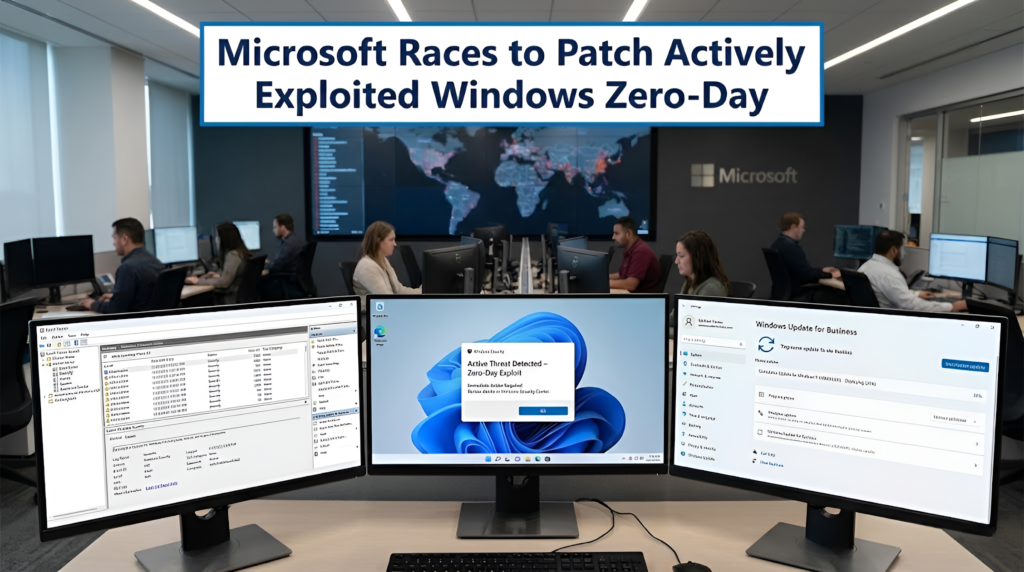
Microsoft is currently responding to a newly identified Windows zero-day vulnerability that security researchers have confirmed is being actively exploited in real-world attacks. The issue came to light after multiple incident reports showed attackers using the flaw before any official fix was publicly available, which by definition makes it a zero-day.
According to the information shared by security researchers, the vulnerability affects a core Windows component that exists across multiple supported versions of the operating system. What makes this case serious is that exploitation was observed before disclosure, indicating that threat actors already had a working exploit while defenders were unaware of the weakness.
Researchers analyzing the activity noted that the exploit is not being used in large-scale automated campaigns. Instead, it appears in targeted intrusion attempts, suggesting involvement of skilled attackers rather than common malware operators. In the observed cases, the zero-day was used as part of a broader attack chain rather than a standalone exploit, pointing to deliberate and controlled use.

Microsoft has acknowledged the vulnerability and confirmed that it is under active exploitation. The company has initiated an accelerated response process and is working on security updates to address the issue. In parallel, Microsoft has begun sharing interim mitigation guidance with enterprise customers while the final patch is being prepared.
From an industry perspective, Windows zero-days are considered especially valuable because of how widely the operating system is deployed in corporate environments. When such vulnerabilities are actively exploited, even for a short period, they significantly increase risk across organizations that rely on Windows-based endpoints.

Security teams monitoring the situation have reported heightened alerting around unusual process behavior and post-exploitation indicators, as the public disclosure of a zero-day often leads to copycat activity once technical details begin circulating.
At the time of writing, the vulnerability remains confirmed, exploitation is ongoing in limited cases, and a full security update from Microsoft is in progress. Additional technical details are expected as Microsoft releases further advisories and integrates the fix into upcoming Windows updates.
This incident highlights, once again, how quickly threat actors move to weaponize previously unknown flaws and why zero-day exposure continues to be one of the most challenging areas of modern endpoint security.