
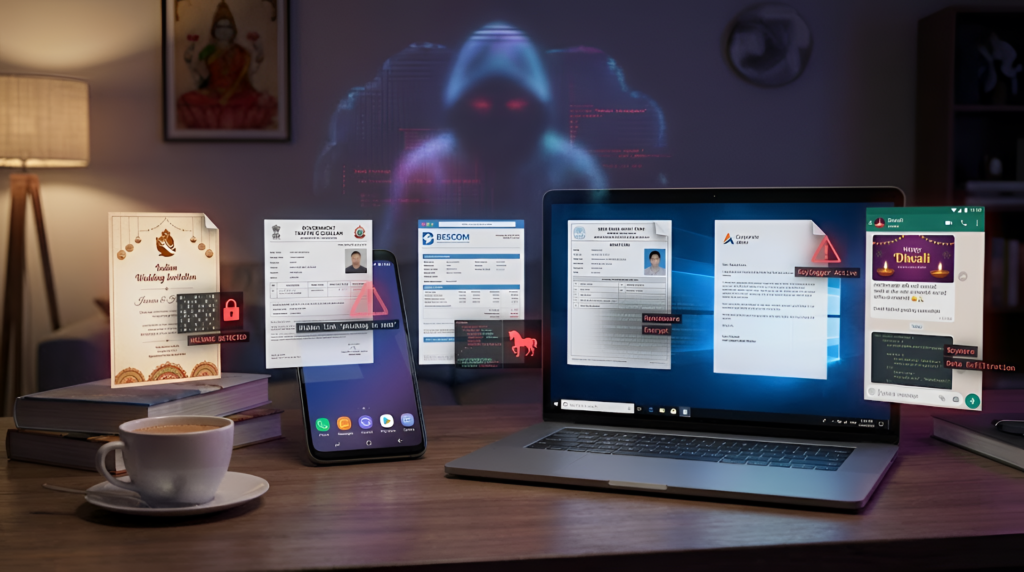
Cybercriminals in India carefully choose file names that feel routine and believable. These files are designed to match what people commonly receive during different situations and seasons.
During the wedding season, many people receive files named like Marriage Invitation.pdf, Wedding Card.jpg, or Marriage Video.mp4. Since such files are frequently shared on WhatsApp and email, users often open them without verification.
Another widely misused theme is RTO and traffic-related messages. Files arrive with names such as RTO Challan.pdf, Traffic Fine Notice.docx, or Vehicle Penalty Details.html. Because traffic challans are common and sometimes urgent, people tend to open these files quickly out of fear or confusion.
Scammers also use government and utility-related documents. Files may appear as Electricity Bill.pdf, Gas Connection Update.docx, Water Bill Notice.pdf, or Aadhaar Update Form.html. These messages work because people are used to receiving official-looking documents.
During exam and admission seasons, students and parents are targeted with files named Exam Admit Card.pdf, Board Result Link.html, or College Admission Form.zip. The pressure of exams makes people act fast, reducing caution.
Job seekers often receive files like Offer Letter.pdf, Interview Schedule.docx, or HR Document.apk. These files are especially dangerous because they target people who are already expecting communication from unknown recruiters.
In some cases, attackers even use medical or emergency-related files, such as Medical Report.pdf, Insurance Claim Form.docx, or Hospital Bill Details.pdf. Fear and urgency make these files highly effective.
The pattern is always the same. Only the file name and timing change.
Why These File Names Work So Well in India
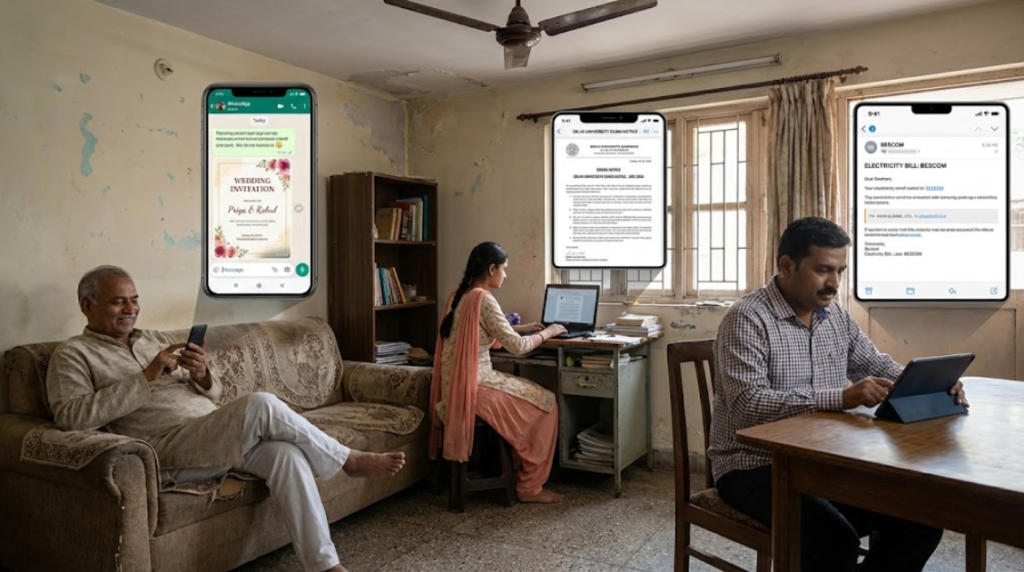
In India, people are used to receiving documents through WhatsApp and email rather than official portals. Many services still rely on shared files instead of secure dashboards. Attackers take advantage of this habit.
The file names sound routine, official, or emotionally relevant. That familiarity lowers suspicion and increases the chance that the file will be opened.
What Happens After Opening Such Files
Once opened, these files may quietly install malicious software or steal active login sessions. Victims often notice the impact later — through bank alerts, locked accounts, unusual WhatsApp activity, or unauthorized access to email and social media.
By the time the connection is made, the file has already done its job.
Final Note for Readers
Whether it is a marriage invitation, RTO challan, electricity bill, exam document, or job offer, the safest habit is to pause and verify. In today’s digital India, attackers do not need advanced hacking tools — they only need the right timing and a believable file name.