

Fake job and internship scams have become a serious concern in today’s digital hiring ecosystem. With recruitment increasingly moving online, cybercriminals are exploiting trusted platforms and professional communication channels to deceive job seekers.
This article explains how fake job scams operate, how to verify whether a job or company is genuine, and what steps individuals should take to protect themselves.
Understanding Fake Job and Internship Scams
Fake job scams involve individuals or groups impersonating legitimate companies, recruiters, or hiring partners. The objective is not employment, but the collection of personal data, financial information, or direct payments from candidates.
These scams are often sophisticated and closely resemble real hiring processes, making them difficult to detect at first glance.
How Fake Job and Internship Scams Usually Work
1. Initial Contact
Scammers reach out through platforms such as LinkedIn, email, WhatsApp, or job portals. The message typically includes:
- A job or internship aligned with the candidate’s profile
- Attractive compensation or benefits
- Work-from-home or immediate joining claims
The communication often creates a sense of urgency.
2. Simulated Recruitment Process
To build credibility, scammers may conduct:
- Short interviews via chat or email
- Basic screening forms or online assessments
- Informal video calls without official verification
The process is deliberately fast to discourage thorough checks.
3. Request for Information or Payment
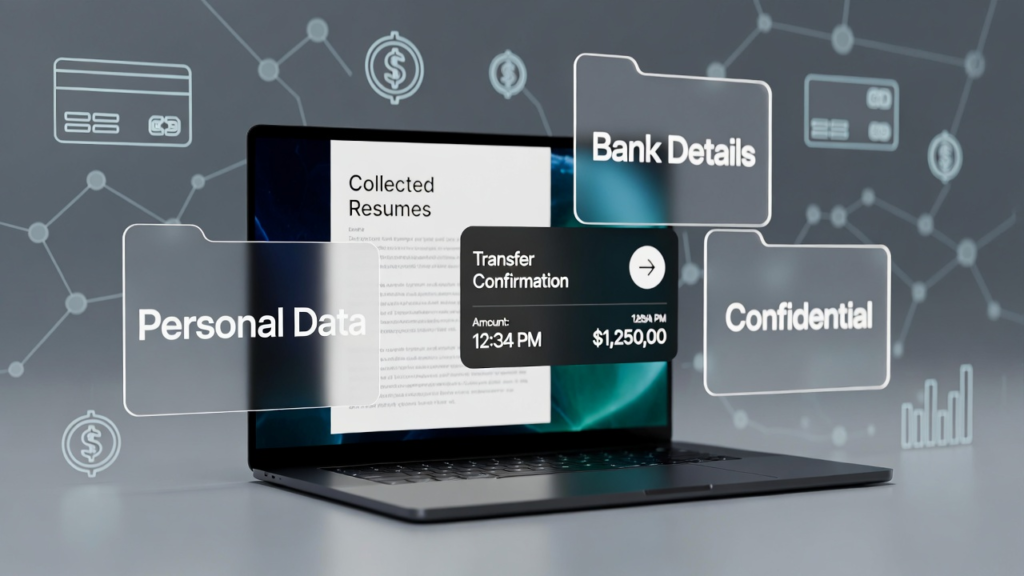
Candidates are then asked to share:
- Resume and personal details
- Government ID documents
- Bank information for “salary processing”
- A one-time fee described as a security deposit, registration fee, or training cost
At this stage, the fraud is executed.
4. Disappearance or Continued Exploitation
After receiving the data or money:
- Communication may stop completely, or
- The information may be misused for identity theft, financial fraud, or sold to other criminals
Victims often realize the issue only after financial or legal consequences arise.
How to Check if a Job or Company Is Genuine
1. Verify the Company’s Official Presence
- Visit the official company website
- Check domain authenticity and company details
- Look for valid contact information and corporate background
A missing or poorly built website is a warning sign.
2. Verify the Recruiter
- Check the recruiter’s LinkedIn profile history
- Look for real connections, activity, and employment records
- Cross-verify the recruiter’s name on the company’s official channels
New or inactive profiles require caution.
3. Check Email and Communication Quality
- Legitimate companies use official email domains
- Generic email services are a red flag
- Poor grammar, urgency, or inconsistent details indicate risk
Professional hiring communication is structured and transparent.
4. Confirm the Hiring Process
- Genuine jobs involve proper interviews
- Offer letters include role details, salary, location, and company branding
- There is no pressure to decide immediately
A rushed process often signals fraud.
5. Never Pay for a Job
No legitimate employer requires:
- Registration fees
- Security deposits
- Training charges before joining
Any payment request during recruitment should be treated as fraudulent.
6. Search for Public Feedback
- Search the company name with keywords like “scam” or “fraud”
- Check online reviews, forums, and social media discussions
Previous complaints are a strong indicator.
What To Do If You Suspect or Face a Fake Job Scam
- Stop all communication immediately
- Do not share any additional documents or money
- Inform your bank if financial details were shared
- Change passwords linked to your email and accounts
- Preserve evidence such as messages and emails
- Report the incident to the appropriate cybercrime authority
Early action can significantly reduce damage.
Conclusion
Fake job and internship scams succeed not because candidates lack intelligence, but because attackers exploit trust, urgency, and professional platforms.
By verifying opportunities, questioning unusual requests, and following disciplined information-sharing practices, job seekers can significantly reduce their risk.
Awareness remains the most effective defense in today’s digital hiring environment.