
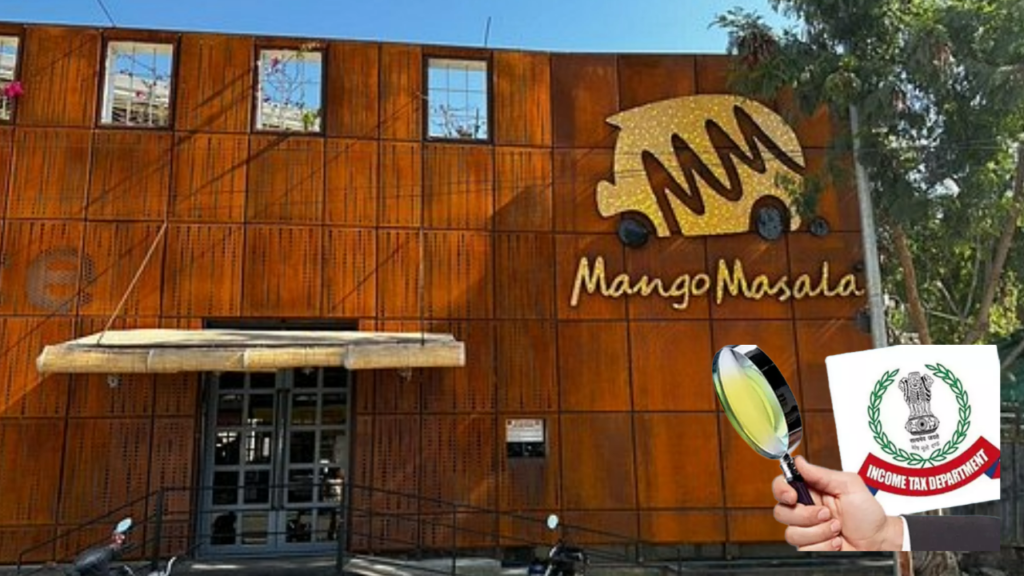
Income Tax Department officials uncovered a major case of suspected tax evasion during a raid at Mango Masala Restaurant in Ajmer, Rajasthan, where investigators say the business concealed nearly ₹15 crore in turnover by keeping part of its sales outside official financial records.
The operation was conducted by the Investigation Wing of the Income Tax Department, which carried out a detailed search of the restaurant’s financial documents, billing systems and digital records. During the inspection, authorities found indications that the restaurant’s declared income did not match the actual volume of transactions being generated through its billing system.
According to officials involved in the investigation, the restaurant was using the PetPooja cloud-based POS (Point-of-Sale) application, a widely used restaurant management platform that helps businesses manage billing, inventory, and sales reporting. Investigators suspect that the restaurant maintained separate records of certain transactions, particularly cash sales, which were allegedly not reflected in the final accounting reports used for taxation.
Officials said that while invoices were generated for customers through the billing system, some transactions were reportedly stored separately from the official sales reports. As a result, the revenue reflected in the restaurant’s tax filings appeared significantly lower than the actual turnover generated by the business.
During the two-day investigation, authorities examined software logs, billing data and financial records to identify discrepancies between recorded transactions and reported income. Digital analysis of the POS system indicated patterns suggesting that certain sales entries were not included in the final ledger used for financial reporting.
Deputy Director of the Income Tax Investigation Wing Lalitesh Meena said the department had received prior information about the possible use of digital billing systems to conceal income. After examining the restaurant’s system, investigators detected indications that a portion of its turnover had not been disclosed.
Officials also stated that the use of POS billing applications such as PetPooja has increased rapidly among restaurants, cafés and food outlets because they provide convenient cloud-based management tools for daily operations. However, investigators believe that in some cases such systems may be misused if businesses maintain separate records of transactions outside official reports.
Following the discovery in Ajmer, the Income Tax Department has begun examining other restaurants, cafés and food outlets in the city that may be using similar digital billing platforms. Authorities already have data related to several establishments and are analyzing their transaction records to detect possible discrepancies between sales activity and income tax filings.
Officials confirmed that similar enforcement actions had previously taken place against restaurants in Udaipur, Kota, Sri Ganganagar and Jaipur, where financial records were also reviewed during tax investigations.
The department is now comparing POS billing data with the income declared in tax returns to determine whether businesses have reported their full revenue. If significant differences are identified, the establishments involved could receive notices from tax authorities and may face penalties under tax regulations.
The Ajmer case highlights how modern financial investigations increasingly rely on digital forensic examination of billing systems and transaction databases. By analyzing system logs and electronic records, investigators can identify hidden or unreported transactions even when they do not appear in standard financial reports.
Authorities say the investigation is ongoing and further action will depend on the outcome of the financial and digital analysis conducted by the department.