
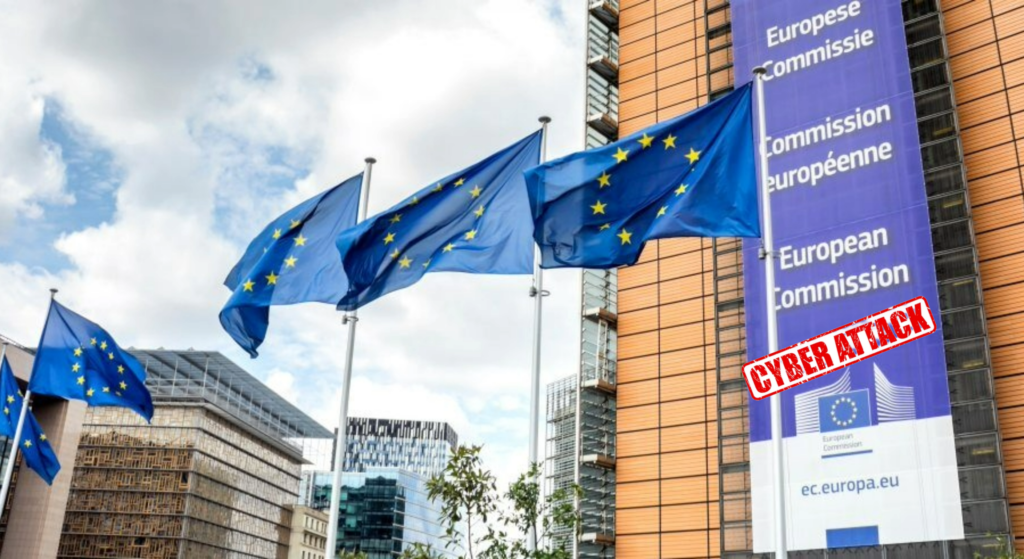
The European Commission has officially confirmed a cybersecurity incident involving unauthorized access to its public-facing web infrastructure, raising fresh concerns about the resilience of government digital systems in an increasingly hostile threat landscape.
According to the Commission, attackers breached systems hosting the Europa web platform, which serves as the primary online gateway for European Union information, policies, and public services. The intrusion was detected on March 24, 2026, and was swiftly contained. However, early findings indicate that data may have been exfiltrated, though the full scope of the breach remains unclear.
Incident Overview
In its initial disclosure, the European Commission acknowledged that malicious actors gained access to cloud-based systems supporting its public websites. Despite the breach, officials confirmed that the affected platforms remained operational throughout the incident, with no visible downtime or service disruption reported.
While the ability to maintain uptime reflects a level of operational resilience, the lack of detailed information about the breach has drawn attention. The Commission has not disclosed what type of data was accessed, how much information may have been taken, or who the attackers might be.
A spokesperson stated that “early findings of the ongoing investigation suggest that data have been taken,” adding that relevant European Union entities are being notified if they may have been impacted.
Possible Cloud Exposure
Although official statements remain limited, multiple reports suggest that the attackers may have gained access to a cloud environment, potentially involving AWS infrastructure, used to host the Europa web services. Some claims indicate that as much as hundreds of gigabytes of data could have been exfiltrated, though this has not been independently confirmed by the Commission.
If verified, such an incident would highlight the growing risks associated with cloud-based public infrastructure, especially when managing large-scale, high-value data environments.
Internal Systems Remain Secure
One of the key points emphasized by the European Commission is that internal systems have not been affected, based on current assessments. This suggests that there was a clear separation between public-facing services and core internal networks.
Such segmentation is considered a best practice in cybersecurity architecture, as it helps contain breaches and prevents attackers from moving laterally into more sensitive systems. If this separation holds true, it may have significantly limited the potential damage of the incident.
However, cybersecurity experts caution that investigations are still ongoing, and conclusions about the full impact should be considered preliminary.
Limited Transparency Raises Questions
Despite the confirmation of unauthorized access and possible data theft, the Commission’s disclosure has been notably brief. Critical details such as the attack vector, duration of access, and identity of the threat actors have not yet been shared.
For an institution that often promotes strong cybersecurity policies and transparency across member states, the limited information has raised questions within the security community. Analysts note that timely and detailed disclosures are essential not only for accountability but also for helping other organizations defend against similar threats.
A Pattern of Security Challenges
This incident comes shortly after another reported security issue involving Commission-issued mobile devices, where attackers may have accessed staff contact information, including names and phone numbers. The proximity of these events suggests that European institutions are currently facing sustained and evolving cyber threats.
Government organizations, due to the sensitive nature of their data and their geopolitical importance, are frequent targets for both cybercriminal groups and state-linked actors.
Broader Cybersecurity Implications
The breach of a major EU platform highlights several important trends in modern cybersecurity:
- Public-facing systems are prime targets due to their accessibility and scale
- Cloud environments introduce new attack surfaces that must be carefully managed
- Data exfiltration remains a primary objective for attackers
- Operational continuity does not guarantee security, as systems can remain online even during a breach
This incident reinforces the idea that cybersecurity is not just about preventing outages, but also about protecting data integrity and confidentiality.
What Happens Next?
The European Commission has stated that its investigation is ongoing and that it is working to determine the full extent of the breach. Affected entities are being notified as part of standard response procedures.
Further updates are expected as forensic analysis continues, and additional details may emerge regarding the methods used by the attackers and the nature of the compromised data.
In parallel, this incident may prompt a review of existing security controls, particularly in relation to cloud infrastructure and public web services.
Conclusion
The confirmed cyberattack on the European Commission’s public web systems serves as a significant reminder of the persistent threats facing even the most established institutions. While the rapid containment and apparent protection of internal systems demonstrate some level of preparedness, the possibility of data exfiltration underscores the need for continuous vigilance.
As investigations progress, the cybersecurity community will be watching closely—not only to understand what happened, but also to learn how similar incidents can be prevented in the future.