
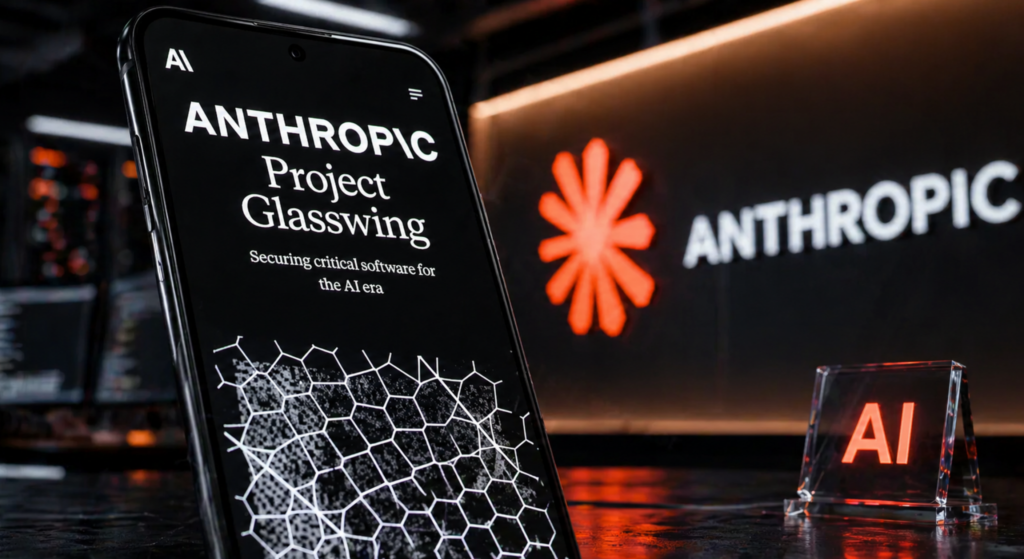
Claude Mythos AI has rapidly become a focal point in global cybersecurity discussions, with governments, regulatory bodies, and technology experts closely evaluating its implications. Developed by Anthropic, the model represents a significant advancement in artificial intelligence, particularly in areas involving software analysis and vulnerability detection.
Unlike traditional AI systems that assist in coding or automation, Mythos operates at a deeper technical level. Its ability to independently analyse complex systems and identify weaknesses has raised both optimism and concern across multiple countries.
The growing attention is not driven by speculation, but by demonstrated capabilities that suggest a shift in how cybersecurity tools may function in the near future.
What Is Claude Mythos AI
Claude Mythos is part of Anthropic’s Claude AI family and is designed with advanced reasoning, coding, and autonomous capabilities. It is a general-purpose model but with strong performance in cybersecurity-related tasks.
The model can process large volumes of code, understand system architecture, and identify vulnerabilities that may not be easily detectable through conventional methods. Its performance reflects improvements in reasoning, planning, and technical understanding compared to earlier AI models.
Importantly, Mythos is not just reactive—it can actively explore systems and derive conclusions without constant human guidance.
Core Capabilities of Mythos AI
The primary reason for global concern lies in what Mythos can actually do.
Vulnerability Discovery
Mythos can analyse widely used software systems and detect hidden vulnerabilities at a scale and speed significantly higher than human researchers.
Exploit Development
In controlled testing environments, the model has shown the ability to convert vulnerabilities into working exploit strategies. This means it can simulate how an attacker might use a weakness to gain access.
Autonomous Cyber Tasks
It can perform complex cybersecurity tasks such as penetration testing, security analysis, and debugging with minimal human input.
Defensive Use
When deployed responsibly, Mythos can strengthen cybersecurity by identifying and fixing vulnerabilities faster, improving overall system resilience.
Offensive Potential
If misused, the same capabilities can assist in designing sophisticated cyberattacks, making it a dual-use technology.
Why It Has Triggered Global Concern
The concern around Claude Mythos AI is rooted in its dual-use nature. While it offers powerful defensive capabilities, it also lowers the barrier for executing advanced cyber operations.
Reports indicate that the model has identified vulnerabilities across major platforms, including operating systems and web browsers, some of which had remained undiscovered for extended periods.
Additionally, its ability to generate working exploit paths represents a shift in how quickly vulnerabilities can be turned into real-world threats.
This combination of speed, autonomy, and technical depth has prompted governments to take precautionary measures.
Global Reactions
United States
In the United States, AI developers and policymakers are approaching high-capability models with caution. Companies are increasingly restricting access to advanced features and conducting extensive internal evaluations before wider deployment.
United Kingdom
The UK AI Security Institute has observed a noticeable increase in cyber capability in models like Mythos. Evaluations suggest that such systems can handle complex cybersecurity challenges more consistently than earlier models.
European Union
The EU is advancing regulatory frameworks that classify high-risk AI systems under strict compliance categories. Models with cybersecurity impact are expected to face tighter controls, including limited deployment and mandatory risk assessments.
India
India has conducted high-level discussions involving financial institutions and cybersecurity stakeholders, particularly focusing on risks to banking systems and digital payment infrastructure.
China
China is actively developing its own AI systems for vulnerability detection, indicating that cybersecurity-focused AI is becoming a strategic priority globally.
Access and Deployment Reality
One of the most important clarifications is that Claude Mythos is not widely available.
- It is not publicly accessible
- Its most advanced capabilities are restricted
- It is being tested in controlled environments
There is no verified public confirmation that a fixed number of companies (such as “11 companies”) have open access to the model. Such claims are not supported by reliable sources and should be avoided.
The restricted access reflects the sensitivity and potential impact of the technology.
Where It Is Being Used Today
Currently, systems like Mythos are being used in limited and controlled scenarios, including:
- Cybersecurity research
- Vulnerability testing environments
- Internal AI capability evaluation
- Defensive security development
These controlled deployments allow organizations to study the model’s strengths and risks without exposing it to uncontrolled use.
Is It Dangerous
Claude Mythos AI is not inherently dangerous. However, its capabilities introduce a new category of risk.
The level of risk depends on:
- Who can access the system
- How it is deployed
- What safeguards are in place
If managed properly, it can significantly improve cybersecurity. If misused, it could accelerate the scale and sophistication of cyberattacks.
What Governments Are Likely to Do Next
Governments worldwide are expected to focus on:
- Strengthening AI regulation frameworks
- Monitoring high-capability AI systems
- Increasing cybersecurity preparedness
- Enhancing coordination between institutions
There is also growing discussion around international cooperation to manage risks associated with advanced AI technologies.
Claude Mythos AI represents a major shift in the intersection of artificial intelligence and cybersecurity. Its ability to both detect and potentially exploit vulnerabilities has placed it at the center of global attention.
While the technology offers significant benefits for defence, it also highlights the need for strong oversight and responsible deployment. As countries continue to evaluate its impact, Mythos stands as a clear example of how powerful AI systems are reshaping the digital security landscape.