
Introduction
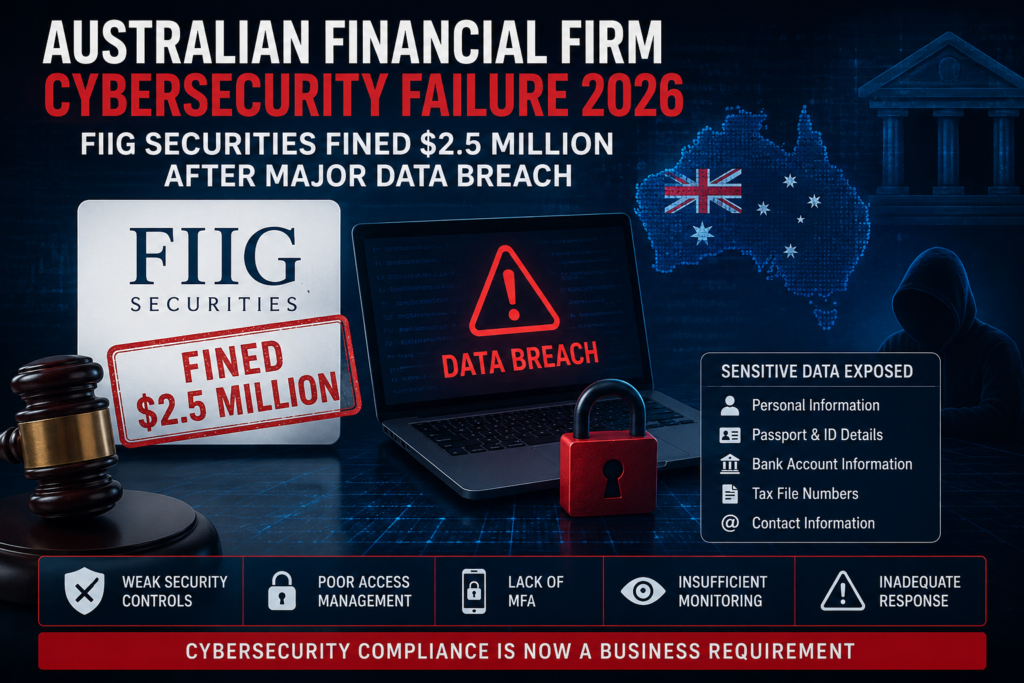
The Australian Financial Firm Cybersecurity Failure case involving FIIG Securities became one of the most important cybersecurity enforcement actions in 2026. Australian regulators imposed a AUD $2.5 million penalty after investigators found major cybersecurity weaknesses that exposed sensitive customer information. This Australian Financial Firm Cybersecurity Failure demonstrates how poor cyber risk management can create serious financial, legal, and reputational consequences for financial institutions.
The FIIG Securities data breach reportedly exposed nearly 385GB of confidential information linked to around 18,000 clients. Regulators stated that the company failed to implement sufficient cybersecurity protections over several years, allowing attackers to compromise internal systems and sensitive customer records.
Australia’s Federal Court described the Australian Financial Firm Cybersecurity Failure as a major example of inadequate cybersecurity governance under Australian Financial Services Licence obligations. Cybersecurity experts believe this ruling will influence how organizations worldwide approach cyber resilience, compliance, and data protection.
What Happened in the FIIG Securities Cybersecurity Incident?
The Australian Financial Firm Cybersecurity Failure originated from long-term weaknesses in FIIG Securities’ internal security systems. According to ASIC cybersecurity enforcement findings, the organization failed to maintain appropriate cyber defenses between March 2019 and June 2023.
Investigators identified several critical cybersecurity weaknesses, including:
- Weak password management
- Poor privileged access controls
- Missing multi-factor authentication (MFA)
- Limited vulnerability testing
- Inadequate firewall configuration
- Weak threat monitoring systems
- Lack of skilled cybersecurity personnel
- Ineffective incident response planning
Regulators stated that these failures allowed attackers to remain active inside company systems for several weeks before the breach was detected. The Australian Financial Firm Cybersecurity Failure highlights how outdated security practices can lead to large-scale cyber incidents.
Sensitive Data Exposed During the FIIG Securities Data Breach
The FIIG Securities data breach reportedly exposed highly sensitive customer information. Public reports indicated that attackers accessed multiple forms of personally identifiable information.
Exposed information allegedly included:
- Full names
- Residential addresses
- Email addresses
- Phone numbers
- Dates of birth
- Passport details
- Driver’s licence information
- Bank account information
- Tax file numbers
Some reports also suggested that stolen information connected to the Australian Financial Firm Cybersecurity Failure later appeared on dark web leak sites associated with ransomware groups.
Although regulators confirmed that customer funds were not directly stolen, the breach significantly increased risks related to identity theft, phishing attacks, and financial fraud. The FIIG Securities data breachSecurities data breach demonstrates why financial institutions remain major targets for cybercriminals.
ASIC Cybersecurity Enforcement Action
ASIC cybersecurity enforcement actions against FIIG Securities data breach focused on the company’s failure to meet cybersecurity obligations under Australian financial regulations.
ASIC cybersecurity enforcement argued that FIIG Securities data breach Securities:
- Failed to implement adequate cyber risk management systems
- Did not allocate sufficient cybersecurity resources
- Neglected threat monitoring capabilities
- Failed to protect sensitive customer data
- Ignored cybersecurity best practices
Following the Australian Financial Firm Cybersecurity Failure investigation, the Federal Court ordered FIIG Securities data breachSecurities to:
- Pay AUD $2.5 million in penalties
- Contribute AUD $500,000 toward ASIC cybersecurity enforcement legal costs
- Complete an independent cybersecurity review
- Improve cyber resilience programs
The ruling reinforced that cybersecurity is now considered a core governance responsibility for financial organizations.
Why the Australian Financial Firm Cybersecurity Failure Matters Globally
The Australia cybersecurity fine 2026 FIIG Securities data breach Cybersecurity Failure has global importance because regulators worldwide are increasing pressure on organizations to strengthen cybersecurity defenses.
Governments and regulators now expect companies to implement proactive cybersecurity programs rather than relying on reactive security measures after a breach occurs.
1. Regulatory Accountability
Organizations may face direct financial penalties when cybersecurity governance failures contribute to data breaches.
2. Rising Financial Sector Cyberattacks
Financial institutions remain prime targets for ransomware operations and cybercriminal groups because they store valuable customer information.
3. Importance of Cyber Resilience
Modern cybersecurity strategies must include prevention, threat detection, incident response, and operational resilience.
4. Human and Operational Weaknesses
Many cyber incidents continue to result from weak internal controls, insufficient staff training, and outdated security systems.
The Australia cybersecurity fine 2026 Firm Cybersecurity Failure demonstrates that even established financial companies can face severe operational and reputational damage if cybersecurity investments are neglected.
Technical Cybersecurity Weaknesses Identified
Investigators examining the ASIC cybersecurity enforcement Financial sector cyberattack Firm Cybersecurity Failure identified several technical weaknesses that contributed to the incident.
Weak Access Controls
Privileged accounts reportedly lacked strong authentication protections and advanced password controls.
Missing Multi-Factor Authentication
The absence of MFA created additional opportunities for attackers to compromise systems remotely.
Poor Threat Monitoring
The organization allegedly lacked qualified cybersecurity professionals capable of identifying suspicious activity quickly.
Insufficient Vulnerability Management
Limited penetration testing and weak vulnerability scanning allowed security flaws to remain undetected.
Inadequate Incident Response
ASIC cybersecurity enforcement findings stated that the company lacked an effective incident response framework.
ASIC cybersecurity enforcement These weaknesses are still common across many organizations globally and continue to contribute to successful cyberattacks.
Cybersecurity Lessons for Organizations
The ASIC cybersecurity enforcemen fine 2026 Firm Cybersecurity Failure provides important lessons for businesses across every industry.
Strengthen Identity and Access Management
Organizations should implement:
- Strong password policies
- Multi-factor authentication
- Privileged access management
- Zero-trust security controls
Improve Threat Detection
Continuous monitoring and threat intelligence systems help organizations identify cyberattacks before major damage occurs.
Conduct Regular Security Testing
Routine penetration testing and vulnerability assessments help identify weaknesses before attackers exploit them.
Invest in Skilled Cybersecurity Teams
Qualified cybersecurity professionals are essential for effective threat detection and incident response.
Develop Incident Response Plans
Organizations should regularly test incident response strategies through cyberattack simulation exercises.
Business Impact of the FIIG Securities data breach Securities Data Breach
The Australian Financial sector cyberattack Firm Cybersecurity Failure created serious business consequences beyond regulatory penalties.
Financial Impact
- AUD $2.5 million regulatory fine
- Legal and remediation costs
- Long-term cybersecurity investments
Reputational Damage
Large-scale breaches can reduce customer trust and harm business credibility.
Compliance Pressure
Financial sector cyberattack firms now face increased pressure to demonstrate stronger cybersecurity governance.
Industry-Wide Implications
The Australian Financial Firm Cybersecurity Failure may encourage regulators worldwide to pursue similar enforcement actions against organizations with poor cybersecurity controls.
Conclusion
The Australian Financial sector cyberattack Firm Cybersecurity Failure involving FIIG Securities data breach Securities represents a major turning point in cybersecurity regulation for the financial sector. Australian regulators made it clear that organizations failing to maintain strong cybersecurity protections may face substantial financial penalties and reputational consequences.
The FIIG Securities data breach also reinforces an important global reality: cybersecurity is now a core business requirement. Financial institutions and other organizations must treat cyber resilience as a critical operational priority.
As ransomware attacks, financial sector cyberattacks, and data breaches continue increasing worldwide, organizations that fail to strengthen cybersecurity frameworks risk becoming the next target of regulatory enforcement and public scrutiny.