
Introduction: Why the Meta AI Image Tool Matters
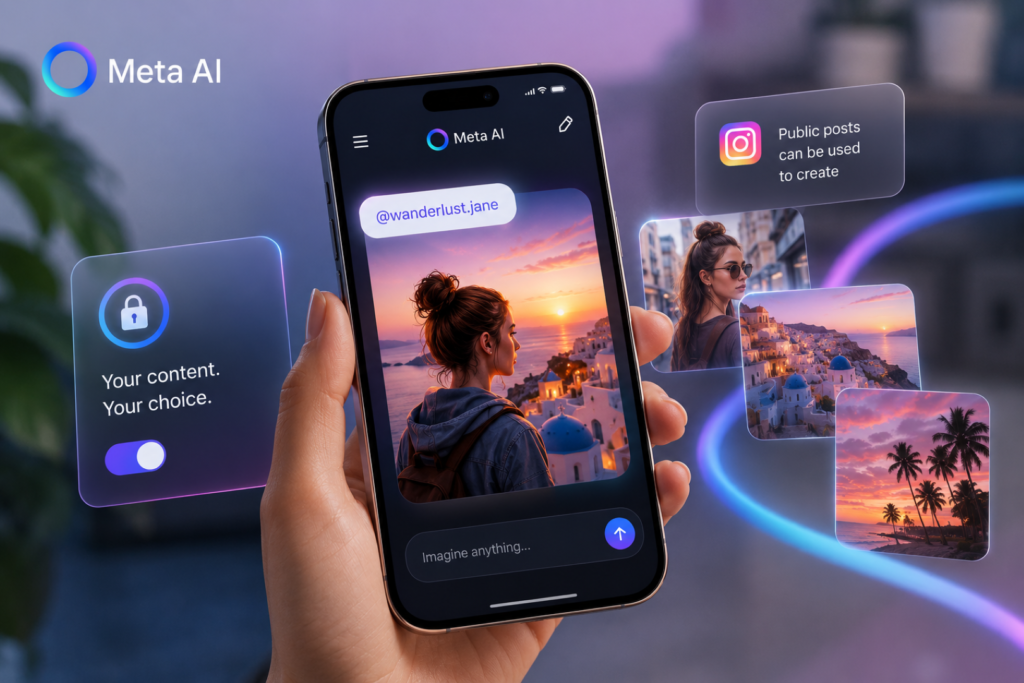
Meta has introduced Meta AI Image Tool, a new image-generation capability powered by its Muse Image model. The feature enables users to reference public Instagram accounts while creating AI-generated images, allowing publicly shared photos, posts, and reels to influence AI-generated content.
The rollout highlights how generative AI is becoming more deeply integrated into mainstream social media platforms. At the same time, it has renewed discussion about user consent, privacy expectations, and how publicly available online content may be reused by artificial intelligence systems.
For individuals, creators, businesses, and cybersecurity professionals, the update serves as another reminder that content shared publicly online may have broader uses than originally anticipated. As Meta AI Image Tool becomes available to more users, understanding how public Instagram content is used for AI-generated images will help individuals make informed privacy decisions before sharing content online.
What is Meta’s Muse Image?
Muse Image is Meta’s latest generative AI model developed by the company’s Superintelligence Labs. It is designed to create custom images from user prompts while incorporating publicly available visual information from supported Meta platforms.
One of its notable capabilities allows users to mention a public Instagram profile during image creation. When this occurs, the AI may use publicly visible posts, photos, or reels from that account as creative reference material when generating new images.
According to Meta, this functionality is intended to improve personalization and creative flexibility across its AI ecosystem.
The feature is currently being introduced gradually and is expected to expand beyond Instagram and WhatsApp to additional Meta services, including Facebook, Messenger, and Meta Advantage+. The Meta AI Image Tool is part of Meta’s broader strategy to integrate generative AI across its platforms while expanding creative tools for everyday users and businesses.
Background: AI Features Are Increasingly Enabled by Default
Technology companies continue expanding AI-powered features into consumer products. Rather than requiring users to opt in, many recent AI capabilities are activated automatically, allowing users to disable them only through account settings.
Meta’s latest rollout reflects this broader industry direction.
Under the current implementation:
- Public Instagram content is eligible for AI-assisted image generation by default.
- Users who prefer not to participate must manually change their privacy settings.
- AI-generated images produced before a user disables the setting may continue to exist.
- Users are not individually notified whenever their public content contributes to an AI-generated image.
While the company provides an opt-out mechanism, privacy advocates have questioned whether default participation provides sufficient transparency for everyday users.
Meta AI Image Tool: Technical Overview
The new capability combines Meta’s generative AI infrastructure with publicly accessible Instagram content to produce customized images.
Instead of copying existing photographs, the system generates entirely new images inspired by available public visual information and user prompts. The Meta AI Image Tool combines generative AI capabilities with publicly available Instagram content to create personalized AI-generated images based on user prompts.
Timeline of Events
- Meta announced Muse Image as part of its expanding AI ecosystem.
- AI image generation using public Instagram accounts began rolling out in selected countries.
- The feature launched across Instagram and WhatsApp with additional Meta platforms expected to follow.
- Users received an option to disable public content reuse through Instagram’s privacy settings.
How Public Content Can Be Used
The feature may reference:
- Public Instagram posts
- Public photographs
- Public reels
- Visual themes
- Creative styles associated with public accounts
The system does not require the original account owner’s approval each time another user generates an AI image referencing their public profile.
How Users Can Disable AI Content Reuse
Users who do not want their public Instagram content to be available for AI image generation can adjust their account settings.
Current navigation path:
- Open Instagram.
- Go to Settings & Activity.
- Select Sharing and Reuse.
- Turn off Allow people to create with and reuse your content.
Users should note that disabling the setting affects future use of eligible public content but may not remove AI-generated images that were created before the setting was changed.
Privacy Considerations
From a cybersecurity and privacy perspective, the update introduces several important considerations.
Publicly shared content has always been accessible to other users, but generative AI significantly changes how that content can be reused and transformed.
Key areas of discussion include:
- User awareness of AI content reuse
- Transparency regarding AI-generated outputs
- Potential impersonation or identity misuse
- Deepfake-style content risks
- Consent mechanisms for creators
- Long-term management of AI-generated assets
Although the feature operates only with eligible public content, privacy specialists emphasize that users should periodically review their account settings to ensure they match their intended level of visibility. Users concerned about digital privacy should regularly review the settings associated with the Meta AI Image Tool to ensure their public content is shared according to their preferences.
Potential Risks & Impact
The introduction of AI-assisted image generation using public social media content raises several cybersecurity, privacy, and governance considerations. While the feature is intended to expand creative possibilities, it also highlights the importance of transparency and informed user consent. As adoption of the Meta AI Image Tool grows, privacy experts recommend that users understand how AI-generated content may interact with publicly shared social media posts and digital identities.
Identity and Privacy Risks
Publicly available images can reveal more than users may realize. Even when content is intentionally shared, AI-powered reuse introduces new scenarios that users may not have anticipated.
Potential concerns include:
- AI-generated images resembling an individual’s appearance or style.
- Increased opportunities for impersonation or misleading visual content.
- Reduced awareness of how publicly shared content may be incorporated into AI systems.
- Difficulty tracking where AI-generated derivatives are being used.
Although Meta states that users can disable future reuse through their account settings, users may not immediately recognize that the option exists if they have not reviewed their privacy preferences.
Risks for Content Creators
Creators, photographers, artists, influencers, and brands often rely on their visual identity as part of their professional work.
Potential challenges include:
- Unintended AI-generated variations of public content.
- Concerns regarding attribution and creative ownership.
- Difficulty monitoring AI-generated images inspired by public profiles.
- Possible confusion between authentic and AI-created visual material.
These concerns are likely to become more significant as generative AI tools become more widely adopted across social media platforms.
Business and Brand Considerations
Organizations managing public-facing Instagram accounts should also consider how AI-powered image generation may affect their online presence.
Businesses may wish to:
- Review current Instagram privacy and sharing settings.
- Update social media governance policies.
- Educate marketing teams about AI-related platform features.
- Monitor AI-generated content that references corporate branding.
Organizations operating in regulated industries may additionally evaluate whether internal social media policies require revision to address AI-related content reuse.
Official Response
Meta has explained that Muse Image is designed to enhance creativity across its AI ecosystem by allowing users to generate more personalized images. According to Meta AI, the feature is gradually rolling out across supported platforms.
The company has also provided an opt-out mechanism through Instagram’s privacy settings, allowing users to disable future reuse of eligible public content.
At the time of writing, Meta has indicated that:
- The feature is being introduced gradually.
- Availability varies by country.
- Expansion is planned for additional Meta platforms.
- Users retain the ability to change their sharing preferences.
The company has not indicated that previously generated AI images will automatically be removed after a user changes their settings.
Industry Context: Why AI Privacy Discussions Are Growing
Generative AI has rapidly become a standard feature across major technology platforms. Organizations developing AI systems are also increasingly following recommendations outlined in the NIST AI Risk Management Framework to strengthen responsible AI governance. Companies are increasingly integrating AI into search engines, productivity software, messaging applications, creative tools, and social media services.
As AI capabilities expand, discussions have shifted beyond technical innovation toward questions involving:
- Digital consent
- Responsible AI governance
- Transparency
- Copyright
- Privacy expectations
- Regulatory compliance
Readers interested in broader developments involving AI governance and cybersecurity regulations can explore CyberNexora’s Laws & Government section for the latest policy updates and regulatory developments affecting AI and cybersecurity.
For practical privacy tips and cybersecurity best practices, visit CyberNexora’s Learn & Protect section.
How to Protect Yourself
Whether you are an individual user, content creator, or business, reviewing AI-related privacy settings should become part of regular cybersecurity hygiene.
Recommended Actions
- Review Instagram privacy settings regularly.
- Disable AI content reuse if it does not align with your preferences.
- Understand which posts are publicly visible.
- Consider limiting highly personal photographs to trusted audiences.
- Monitor official announcements regarding new AI features.
- Educate employees about changes affecting corporate social media accounts.
- Review organizational social media governance policies.
- Stay informed about emerging AI privacy regulations in your region.
Remaining informed helps users make better decisions about what they share publicly and how that information may be reused by evolving AI technologies. Review updates related to the Meta AI Image Tool, as Meta may introduce additional privacy controls or feature changes in future updates.
Key Takeaways
- Meta has introduced Muse Image to support AI-generated image creation across its ecosystem.
- Public Instagram content may be referenced for AI image generation unless users disable the feature.
- Users are responsible for reviewing and managing their own sharing preferences.
- Privacy discussions surrounding generative AI continue to expand globally.
- Businesses and content creators should periodically reassess their AI and social media policies.
Conclusion: Meta AI Image Tool and What Comes Next
The rollout of Meta AI Image Tool illustrates how quickly generative AI is becoming embedded within everyday digital experiences. Features that rely on publicly shared content can deliver new creative capabilities, but they also introduce important questions about transparency, user expectations, and long-term governance.
As AI technologies continue evolving, users should remain proactive by reviewing account settings, understanding platform policies, and following official updates regarding privacy controls. The balance between innovation and user trust will remain a defining issue for the future of AI-powered social media services. As the Meta AI Image Tool continues to evolve, users should stay informed about new privacy settings and platform updates to maintain greater control over how their public content may be used.
Readers can stay informed about the latest cyberattacks, data breaches, and emerging threats by visiting CyberNexora’s Cyber Incidents section.
Frequently Asked Questions(FAQs)
Meta AI Image Tool refers to Meta’s latest AI-powered image generation capability that enables users to create images using prompts and publicly available Instagram content where permitted by platform settings.
Yes. Eligible public Instagram posts, photos, and reels may be used as creative references for AI-generated images unless users disable the relevant sharing option in their Instagram settings.
Yes. Users can disable future reuse through Instagram’s Settings & Activity → Sharing and Reuse menu by turning off the option allowing others to create with and reuse their content.
Based on the available information, previously generated AI images are not automatically removed simply because a user later changes their privacy settings.
As AI becomes integrated into social media platforms, users should understand how publicly shared content may be reused and periodically review available privacy controls to ensure they align with personal preferences.
Yes. Organizations should evaluate how new AI-powered platform features affect brand protection, employee guidance, and overall social media governance.