
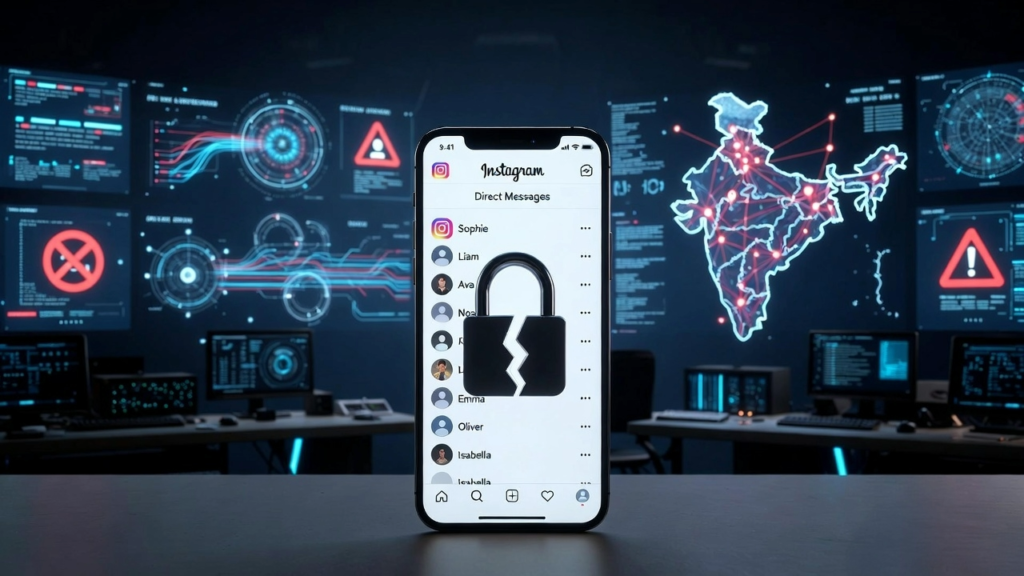
Instagram, the social media platform owned by Meta, has announced plans to discontinue its end-to-end encrypted direct messaging feature, marking a notable shift in how private conversations will be handled on the platform. The change is expected to take effect in May 2026, after which encrypted chat functionality within Instagram’s messaging system will no longer be supported.
End-to-end encryption (E2EE) is a security technology designed to ensure that only the sender and the recipient of a message can read its contents. In such systems, messages are encrypted on the sender’s device and can only be decrypted on the recipient’s device, meaning that even the platform hosting the communication cannot access the message content. This technology is widely used in secure messaging services because it protects conversations from interception, unauthorized access, and surveillance.
Instagram introduced encrypted messaging as an optional feature in 2023, allowing users to start private conversations that were protected by encryption keys stored on their devices. The feature was part of Meta’s broader initiative to expand privacy tools across its messaging ecosystem. However, unlike messaging platforms where encryption is enabled by default, Instagram required users to manually initiate an encrypted chat.
According to Meta, the decision to discontinue the feature was influenced by limited adoption among users. Company representatives indicated that only a relatively small portion of Instagram’s global user base actively used encrypted messaging within the platform, making it difficult to justify maintaining the infrastructure and support required for the feature.
Another factor frequently discussed in relation to encrypted messaging across social platforms is the ongoing regulatory debate surrounding online safety. Governments and law-enforcement agencies in several countries have expressed concerns that strong encryption can limit a platform’s ability to detect and investigate illegal activities conducted through private messaging channels. Because end-to-end encryption prevents platforms from accessing message content, it can make automated moderation and investigative processes more challenging.
From a cybersecurity perspective, encryption plays an important role in protecting digital communication. When encryption is present, messages cannot be read by intermediaries such as network operators, attackers attempting to intercept data, or even the service provider itself. This is why end-to-end encryption is commonly recommended for sensitive communication and is widely used by messaging platforms focused on privacy protection.
Removing encryption from a messaging system changes how message data is handled. Without end-to-end encryption, conversations are no longer secured exclusively between the communicating devices, which allows the platform to apply moderation tools, detect policy violations, and respond more effectively to reports of harmful activity. However, privacy advocates often point out that reducing encryption protections can also raise concerns about data exposure, surveillance, or unauthorized access if systems are compromised.
For users who currently have encrypted conversations on Instagram, the platform has indicated that these chats will no longer function once the feature is discontinued. Users are being encouraged to save or export any important information from encrypted conversations before the change takes effect.
The decision highlights a broader global discussion taking place within the technology industry regarding the balance between user privacy, platform safety, and regulatory oversight. While encryption remains a fundamental tool for protecting digital communication, social media platforms continue to face pressure to ensure that their services can detect harmful activity and comply with evolving regulatory expectations.
As messaging services become a central part of online interaction, changes to encryption policies on major platforms such as Instagram are likely to remain a significant topic in discussions about cybersecurity, digital rights, and the future of private communication on social media.