
Introduction: Women Data Leak — Why It Matters
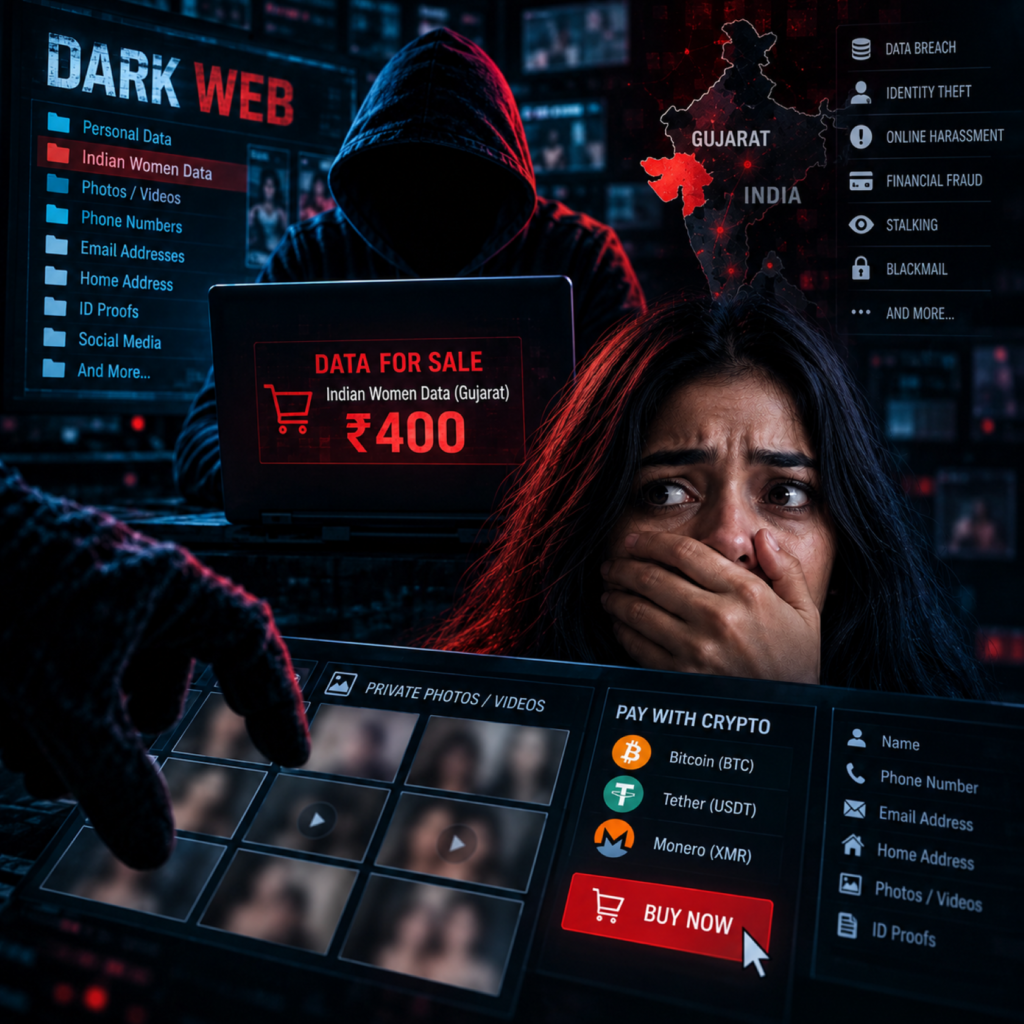
Women Data Leak 2026 has raised serious privacy and cybersecurity concerns after reports claimed that personal information belonging to around 4 crore women across India is being offered for sale on the dark web. The reported dataset allegedly contains names, phone numbers, addresses and email IDs, creating potential risks of fraud, harassment and stalking.
According to the available reports, 3,366 women from Gujarat were identified in the Women Data Leak dataset. Cybersecurity experts reportedly examined samples and found the information to be genuine and active, although the full origin and scope of the alleged leak remain subject to investigation.
The reported marketplace is said to work like a searchable “female search engine,” allowing buyers to look up individual records. Individual profiles are reportedly being offered for approximately ₹400–₹500, increasing concerns about the misuse of personal information.
What Caused the Women Data Leak?
The precise cause of the reported exposure has not been publicly established from the available information. However, reports suggest that the dataset may have originated from a major Indian e-commerce clothing brand.
No specific company has been identified in the available news input, and there is no confirmed attribution to a particular breach, cybercriminal group or intrusion method. Therefore, the suspected source should be treated as an allegation rather than an established fact.
The Women Data Leak availability of active contact and address information is particularly concerning because such details can be combined with information from other sources to create highly targeted attacks.
Women Data Leak: Reported Data Breakdown
The information reportedly being circulated includes:
- Full names
- Mobile phone numbers
- Residential addresses
- Email addresses
- Other personal details associated with individual records
The reports claim that approximately 40 million women in India may be represented in the Women Data Leak dataset. However, the exact number of unique affected individuals and the original database size have not been independently established from the information available.
Timeline of Events
The reported incident has emerged through claims about personal data being traded on dark-web channels.
- A large dataset allegedly containing information on Indian women appeared for sale.
- Reports claimed that records could be searched individually.
- Cybersecurity experts reportedly reviewed samples of the information.
- Some samples were said to match genuine and active personal details.
- Concerns subsequently grew over potential phishing, fraud, harassment and physical safety threats.
Potential Risks & Impact
Identity and Financial Risk
The Women Data Leak exposure of phone numbers and email addresses can make individuals easier targets for phishing and impersonation scams. Attackers may use apparently legitimate personal information to make fraudulent messages or calls appear more convincing.
The reported Women Data Leak could therefore increase the effectiveness of targeted scams, particularly when leaked information is combined with data obtained from social media, breached databases or public records.
Harassment, Stalking and Physical Safety
The reported inclusion of residential addresses makes this incident more serious than a typical email or phone-number exposure. Malicious individuals could potentially use address information for stalking, intimidation, unwanted contact or other forms of harassment.
Women whose information is exposed should be particularly cautious about unsolicited contact that references their name, location, shopping activity or other personal details.
Business and Reputational Risk
If the suspected e-commerce source is eventually confirmed, the organization involved could face significant customer-trust and reputational consequences. Customers may also question how personal information was collected, stored, protected and potentially exposed.
Organizations handling large volumes of consumer data can review similar incidents through the Cyber Incidents category and strengthen their incident-response planning accordingly.
Regulatory and Compliance Risk
A confirmed personal-data breach could potentially raise questions around privacy obligations, security controls and breach handling. The applicable regulatory consequences would depend on the investigation, the organization involved and the circumstances of the exposure.
Official Response / Statement
No confirmed company statement or official attribution has been provided in the available news input. The suspected connection to a major Indian clothing e-commerce brand therefore remains unconfirmed.
Authorities, affected organizations and cybersecurity investigators would need to establish the Women Data Leak 2026 dataset’s origin, authenticity, scale and method of exposure before definitive conclusions can be drawn.
Industry Context: Why Personal Data Leaks Are Dangerous
Large databases containing contact and identity information can become valuable commodities for cybercriminals because they support highly personalized social-engineering campaigns.
Unlike random spam, targeted fraud can use a victim’s real name, phone number or address to create credibility. Attackers may impersonate banks, delivery companies, retailers, employers or government services to persuade victims to disclose passwords, OTPs or financial information.
Readers can follow broader developments through CyberNexora’s cybersecurity incident coverage. Organizations can also use the site’s Learn & Protect resources to strengthen awareness and defensive practices.
How to Protect Yourself and Your Organization
- Be suspicious of unexpected messages: Treat unsolicited calls, emails and WhatsApp messages requesting information with caution.
- Never share OTPs or passwords: Legitimate banks and services do not require users to disclose authentication codes.
- Verify callers independently: If someone claims to represent a bank, retailer or government agency, contact the organization through its official channel.
- Strengthen account security: Use unique passwords and enable multi-factor authentication wherever available.
- Limit publicly available information: Avoid unnecessarily publishing phone numbers, addresses and other sensitive details online.
- Watch for targeted phishing: A scammer knowing a person’s name or address does not prove that the communication is legitimate.
- Monitor financial activity: Review bank and payment-account transactions for unfamiliar activity.
- Report suspicious activity: Individuals who experience fraud, threats or cybercrime should report the incident through appropriate official channels.
Individuals who experience cybercrime or financial fraud can also use the National Cyber Crime Reporting Portal to report incidents and seek appropriate assistance.
Indicators of Compromise (IoCs)
This incident does not currently have conventional malware or network-based IoCs. Instead, users should watch for behavioral indicators associated with potential misuse of exposed information:
- Unexpected calls using accurate personal details
- Phishing emails containing a real name or address
- Fake offers referencing previous purchases
- Unsolicited messages requesting OTPs or payments
- Unknown individuals demonstrating knowledge of private information
Key Takeaways
- Around 4 crore Indian women are reportedly represented in the Women Data Leak 2026 dataset.
- Reported information includes names, phone numbers, addresses and email IDs.
- 3,366 Gujarat women were reportedly identified in the dataset.
- Experts reportedly found sampled records to be genuine and active.
- The suspected e-commerce source has not been officially confirmed.
- The reported data could enable phishing, fraud, harassment and stalking.
Conclusion: Women Data Leak and What Happens Next
The Women Data Leak allegations highlight the risks created when large volumes of personal information become accessible to criminals. While the reported dataset and some sampled records have reportedly been validated, its precise origin, full scale and circumstances still require authoritative confirmation.
The next key developments will be any official investigation, confirmation of the suspected source and clarification of how the information was obtained. Until then, consumers should remain alert to highly personalized scams, while organizations should review their data-protection and incident-response controls.
Frequently Asked Questions(FAQs)
The Women Data Leak refers to reports of a dataset containing personal information belonging to around 40 million Indian women being sold on the dark web. The reported information includes names, phone numbers, addresses and email IDs.
Reportedly exposed information includes names, mobile numbers, residential addresses and email addresses. The exact scope of the dataset has not been independently established from the available information.
Yes, reports claim that 3,366 women from Gujarat were identified in the dataset. Cybersecurity experts reportedly found sampled records to be genuine and active.
The dataset is suspected of originating from a major Indian e-commerce clothing brand. However, the available information does not confirm the identity of the company or establish the source conclusively.
Criminals could potentially use the information for phishing, impersonation, targeted fraud, harassment or stalking. Combining leaked details with other publicly available information could make social-engineering attacks more convincing.
Users should be cautious with unexpected calls and messages, avoid sharing OTPs or passwords, strengthen account security and monitor financial activity. Suspicious cybercrime or fraud should be reported through appropriate official channels.