
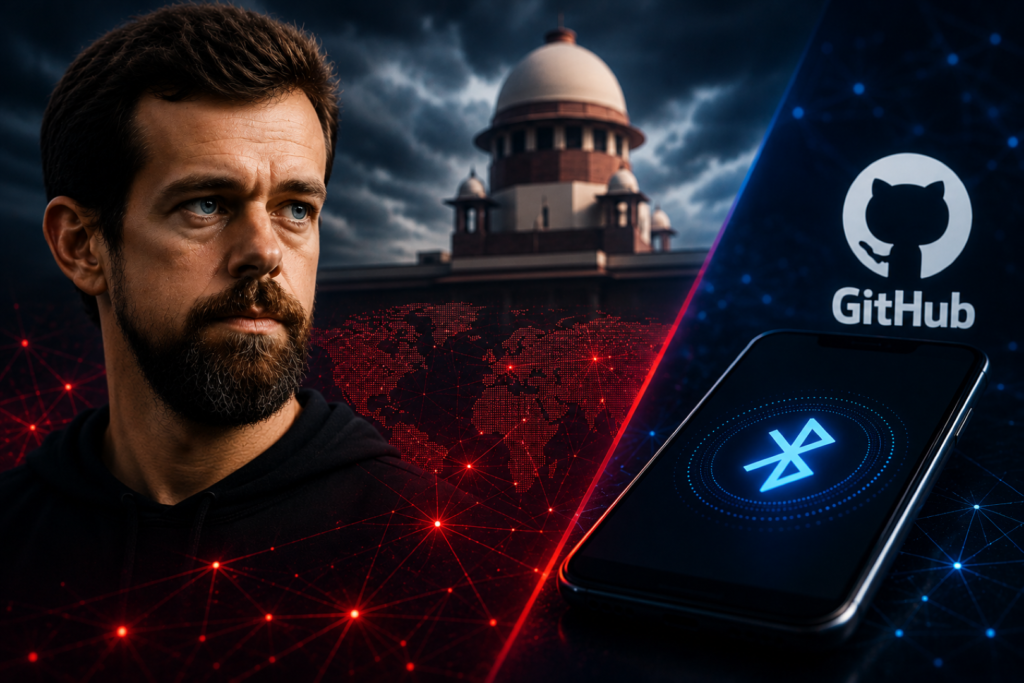
Introduction: Why the Bitchat GitHub Removal Matters
India has directed GitHub to disable public access to repositories associated with Bitchat GitHub Removal, a decentralized Bluetooth mesh messaging application developed by Jack Dorsey. The directive was reportedly issued by the Indian Cyber Crime Coordination Centre (I4C), operating under the Ministry of Home Affairs, on July 23 under Section 79(3)(b) of the Information Technology Act and Rule 3(1)(d) of the Information Technology (Intermediary Guidelines and Digital Media Ethics Code) Rules, 2021.
According to the reported order, GitHub was instructed to disable access to three repositories related to the project—including the primary Bitchat repository and its Android implementation—within three hours. The action highlights the increasing focus of Indian authorities on decentralized communication technologies that may limit lawful monitoring and digital investigations.
What is Bitchat?
Bitchat is a decentralized messaging platform that enables users to communicate through Bluetooth mesh networking instead of relying on conventional internet connectivity or mobile cellular networks.
Unlike traditional messaging applications, Bitchat operates without:
- Internet access
- Cellular data
- Centralized cloud servers
- User accounts or phone numbers
Instead, nearby devices relay encrypted messages across a Bluetooth mesh network, allowing communication between users even when internet services are unavailable.
This Bitchat GitHub Removal case highlights how the design improves resilience during network outages and emergency situations. However, it also reduces the dependence on centralized infrastructure that authorities typically rely upon for lawful investigations and digital evidence collection.
Background of the Government Order
The reported direction was issued by the Indian Cyber Crime Coordination Centre (I4C), an organization established under the Ministry of Home Affairs to strengthen cybercrime prevention, investigation, and coordination across India.
The order references:
- Section 79(3)(b) of the Information Technology Act
- Rule 3(1)(d) of the Information Technology Rules, 2021
These legal provisions require online intermediaries to remove or disable access to specific content when directed by competent government authorities.
According to the reported Bitchat GitHub Removal directive, GitHub received instructions to restrict access to three repositories connected with Bitchat within a three-hour compliance window.
The reported repositories include:
- Main Bitchat source code repository
- Android implementation repository
- An additional project repository associated with the application
At the time of reporting, the directive represents one of the notable instances where source code repositories for a decentralized communication platform have been targeted under India’s IT regulations.
Bitchat GitHub Removal: Full Breakdown
Timeline of Events
- July 23, 2026: I4C reportedly issued a takedown directive to GitHub.
- The order cited Section 79(3)(b) of the IT Act and Rule 3(1)(d) of the IT Rules, 2021.
- GitHub was instructed to disable access within three hours.
- Three repositories connected to Bitchat were identified in the directive.
- The Bitchat GitHub Removal drew attention because the repositories relate to decentralized Bluetooth-based communication software rather than conventional online messaging services.
Why Authorities Raised Concerns
According to the reported order, authorities believe Bitchat’s decentralized architecture could make several law enforcement activities significantly more challenging.
Government concerns reportedly include:
- Difficulty in lawful interception of communications.
- Limited ability to attribute messages to specific users.
- Reduced availability of centralized logs or server-side evidence.
- Challenges during digital forensic investigations.
- Potential misuse by criminal groups to evade conventional monitoring.
Officials reportedly stated that decentralized peer-to-peer communication platforms may be exploited for activities such as:
- Coordinating unlawful assemblies.
- Organizing violent protests.
- Spreading misinformation.
- Supporting radicalization efforts.
- Facilitating criminal conspiracies.
Authorities argue that the absence of centralized infrastructure can complicate investigations, especially when traditional communication records are unavailable.
Bitchat GitHub Removal: Potential Risks and Broader Impact
Public Safety Concerns
From a law enforcement perspective, decentralized communication platforms introduce unique investigative challenges. Unlike conventional messaging services, there may be no central server capable of retaining metadata, responding to lawful requests, or preserving communication records.
Officials argue that this could delay investigations involving public safety incidents or organized criminal activity.
Technology and Developer Community
The reported action also raises broader questions regarding open-source software development and decentralized technologies.
Developers often publish source code on platforms such as GitHub to encourage transparency, peer review, and collaborative innovation. Restrictions affecting publicly accessible repositories may therefore prompt discussions around the balance between cybersecurity, public safety, privacy, and open-source development.
Regulatory and Compliance Impact
The incident reflects India’s growing emphasis on regulating digital platforms under existing IT legislation.
Technology companies hosting user-generated content or software repositories may continue facing increased scrutiny when authorities believe hosted content could interfere with lawful investigations or national security objectives.
Official Response
At the time of writing, The reported Bitchat GitHub Removal directive indicates that the Indian Cyber Crime Coordination Centre (I4C) instructed GitHub to disable access to three repositories associated with the Bitchat project under the Information Technology Act and the IT Rules, 2021.
The government’s reported rationale centers on concerns that decentralized Bluetooth mesh communication can make lawful interception, attribution, and digital investigations significantly more difficult. Authorities also noted that such platforms could potentially be misused for unlawful activities, including coordinating violent protests, spreading misinformation, and facilitating criminal conspiracies.
As of publication, no additional official public statement expanding on the directive had been reported beyond the cited legal provisions.
Industry Context: Why Decentralized Messaging Is Receiving More Attention
Decentralized communication technologies have gained significant popularity in recent years due to increasing concerns over privacy, censorship resistance, and communication resilience during internet outages.
Unlike traditional messaging services, decentralized platforms distribute communication across users’ devices instead of routing messages through centralized servers. While this architecture offers enhanced privacy and operational continuity, it also presents new challenges for regulators and law enforcement agencies tasked with investigating cybercrime and maintaining public safety.
India, along with several other countries, has introduced stronger oversight of digital platforms through evolving cybersecurity regulations and intermediary compliance requirements.The Bitchat GitHub Removal reflects the broader debate between protecting user privacy and ensuring lawful access during criminal investigations.
Readers interested in India’s evolving cybersecurity regulations can also explore CyberNexora News’s Laws & Government, Cyber Incidents, and Learn & Protect sections for related developments.
How to Protect Yourself and Your Organization
Although this incident concerns regulatory action rather than a cybersecurity breach, organizations should remain aware of how decentralized technologies may affect security and compliance strategies.
1. Review Communication Policies
Clearly define which messaging platforms are approved for business communication and ensure employees understand acceptable usage policies.
2. Maintain Regulatory Compliance
Organizations operating in regulated sectors should regularly review national cybersecurity laws and ensure communication tools align with applicable legal requirements.
3. Conduct Security Risk Assessments
Evaluate the security implications of decentralized communication platforms before deploying them within enterprise environments.
4. Strengthen Employee Awareness
Train staff on the benefits and potential risks of peer-to-peer communication technologies, particularly when handling sensitive or regulated information.
5. Monitor Emerging Regulations After the Bitchat GitHub Removal
Government policies regarding encrypted and decentralized communication continue to evolve. Staying informed enables organizations to respond proactively to compliance changes.
6. Implement Layered Security Controls
Use endpoint security, network monitoring, access controls, and data protection measures to reduce organizational risk regardless of the communication platform being used.
Key Takeaways
- The Bitchat GitHub Removal followed India’s I4C directive to disable three repositories related to the project.
- The order was issued under Section 79(3)(b) of the Information Technology Act and Rule 3(1)(d) of the IT Rules, 2021.
- Authorities expressed concerns that decentralized Bluetooth mesh communication could complicate lawful interception and cyber investigations.
- The move highlights the ongoing debate between digital privacy, open-source innovation, and national security.
- Organizations should continue monitoring regulatory developments surrounding decentralized communication technologies.
Conclusion: Bitchat GitHub Removal and What Comes Next
The reported Bitchat GitHub Removal represents another example of how governments are increasingly examining decentralized communication platforms through the lens of cybersecurity, public safety, and regulatory compliance.
As privacy-focused technologies continue to evolve, policymakers, technology companies, developers, and security professionals will likely face ongoing discussions about balancing innovation, user privacy, and lawful investigative capabilities. Organizations and developers should closely monitor future regulatory guidance following the Bitchat GitHub Removal, as decisions involving decentralized technologies may influence software development, compliance obligations, and digital communication practices worldwide.
Frequently Asked Questions(FAQs)
The Bitchat GitHub Removal refers to the reported directive issued by India’s Indian Cyber Crime Coordination Centre (I4C) instructing GitHub to disable access to repositories associated with the Bitchat Bluetooth messaging project.
According to the reported order, authorities believe the application’s decentralized Bluetooth mesh architecture may make lawful interception, attribution, and criminal investigations more difficult.
No. Bitchat is designed to operate using Bluetooth mesh networking, allowing nearby devices to exchange messages without internet access, cellular networks, or centralized servers.
The reported directive cites Section 79(3)(b) of the Information Technology Act and Rule 3(1)(d) of the Information Technology Rules, 2021.
The reported directive specifically concerns certain GitHub repositories related to the Bitchat project. It does not, by itself, constitute a blanket ban on all decentralized messaging platforms.