
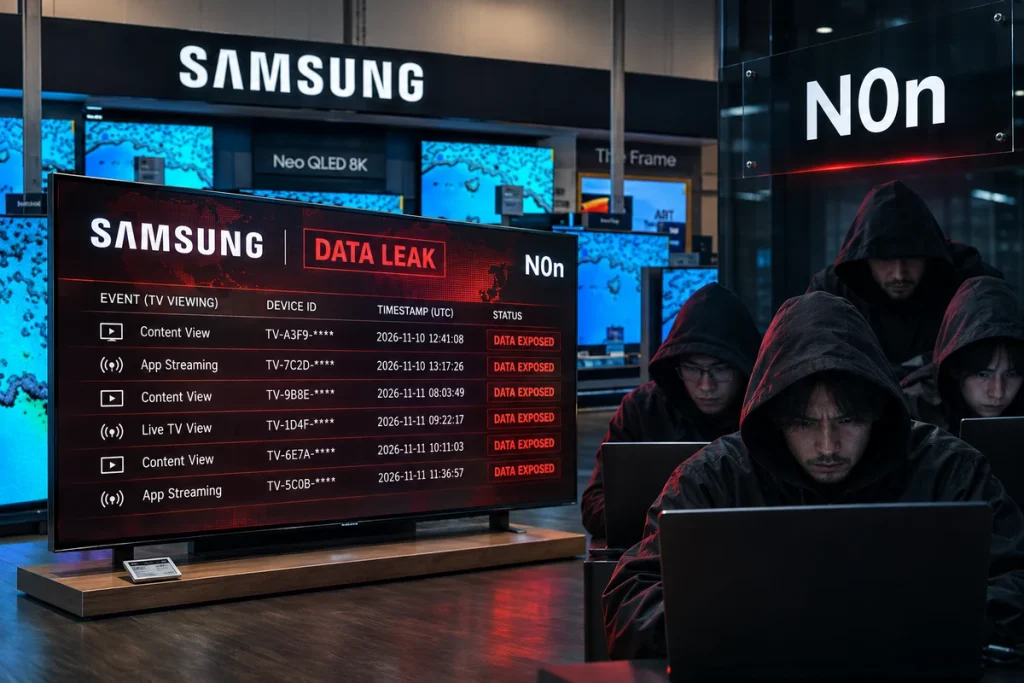
Samsung Electronics has acknowledged a cybersecurity incident involving a third-party advertising data provider after the N0n hacking group claimed to have published approximately 220MB of Samsung-related data on the dark web.
The alleged leak includes around 150,000 Samsung Smart TV viewing events, political advertising records, AI training data and internal documents.
Cybernews researchers examined the exposed files, raising concerns about the security of information collected by internet-connected televisions.
What Happened in the Samsung Data Breach?
On November 14, 2026, the N0n extortion group listed Samsung Electronics on its dark-web leak site.
The attackers subsequently released approximately 220MB of allegedly stolen information.
According to the Cybernews investigation, the exposed datasets included:
| Data Category | Reported Records |
|---|---|
| Smart TV viewing events | 150,000 |
| Political advertising records | 42,600 |
| AI advertising training records | 99,100 |
| Internal company documents | 2 |
The viewing records reportedly contained timestamps, viewing durations, device information, city names, ZIP codes and television service provider details.
Important: The 150,000 figure represents viewing events, not 150,000 confirmed affected customers.
Samsung Confirms Third-Party Cyber Incident
Samsung confirmed that the incident involved a third-party vendor supporting advertising data processing for its North American business, Samsung Ads.
According to Samsung’s statement reported by Cybernews, the vendor’s preliminary investigation indicates that some Samsung information may have been affected.
Samsung and the vendor are investigating the incident to determine its scope.
The company has not established the total number of affected customers or confirmed that the entire dataset originated from a compromise of Samsung’s own systems.
Why the Samsung Smart TV Leak Matters
The incident highlights cybersecurity risks associated with connected devices and third-party data processing.
Smart TVs can collect viewing-related information for audience measurement, advertising and service improvement.
If such information is exposed, attackers may gain access to commercially sensitive advertising intelligence and device-related information.
The reported leak also raises concerns about data access controls, vendor security and the protection of information shared between organisations.
Businesses should regularly assess third-party access, API security, sensitive data handling and exposed infrastructure.
Related: CyberNexora’s VAPT and Penetration Testing Services.
What Happens Next?
Samsung’s investigation remains ongoing.
The full extent of the data exposure, the number of affected individuals and the precise method used to obtain the information have not been publicly established.
The incident demonstrates why organisations must evaluate not only their internal security but also the security of external providers handling sensitive information.
For continuing updates on data breaches, ransomware and cyber threats, visit CyberNexora News – Cyber Incidents.