
Close Menu
    What's Hot

    LLM-Generated Mythic Agents: AI Creates Disposable Malware

    June 29, 2026

    VS Code Infostealer Attack: Critical npm Packages Hijacked

    June 29, 2026

    GLM-5.2 AI: Major Challenge to U.S. Cybersecurity

    June 29, 2026

    Zero Trust Architecture Guide: CISA Releases TIC 3.0 Framework

    June 28, 2026

    Signal Backup Recovery Key Phishing: Critical FBI Warning

    June 28, 2026
    Facebook X (Twitter) Instagram
    Tuesday, June 30
    CyberNexora News
    X (Twitter) Instagram LinkedIn
    • Home
    • Cyber Incidents
    • laws & government
    • Penalties
    • Learn & Protect
    • Resources
    • Contact Us
    Get Cyber Alerts
    CyberNexora News
    Home»Resources»Networking Basics for Cybersecurity Students

    Networking Basics for Cybersecurity Students

    Zeel_CyberexpertBy Zeel_CyberexpertFebruary 15, 2026Updated:March 4, 20262 Mins Read
    Facebook Twitter LinkedIn Email Telegram

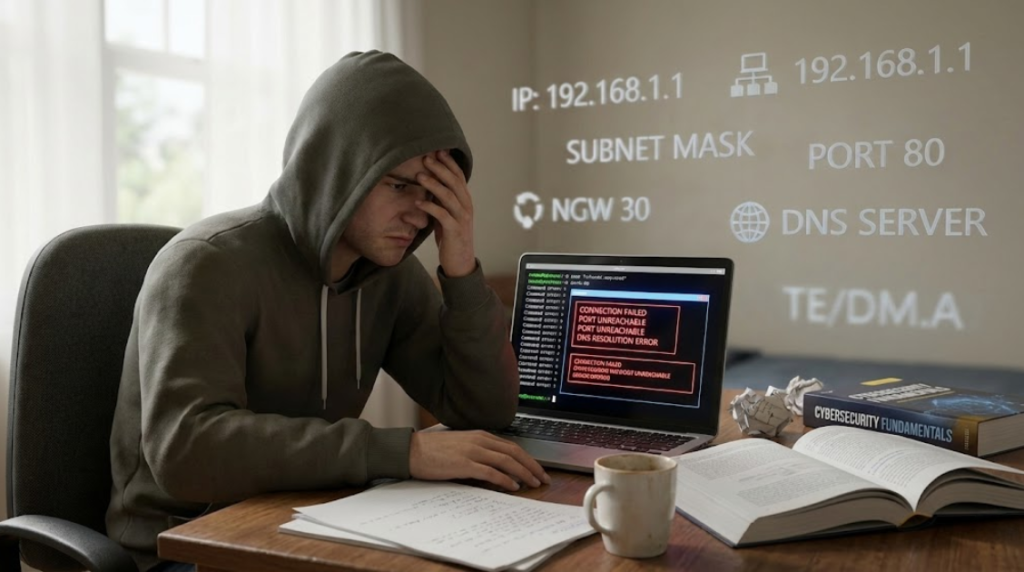
    Networking is the foundation of cybersecurity. Most cyber attacks do not start with tools — they start with network communication.
    Students who skip networking often feel confused later while learning SOC, VAPT, or cloud security.

    This resource explains only the most important networking concepts and ports, clearly and practically.

    Why Networking Is Essential in Cybersecurity

    Every cyber activity depends on the network:

    • Phishing emails
    • Malware communication
    • Data exfiltration
    • Remote access attacks

    If you don’t understand how devices communicate, you cannot understand how attacks work.

    Core Networking Concepts You Must Know

    1. IP Address

    An IP address is the unique identity of a device on a network.

    Why it matters in cybersecurity:

    • Attacker IPs are logged and traced
    • Malicious IPs are blocked
    • SOC teams analyze IP-based alerts

    2. Ports

    Ports are entry points for services.
    Open or misconfigured ports increase attack risk.

    Attackers always scan ports before attacking.

    3. Protocols

    Protocols define how data is transferred.

    Important ones:

    • TCP – Reliable communication (login, web, email)
    • UDP – Fast but risky (often abused in DDoS)
    • HTTP / HTTPS – Web traffic
    • DNS – Domain resolution

    4. DNS (Domain Name System)

    DNS converts a website name into an IP address.

    Security relevance:

    • Phishing uses fake domains
    • DNS hijacking redirects users
    • SOC teams analyze DNS logs regularly

    5. Firewall

    A firewall controls what traffic is allowed or blocked.

    In cybersecurity:

    • Firewall logs are critical evidence
    • Misconfigured firewalls cause breaches

    6. LAN vs WAN

    • LAN: Internal network (office, school, lab)
    • WAN: Internet (external threats)

    Most attacks enter from WAN and spread inside LAN.

    Important Port Numbers for Cybersecurity (Only Essentials)

    PortServiceWhy It Matters
    22SSHRemote access, brute-force target
    25SMTPEmail abuse, phishing
    53DNSDNS spoofing & redirection
    80HTTPUnencrypted web traffic
    443HTTPSSecure web traffic
    3389RDPHigh-risk remote desktop attacks

    🔐 Note:
    You do NOT need to memorize every port.
    Understanding why these ports are targeted is more important.

    How Networking Is Used in Cybersecurity Roles
    SOC Analyst

    • Monitor network traffic
    • Detect suspicious IPs and ports
    • Analyze firewall and DNS logs

    Ethical Hacker (VAPT)

    • Scan open ports
    • Identify exposed services
    • Test network misconfigurations

    Common Beginner Mistakes

    Skipping networking basics
    Jumping straight into hacking tools
    Memorizing ports without understanding usage
    Ignoring DNS and firewall concepts

    What Is Enough for a Beginner?

    You are ready to move forward if you understand:

    • IP addresses
    • Ports and services
    • TCP vs UDP
    • DNS and firewalls

    This is a strong and sufficient foundation.

    Final Takeaway

    Networking is not optional in cybersecurity.
    A weak foundation leads to confusion later.

    Related Articles

  • Scanning & Enumeration in Cyber Attacks: How Hackers Discover Systems, Services, and Hidden Vulnerabilities In modern cybersecurity, scanning and enumeration represent critical phases where...
  • How Hackers Use Reconnaissance to Collect Information Before an Attack: Tools and Techniques Explained Reconnaissance is the foundation of every cyber attack and every...
  • Linux Basics & Importance in Cybersecurity The Biggest Beginner Mistake in Cybersecurity Today, cybersecurity is one...
  • Top 10 Free SOC Analyst Practice Labs (With Tool-Wise Details) SOC Analyst labs simulate how a real Security Operations Center...
  • What Is Kali Linux? Why Hackers and Cybersecurity Professionals Use It. Cybersecurity is one of the fastest-growing fields in technology. Because...
  • Share. Facebook Twitter LinkedIn Email Telegram

    latest news

    LLM-Generated Mythic Agents: AI Creates Disposable Malware

    June 29, 2026

    VS Code Infostealer Attack: Critical npm Packages Hijacked

    June 29, 2026

    GLM-5.2 AI: Major Challenge to U.S. Cybersecurity

    June 29, 2026

    Zero Trust Architecture Guide: CISA Releases TIC 3.0 Framework

    June 28, 2026

    Signal Backup Recovery Key Phishing: Critical FBI Warning

    June 28, 2026

    Bucket Hijacking Attack: Critical Cloud Data Risk

    June 28, 2026

    GPT-5.6 Sol: OpenAI Unveils Secure AI Preview

    June 27, 2026

    Claude Mythos 5 Redeployment: Anthropic Confirms Return

    June 27, 2026

    TinyRCT Backdoor: Chinese APT Targets Southeast Asia

    June 27, 2026

    Pedit COW Exploit: Critical Linux Root Vulnerability

    June 26, 2026
    Recent Posts
    • LLM-Generated Mythic Agents: AI Creates Disposable Malware
    • VS Code Infostealer Attack: Critical npm Packages Hijacked
    • GLM-5.2 AI: Major Challenge to U.S. Cybersecurity
    Top Posts

    Unauthorized Access Incident at Coupang Exposes Customer Data

    December 29, 2025

    LLM-Generated Mythic Agents: AI Creates Disposable Malware

    June 29, 2026

    Significant Data Breach at Korean Air Subcontractor Exposes Employee Records

    December 29, 2025
    About

    CyberNexora Blog provides trusted cybersecurity news, attack analysis, and security awareness updates. Our goal is to educate and inform readers about emerging cyber threats and best protection practices.

    Facebook X (Twitter) Instagram Pinterest LinkedIn
    Pages
    • Home
    • Cyber Incidents
    • laws & government
    • Penalties
    • Learn & Protect
    • Resources
    • Contact Us

    Get Cyber Security Alerts

    Thanks! Please check your email to confirm subscription.

    • About CyberNexora News
    • Privacy Policy
    © 2026 CyberNexora News. All Rights Reserved.

    Type above and press Enter to search. Press Esc to cancel.