Close Menu
    What's Hot

    LLM-Generated Mythic Agents: AI Creates Disposable Malware

    June 29, 2026

    VS Code Infostealer Attack: Critical npm Packages Hijacked

    June 29, 2026

    GLM-5.2 AI: Major Challenge to U.S. Cybersecurity

    June 29, 2026

    Zero Trust Architecture Guide: CISA Releases TIC 3.0 Framework

    June 28, 2026

    Signal Backup Recovery Key Phishing: Critical FBI Warning

    June 28, 2026
    Facebook X (Twitter) Instagram
    Tuesday, June 30
    CyberNexora News
    X (Twitter) Instagram LinkedIn
    • Home
    • Cyber Incidents
    • laws & government
    • Penalties
    • Learn & Protect
    • Resources
    • Contact Us
    Get Cyber Alerts
    CyberNexora News
    Home»Learn & Protect»Can iPhones Really Be Hacked? The Truth About iPhone vs Android Security

    Can iPhones Really Be Hacked? The Truth About iPhone vs Android Security

    Many people believe iPhones cannot be hacked. Learn the truth about iPhone vs Android security, how smartphones get hacked, and how to protect your device.
    Zeel_CyberexpertBy Zeel_CyberexpertMarch 6, 20263 Mins Read
    Facebook Twitter LinkedIn Email Telegram

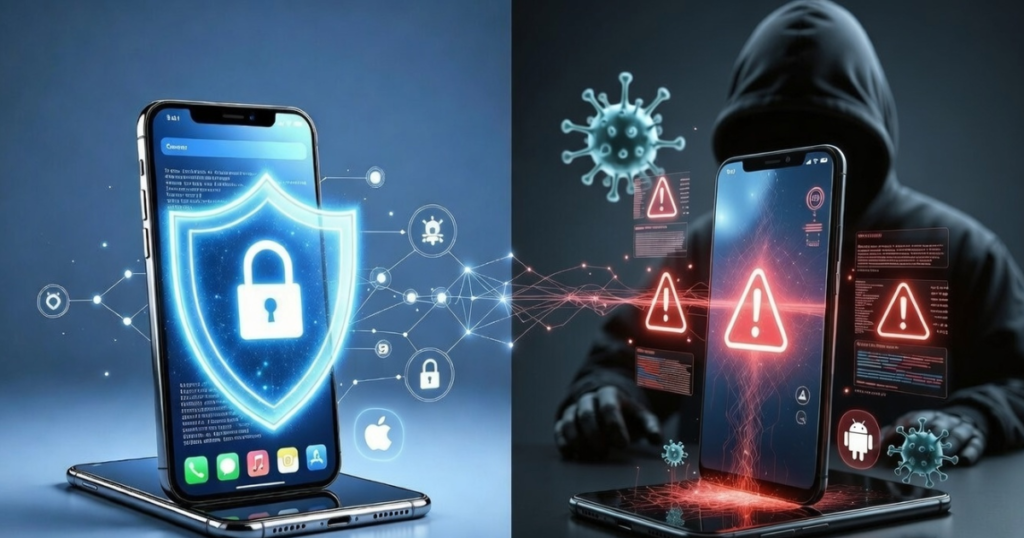
    Many people believe that iPhones cannot be hacked, but cybersecurity experts say this is a myth. While Apple devices are known for strong security protections, no smartphone is completely immune to cyber threats.

    Both iPhone and Android devices can be compromised under certain conditions. The difference is usually in how the attack happens and how difficult it is for attackers to exploit the device.

    Understanding how smartphone hacking works is important for anyone who uses a mobile phone for banking, communication, or storing personal data.

    Why People Think iPhones Cannot Be Hacked

    Apple has built a reputation for strong security. The company tightly controls its ecosystem, meaning apps must pass strict security checks before appearing on the App Store.

    iPhones also receive regular software updates directly from Apple, which helps patch security vulnerabilities quickly.

    Because of these protections, iPhones are generally harder to attack compared to many devices. However, that does not mean they are impossible to hack.

    How Smartphones Actually Get Hacked

    Most phone hacks do not happen through complex technical attacks. In many cases, hackers use simple tricks to fool users.

    Phishing Messages
    Attackers send fake links through SMS, email, or messaging apps that steal login credentials.

    Malicious Apps
    Downloading apps from unknown sources can allow malware to access files or personal information.

    Spyware Attacks
    Advanced spyware tools can monitor calls, messages, and location data without the user noticing.

    Public Wi-Fi Attacks
    Unsecured Wi-Fi networks can allow attackers to intercept sensitive information.

    Social Engineering
    Hackers often trick users into sharing verification codes, passwords, or account access.

    iPhone vs Android Security

    Both platforms offer strong security features but operate differently.

    iPhone Security Advantages

    • Strict App Store security checks
    • Faster and regular system updates
    • Strong privacy controls
    • Hardware-based security protections

    Android Security Advantages

    • Greater flexibility and customization
    • Advanced security tools on modern devices
    • Large ecosystem of security applications

    However, Android updates sometimes depend on the device manufacturer, which may delay security patches.

    Warning Signs Your Phone May Be Compromised

    Although uncommon, a hacked phone can show several warning signs:

    • Unusual battery drain
    • Unknown apps appearing on the device
    • High data usage without explanation
    • Frequent pop-ups or suspicious messages
    • Unauthorized access to accounts

    If these signs appear frequently, it may indicate a security issue.

    How to Protect Your Smartphone from Hackers

    Following a few basic security practices can significantly reduce the risk of hacking.

    Keep your phone updated
    Install operating system updates as soon as they become available.

    Download apps only from official stores
    Avoid installing applications from unknown websites.

    Enable two-factor authentication
    This adds an extra security layer to your accounts.

    Avoid suspicious links
    Do not click unknown links received via SMS, email, or messaging apps.

    Be careful with public Wi-Fi
    Avoid accessing sensitive accounts on unsecured networks.

    Use strong passwords
    Unique and complex passwords make accounts harder to compromise.

    Final Thoughts

    The belief that iPhones cannot be hacked is not entirely accurate. While Apple devices provide strong protection, every smartphone remains vulnerable if users are not careful.

    Most cyber attacks succeed because of human error rather than technical weaknesses. Staying informed and practicing basic digital safety habits is the best defense against mobile cyber threats.

    Related Articles

  • Apple Beats Studio Buds Vulnerability 2026: Critical Mic Spy Flaw Patched Introduction: Apple Beats Studio Buds Vulnerability 2026 — Why It...
  • Public USB Charging Risks Explained: How to Stay Safe from Juice Jacking Attacks Introduction Public USB charging stations have become a common convenience...
  • iPhone Hack Alert 2026: New Exploits Can Take Control of Your Device — Apple Urges Immediate Update Apple has issued an urgent security warning to iPhone users...
  • Telegram Mini Apps Crypto Scam: FEMITBOT Targets Users with Fake Dashboards A large-scale Telegram Mini Apps crypto scam 2026 campaign has...
  • Windows 10 ESU: Microsoft Extends Security Updates to 2027 Windows 10 ESU: Why Microsoft’s Extension Matters Microsoft has officially...
  • Share. Facebook Twitter LinkedIn Email Telegram

    latest news

    LLM-Generated Mythic Agents: AI Creates Disposable Malware

    June 29, 2026

    VS Code Infostealer Attack: Critical npm Packages Hijacked

    June 29, 2026

    GLM-5.2 AI: Major Challenge to U.S. Cybersecurity

    June 29, 2026

    Zero Trust Architecture Guide: CISA Releases TIC 3.0 Framework

    June 28, 2026

    Signal Backup Recovery Key Phishing: Critical FBI Warning

    June 28, 2026

    Bucket Hijacking Attack: Critical Cloud Data Risk

    June 28, 2026

    GPT-5.6 Sol: OpenAI Unveils Secure AI Preview

    June 27, 2026

    Claude Mythos 5 Redeployment: Anthropic Confirms Return

    June 27, 2026

    TinyRCT Backdoor: Chinese APT Targets Southeast Asia

    June 27, 2026

    Pedit COW Exploit: Critical Linux Root Vulnerability

    June 26, 2026
    Recent Posts
    • LLM-Generated Mythic Agents: AI Creates Disposable Malware
    • VS Code Infostealer Attack: Critical npm Packages Hijacked
    • GLM-5.2 AI: Major Challenge to U.S. Cybersecurity
    Top Posts

    Unauthorized Access Incident at Coupang Exposes Customer Data

    December 29, 2025

    LLM-Generated Mythic Agents: AI Creates Disposable Malware

    June 29, 2026

    Significant Data Breach at Korean Air Subcontractor Exposes Employee Records

    December 29, 2025
    About

    CyberNexora Blog provides trusted cybersecurity news, attack analysis, and security awareness updates. Our goal is to educate and inform readers about emerging cyber threats and best protection practices.

    Facebook X (Twitter) Instagram Pinterest LinkedIn
    Pages
    • Home
    • Cyber Incidents
    • laws & government
    • Penalties
    • Learn & Protect
    • Resources
    • Contact Us

    Get Cyber Security Alerts

    Thanks! Please check your email to confirm subscription.

    • About CyberNexora News
    • Privacy Policy
    © 2026 CyberNexora News. All Rights Reserved.

    Type above and press Enter to search. Press Esc to cancel.